
Your EU Buyers Are Asking About Your Supply Chain
What Every Fashion Startup Needs to Know About Sustainable Manufacturing in 2026
Published on April 25, 2026
Krazy Kreators Team
If you are planning to sell into the European market, things are changing faster than ever. It used to be that retailers only cared about your wholesale price and whether your designs would sell. Now? They are asking for your supply chain documentation before they even agree to stock your brand.
Sustainability is no longer just a marketing buzzword you can slap on a label. It has become a concrete, measurable, and highly regulated requirement. And if you are a Direct-to-Consumer (D2C) founder currently sourcing your garments, you are about to hit a major compliance deadline.
The EU Digital Product Passport regulation, which mandates full textile traceability, rolls out in 2027. That means right now, in 2026, is the exact moment you need to get your manufacturing processes in order. Let us break down what this actually means for your day-to-day operations and how you can stay ahead of the curve.
The Practical Reality of Sustainable Manufacturing
When you hear "sustainable manufacturing," it is easy to picture something vague and unachievable. But at a practical level for startup founders, it boils down to three very tangible pillars.
1. Material Choices
It starts with what goes into your garments. Are your fabrics grown with minimal water impact? Are they recycled? Can they be traced back to the farm?
2. Process Efficiency
How are those materials handled? This involves looking at the dyes being used (are they low-impact?), water management systems in the factory, and energy sources.
3. Labor Practices
Sustainability includes the people making the clothes. Fair wages, safe working environments, and reasonable hours are foundational, not optional.
You do not have to be perfect from day one, but you do have to be transparent. That transparency is exactly what the new EU regulations are built around.
What the EU Digital Product Passport Means for You
Starting in 2027, the EU is implementing the Digital Product Passport (DPP) for textiles. If you want to sell into Europe, this matters.
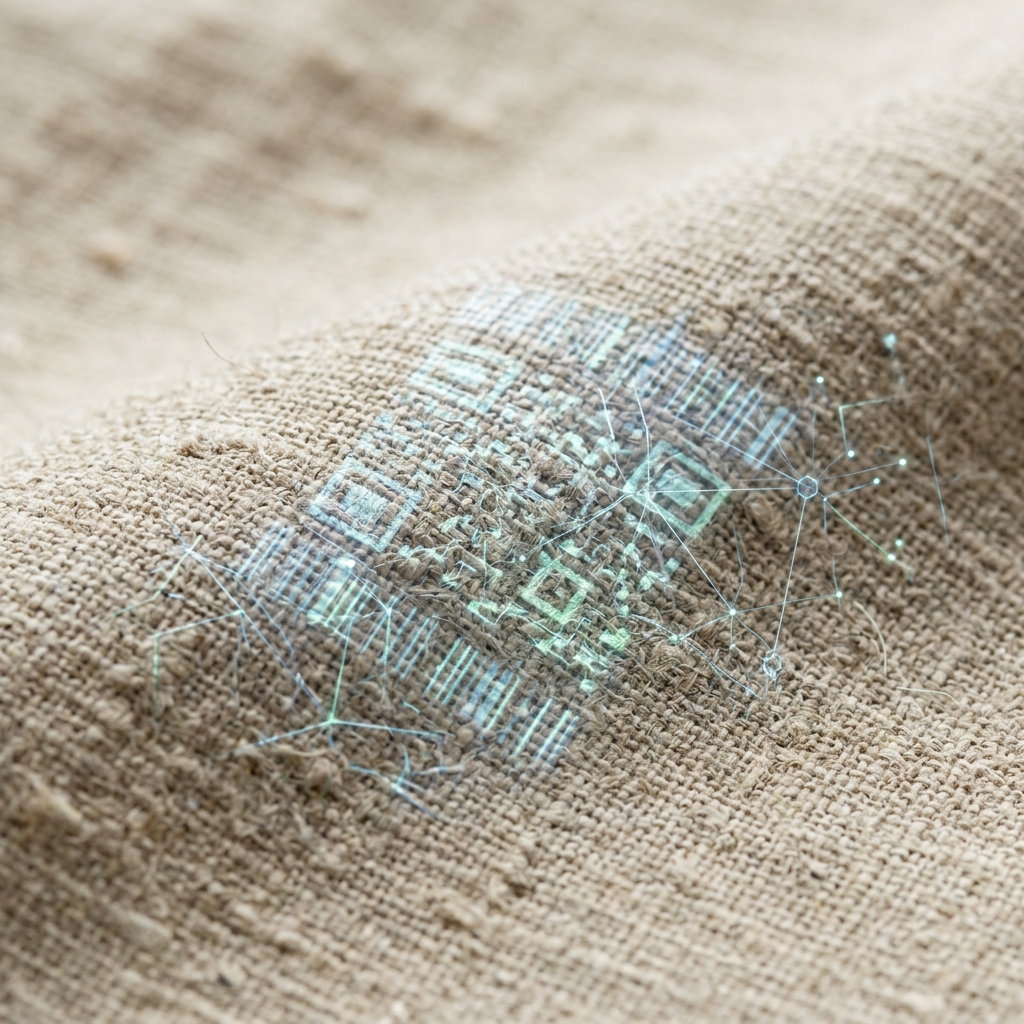
Think of the DPP as a digital birth certificate for your clothing. It will require brands to attach a scannable tag (like a QR code or RFID) to their garments. When scanned, it must reveal the complete journey of that product.
- Where the raw materials were sourced
- Who manufactured it and under what conditions
- The environmental impact of production
- Instructions for recycling or end-of-life disposal
For founders sourcing from regions like India, this actually presents a massive opportunity. The best Indian manufacturers are already deeply integrated with traceability software and certified organic supply chains. By partnering with a factory that can provide this data easily, you automatically bypass a major hurdle that will trip up thousands of unprepared brands next year.
The 5 Exact Questions to Ask Your Manufacturer
Do not wait for buyers to ask you these questions. You need to ask your manufacturing partner these exact questions today.
1. "Can you provide transaction certificates for organic materials?"
If a factory claims they use organic cotton (like GOTS certified), they must be able to provide a transaction certificate for your specific batch of fabric. Without it, the claim is legally meaningless in the EU.
2. "How do you handle dye house wastewater?"
Dyeing is historically the most toxic part of fashion. You want a partner who uses Zero Liquid Discharge (ZLD) systems or properly treats their effluent water before it leaves the facility.
3. "What social compliance audits do you currently hold?"
Look for internationally recognized certifications like SEDEX (SMETA), SA8000, or WRAP. These prove that third-party auditors have verified safe working conditions and fair labor practices.
4. "How is your fabric waste managed?"
The cutting room floor generates massive waste. Ask if they have partnerships to recycle offcuts or if they end up in a landfill.
5. "Are you prepared for digital traceability requirements?"
A modern factory should not be confused by this question. They should already be mapping their Tier 2 and Tier 3 suppliers (yarn spinners and farmers) to prepare for the 2027 DPP rollout.
Fabric Choices That Make an Immediate Impact
Changing your fabric is the fastest way to improve your brand's environmental footprint. Here are the materials buyers love to see:
- 🌿
Organic Cotton (GOTS Certified)
Grown without synthetic pesticides or fertilizers. It uses significantly less water than conventional cotton and keeps soil healthy. It is the gold standard for premium streetwear.
- ♻️
Recycled Polyester (rPET)
If you need synthetics for activewear or outerwear, use rPET. It diverts plastic bottles from oceans and landfills and requires less energy to produce than virgin polyester.
- 🎋
Hemp and Tencel™ Lyocell
Hemp is naturally pest-resistant and requires very little water. Tencel (derived from sustainably sourced wood pulp) is processed in a closed-loop system where 99% of the water and solvents are reused.
The Bottom Line
The rules of the game are shifting, and ignorance is no longer an excuse.
EU buyers are scrutinizing supply chains because their governments are forcing them to. By 2027, traceability will be the baseline expectation, not a premium feature. If you start asking the right questions and partnering with compliant manufacturers now, you will position your brand as a secure, forward-thinking partner for global retailers. Get your data straight, choose your materials wisely, and you will turn compliance from a headache into a competitive advantage.
Need a Compliant Manufacturing Partner?
At Krazy Kreators, we connect brands with fully vetted, certified manufacturers in India who are already prepared for strict global compliance standards. Let us help you build a transparent, scalable supply chain.
No comments yet
Be the first to share your thoughts!