
What the EU Digital Product Passport
Means for Your Clothing Brand Right Now
How to prepare before 2027 and avoid the scramble most brands will not see coming
Hosted on May 12, 2026
Krazy Kreators Team
If you are building a clothing brand in 2026 and you plan to sell into Europe, there is a regulation you should already have on your radar. Most founders we talk to have not heard of it. The ones who have usually think it is a 2027 problem. It is not. It is a 2026 problem that becomes a 2027 emergency for the brands who waited.
It is called the EU Digital Product Passport, often shortened to DPP. By the time it takes full effect for textiles, every garment sold into the European Union will need a scannable, verifiable record of how and where it was made. Brands that can produce that record on demand will keep their shelf space. Brands that cannot will quietly stop receiving purchase orders.
This is the single biggest compliance event hitting fashion brands in the next 12 months. So let us walk through it the way you actually need to hear it. What it is, who it touches, what to collect from your manufacturer right now, and what happens if you wait.
What the EU Digital Product Passport Actually Is
The Digital Product Passport is part of the EU's Ecodesign for Sustainable Products Regulation. In plain English, it is a digital record attached to every textile product that crosses into the European market. A QR code, an NFC tag, or another scannable identifier links the garment to a structured set of data about its origin, materials, and journey.
A buyer, a regulator, or an end customer should be able to scan that tag and see exactly what the garment is made of, where the fibre was grown, where the fabric was milled, where it was dyed, who stitched it, and how it should be cared for or recycled at end of life. Nothing about that is optional.
When it actually kicks in
Textiles are in the first wave of categories scheduled to fall under DPP enforcement. Phased implementation begins in 2027, and large EU retailers are already asking their wholesale brands to be DPP-ready well ahead of the deadline. If your timeline is to be on European shelves by spring 2027, the documentation work needs to be underway in 2026.
The thing to understand is that DPP is not a checkbox. It is a chain of records. You cannot generate it the week before you ship. It has to be captured at every step of production, and that means it has to live inside your manufacturer's process, not yours.
Which Brands Are Affected and Which Are Not
A lot of founders assume DPP is a problem for the giants. H&M, Zara, Nike. The opposite is closer to the truth.
The big players already have compliance teams, supply chain dashboards, and software vendors solving this in the background. It is the small and mid-sized brands selling into Europe who are most exposed, because they do not yet have the systems and they often do not control their factories tightly enough to demand the data.

You are affected if
You sell or plan to sell textile products into any EU member state. This includes D2C shipments to European customers, wholesale into EU retailers, and marketplace fulfilment through Amazon EU, Zalando, or Asos. The placer of the product on the EU market is on the hook, even if your business is registered elsewhere.
You are not affected if
You sell only into non-EU markets and have no plans to enter Europe. Even then, expect the UK, parts of Asia, and eventually the US to follow with their own traceability frameworks. Brands building for the next five years should treat DPP as the new floor, not an EU-only obligation.
If you sell wholesale
EU department stores and concept stores are already adding DPP-readiness clauses to their vendor onboarding forms. You will be asked to confirm traceability before you receive a purchase order, not after. If you cannot answer, the buyer moves on.
If you sell D2C in the EU
Customs and market surveillance authorities will spot-check shipments. A missing or unverifiable DPP tag is grounds for the product to be held, refused, or destroyed. The cost of one stopped container is usually higher than the cost of doing this properly from day one.
What to Collect From Your Manufacturer Right Now
Do not wait for the final EU technical specification to be published. The data points are already clear enough to start gathering. The brands who win the 2027 transition will be the ones who built this dataset across every production run in 2026 instead of trying to recreate it retroactively.
Material composition with origin
Not just "100 percent cotton." You need the spinning mill, the country of origin of the fibre, and any certifications attached to it like GOTS, OEKO-TEX, or GRS for recycled content. Save the certificate numbers, not just the logo.
Tier 1, 2, and 3 supplier list
Tier 1 is the stitching unit. Tier 2 is the fabric mill, the dye house, the printer. Tier 3 is the yarn spinner and the fibre source. Each tier should have a name, an address, and a contact. Most brands have Tier 1. Almost none have Tier 3 written down anywhere.
Process records per production stage
Dye type and recipe, printing method, finishing treatments, any chemicals applied. You do not have to publish the formula. You have to be able to prove what was used if asked.
Social compliance audits
SA8000, BSCI, Sedex, or equivalent. Confirm the audit window and pull the report. EU retailers are increasingly bundling DPP and human rights documentation into a single intake form.
End-of-life instructions
Recyclability, fibre separation guidance, and care instructions that go beyond the wash label. The DPP will eventually carry a circularity score. Garments designed without it in mind will simply rank lower in front of the customer.
Batch and production lot identifiers
Every order should be tagged to a production lot in your manufacturer's system so that the data above is tied to a specific run, not a vague brand-wide answer. This is the single piece most factories skip.
What Happens to Brands That Cannot Provide Traceability Data
This is the part most articles leave vague. We will not.
You lose retail accounts before launch
Wholesale buyers in Berlin, Paris, Milan, and Amsterdam are already screening for traceability during onboarding. If your line sheet looks beautiful but your supply chain answers are vague, the purchase order goes to a competitor whose answers are clean. You will never hear why.
Your shipments get held at customs
Once enforcement begins, a container without DPP-compliant tags is treated like any other non-compliant import. It can be held, refused entry, or in some cases destroyed at the importer's cost. For a small brand, a single stopped shipment can wipe out a quarter.
Your sustainability claims become legal risk
The EU Green Claims Directive sits alongside DPP. If you say organic, recycled, or low-impact on your website and you cannot back it up with documented evidence pulled from a real production record, you are exposed to greenwashing penalties. The data the DPP captures is the same data that defends your marketing.
You scramble in 2027 at full price
Compliance consultants are already quoting six-figure retainers for end-of-deadline cleanup. Software vendors will raise prices the closer enforcement gets. The cost curve for DPP readiness is steep in the wrong direction. Cheapest in 2026, expensive in 2027, painful in 2028.
How a Documented Manufacturing Process Protects Your Brand From Day One
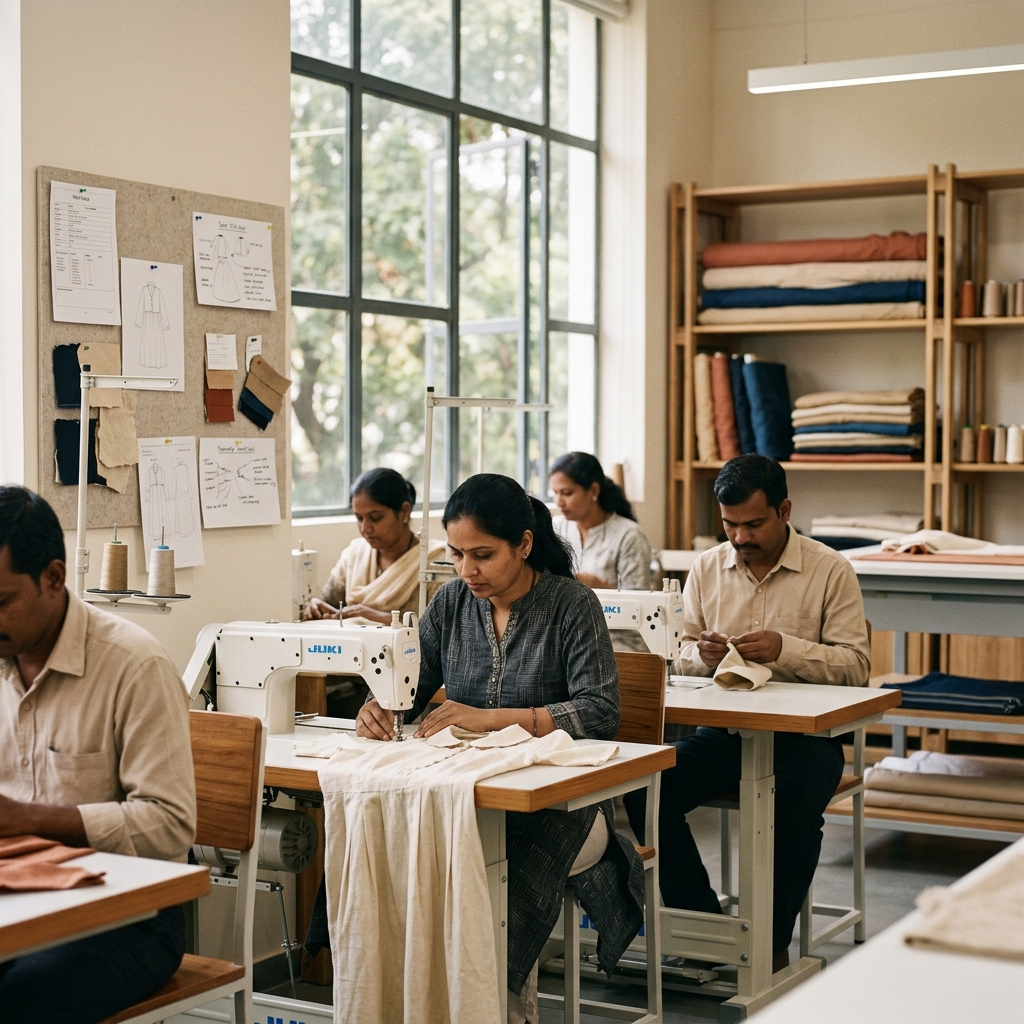
Here is the part most founders do not realise. The DPP is not really new work. It is the same information a well-run factory already produces internally to control quality. The brands who lose the most over the next 18 months are the ones whose manufacturer never wrote any of it down.
A documented production process is your insurance policy. When fabric is received, the source is logged. When dye is applied, the recipe is logged. When stitching begins, the unit and the date are logged. When the order ships, every datapoint is bundled into a single production file tied to the lot number. That file becomes your DPP record without any additional scramble. It also becomes your defence the first time a buyer, a regulator, or a customer asks how this garment was made.
Brands working with this kind of partner do not feel DPP as a shock. They feel it as a question they already know the answer to. The same documentation that satisfies the regulator is what protects you against defective bulk orders, fabric substitutions, and the slow drift in quality that kills small brands in their second year.
How Krazy Kreators Documents Every Production Stage
We built our process around the idea that nothing leaves the factory without a paper trail. That habit predates DPP. It is how we have worked with EU buyers for years, and it is why our brands tend to walk into wholesale conversations with the documentation already in hand.
Tier-mapped supplier register
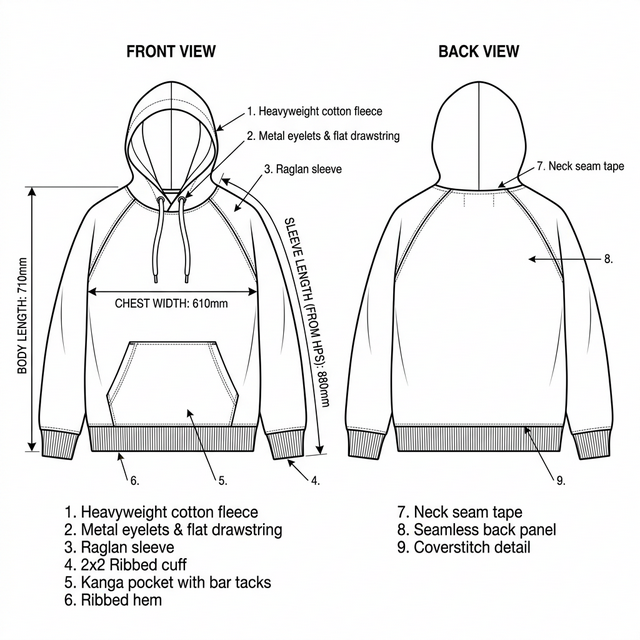
Tier 1 to Tier 3 suppliers are mapped before sampling begins, with certifications and audit windows on file. You see who made every part of your garment before you commit to bulk.
Per-lot production record
Every production run is tied to a unique lot identifier. Fabric source, dye recipe, print method, finishing, social audit, and ship date all sit under that lot in one structured file.
DPP-ready export pack
When you need to hand documentation to an EU buyer or a customs broker, we deliver a structured export pack that maps to the DPP data schema. No reformatting, no chasing factories for missing certificates.
The brands we onboard usually tell us the same thing after their first wholesale meeting in Europe. The buyer asked three traceability questions they did not expect, and they answered all three in under a minute. That is what readiness feels like.
The Bottom Line
The EU Digital Product Passport is not a future problem. It is a 2026 preparation problem with a 2027 enforcement deadline.
Founders who set up documented production now will treat DPP as a non-event. They will keep their wholesale accounts, clear customs without surprises, and back up every sustainability claim with a real production record. Founders who wait will spend 2027 paying premium fees to retrofit the same documentation they could have collected for free, run by run, starting today. The work is the same either way. The cost is not.
Get Your Production Fully Documented Before EU Retailers Start Asking
Krazy Kreators builds traceability into every project. Tier-mapped suppliers, per-lot records, and a DPP-ready export pack from day one. Book a free call and we will walk through your production documentation needs.
No comments yet
Be the first to share your thoughts!