



Exporting Apparel from India

Exporting Apparel from India: A Checklist for First-Time Buyers

Export Guide12 min readPosted on December 12, 2024

Pre-Export Preparation

1. Research the Market

  • Identify target country requirements (demand, style, seasonality, and price points).
  • Study trade restrictions, duty rates, and competitor sourcing regions.

2. Finalize Product & Specifications

  • Decide apparel category (casual wear, activewear, ethnic, kidswear, etc.).
  • Prepare a tech pack with fabric details, measurements, trims, colors, packaging instructions.

3. Select Reliable Suppliers/Manufacturers

  • Verify background: certifications (SEDEX, GOTS, ISO, Fair Trade).
  • Inspect sample quality & compliance with international standards.
  • Negotiate clear terms on MOQ, pricing, and lead time.
Pre-export preparation
Compliance and legal documentation

Compliance & Legal Documentation

1. Exporter Registration

  • Importer-Exporter Code (IEC) from DGFT (mandatory).
  • Register with EPCH / AEPC for export incentives.

2. Business & Legal Docs

  • GST registration (if applicable).
  • Company PAN, bank account with AD code (Authorized Dealer Code).

3. Buyer’s Import Regulations

  • Check labeling norms (fiber content, wash care, country of origin).
  • Ensure compliance with safety standards (e.g., CPSIA for US, REACH for EU).

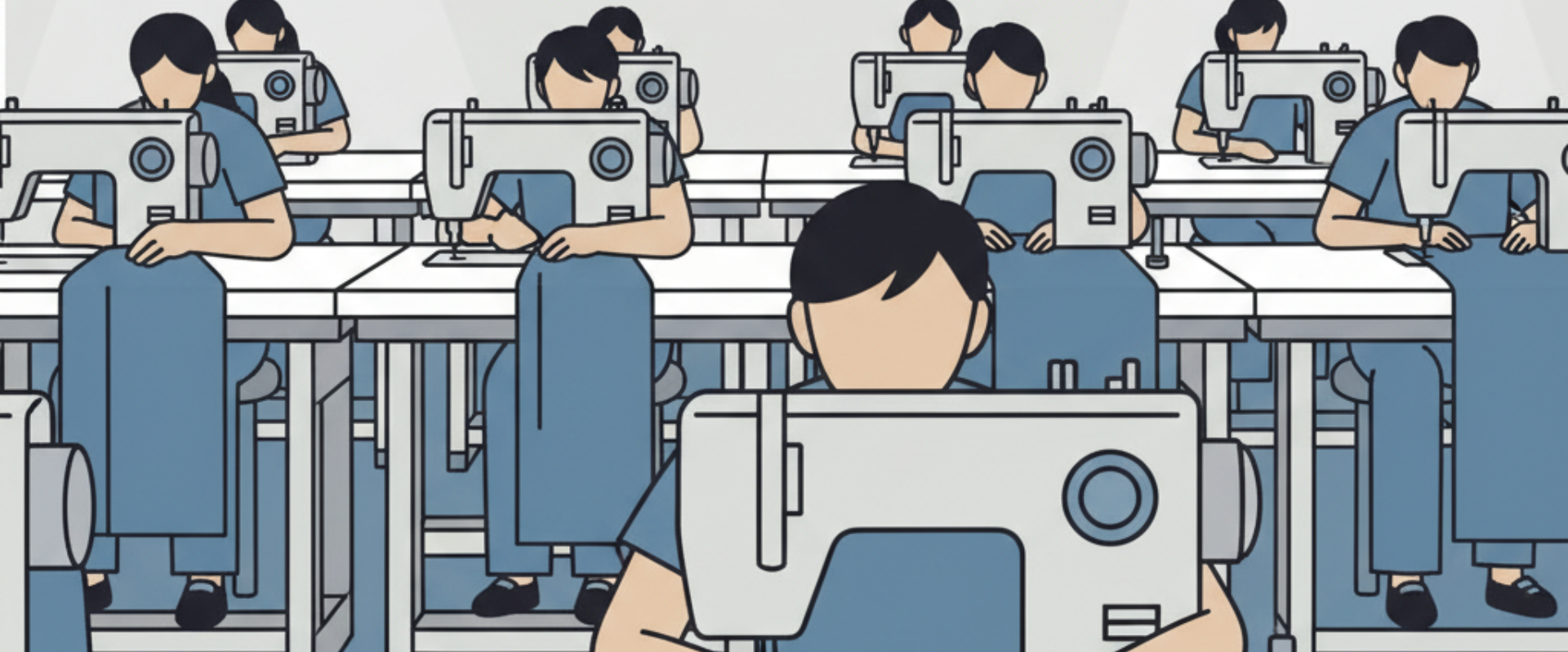
Order & Production Process

1. Sampling & Approvals

  • Develop proto sample → fit sample → pre-production sample.
  • Obtain written approval on each sample to avoid disputes.

2. Production Monitoring

  • Conduct quality checks at inline, midline, and final stages.
  • Ensure AQL (Acceptable Quality Level) inspections before shipment.
Order and production process
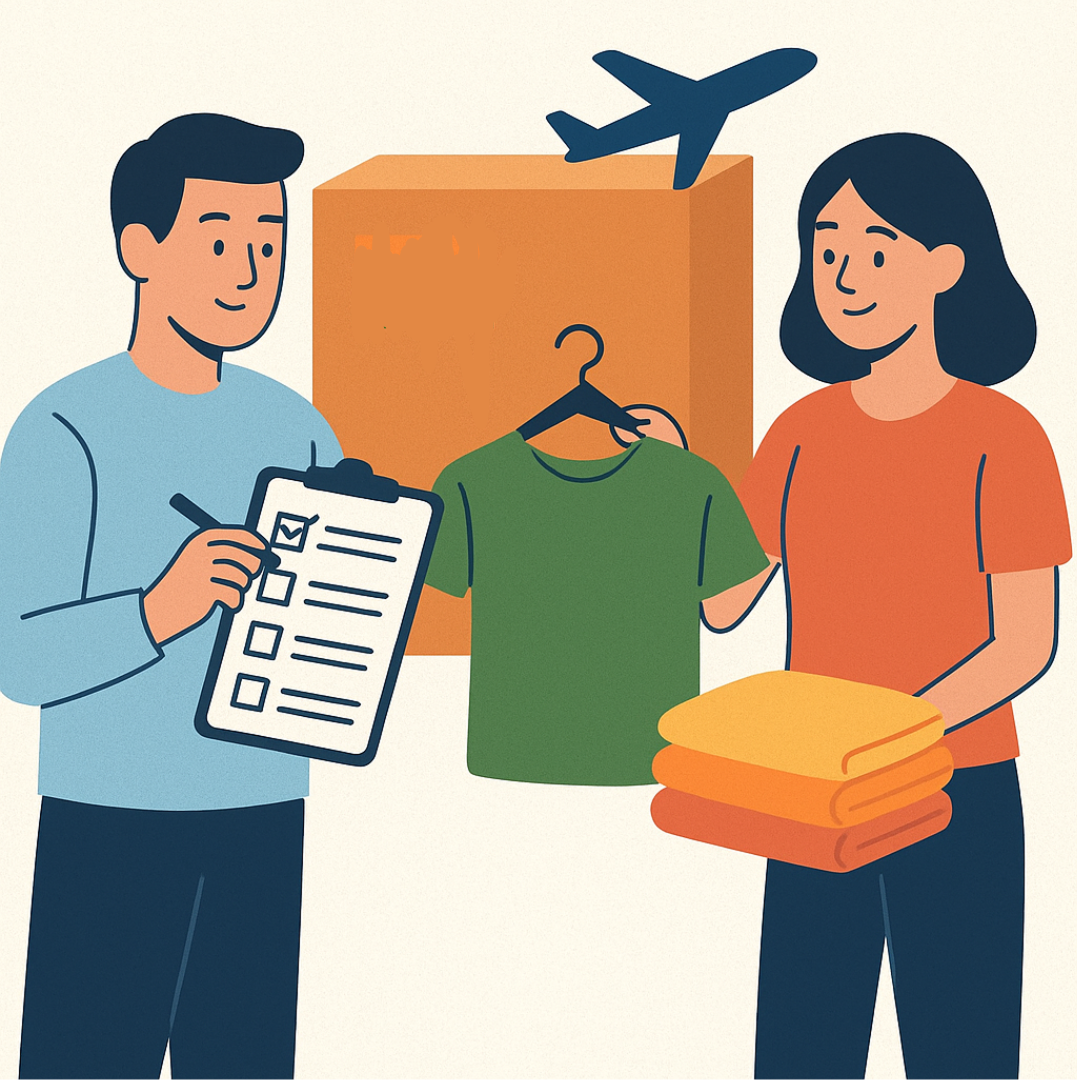
Logistics and shipping

Logistics & Shipping

1. Packaging

  • Follow buyer’s packaging standards (poly bags, tags, cartons).
  • Use barcodes if required (UPC/EAN).

2. Logistics

  • Choose mode: sea (cheaper, longer) or air (faster, costly).
  • Agree on Incoterms (FOB, CIF, DDP) with the buyer.

3. Export Documentation

  • Commercial Invoice & Packing List.
  • Bill of Lading / Airway Bill & Certificate of Origin.
  • Inspection Certificate (if required) & Export Declaration Form (EDF).

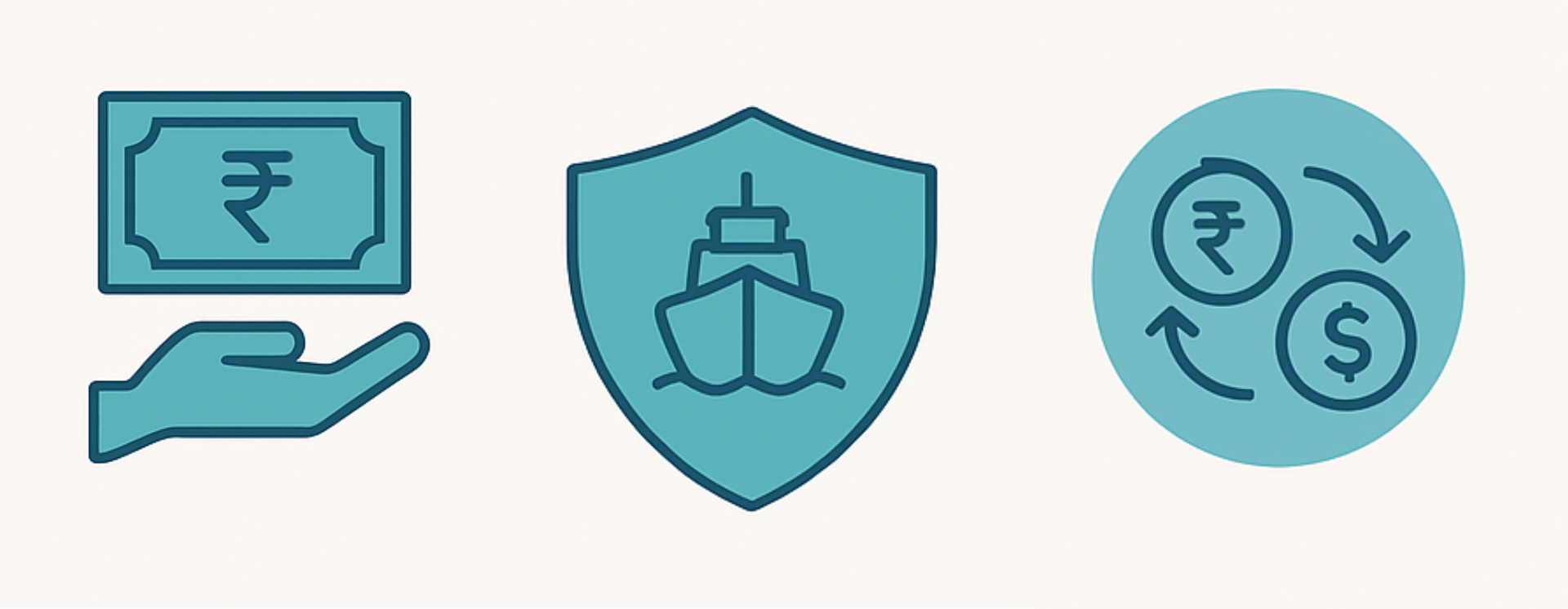
Payment & Risk Management

1. Payment Terms

  • Secure methods: LC (Letter of Credit), Advance TT, or DP (Documents against Payment).
  • Avoid full credit for first-time orders.

2. Insurance

  • Marine insurance for goods in transit.
  • Credit insurance to safeguard against buyer default.

3. Foreign Exchange

  • Monitor exchange rates (USD/Euro vs INR).
  • Hedge currency risk for large orders.
Payment and risk management
After-sales relationship building

After-Sales & Relationship Building

1. Post-Shipment Follow-Up

  • Confirm receipt and buyer satisfaction.
  • Maintain communication to secure repeat orders.

2. Feedback Loop

  • Collect buyer feedback on quality, packaging, and timelines.
  • Use insights to refine processes for future exports.

Explore More Insights

Discover more articles about fashion design, manufacturing, and industry insights.

CPSC eFiling and California SB 707: What the New 2026 Apparel Compliance Rules Mean for Your Brand
Manufacturing4 min read

CPSC eFiling and California SB 707: What the New 2026 Apparel Compliance Rules Mean for Your Brand

CPSC eFiling for apparel became mandatory on 8 July 2026, and California's SB 707 deadline passed a week before it. Neither will fine you this month, which is exactly what makes them easy to misread. Most adult clothing turns out to be exempt — and what decides it is not a lawyer, it is your fabric spec: a smooth-faced cloth at 2.6 ounces per square yard or more, or anything made entirely from acrylic, modacrylic, nylon, olefin, polyester or wool. A brushed fleece or a light rayon blouse falls outside that, and needs testing, a certificate and a filing at the border. Nothing is being rejected yet. Your filings are quietly setting a risk score that decides whose containers get held in 2027.

Krazy Kreators TeamAugust 26, 2026
0
0
Sustainable Clothing Manufacturing: How to Build an Eco-Conscious Fashion Brand
Sustainability12 min read

Sustainable Clothing Manufacturing: How to Build an Eco-Conscious Fashion Brand

From 27 September, “eco-friendly” is a claim you have to prove. A practical guide to sustainable clothing manufacturing — fabric choices, ethical sourcing, and the waste reduction that pays for itself.

Krazy Kreators TeamAugust 22, 2026
0
0
Beyond China: Why More Fashion Brands Are Sourcing From India in 2026
Manufacturing11 min read

Beyond China: Why More Fashion Brands Are Sourcing From India in 2026

Sourcing clothing manufacturing from India got materially cheaper on 24 July, and the trade data has not caught up: US apparel imports from India fell 26.4% over January to May while the whole market fell 9.3%, and the China volume went to Cambodia and Indonesia instead. Then the punitive rate expired and the new forced-labor Section 301 action put India in the lower tier. A cotton tee from India now clears at 26.5% — 16.5% general rate plus 10% — against 29% from Vietnam and 36.5% from China. On a 5,000-piece run that is $7,000 against China and $1,750 against Vietnam. But Bangladesh, Cambodia, Indonesia, Pakistan and Sri Lanka pay the same 26.5%, so the duty removed India's penalty rather than handing it an edge. What decides it now is the fibre-to-garment chain on one side, and a thin man-made-fibre base and incentive schemes with expiry dates on the other.

Krazy Kreators TeamAugust 22, 2026
0
0

Ready to Transform Your Vision Into Reality?

Let's work together to bring your fashion vision to life with our comprehensive design and manufacturing services.