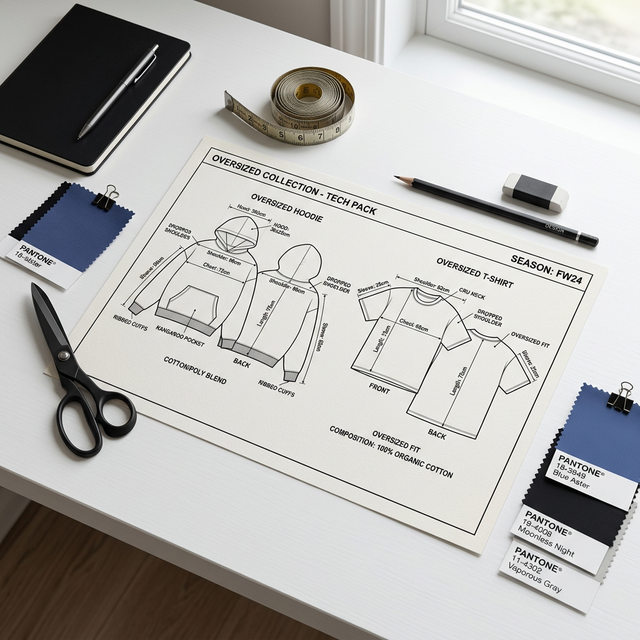
Grading vs. Pattern Making: Why Your Sample Fits Great in One Size but Not the Others
A Medium is not just a smaller Large. Here is why fit breaks across your size run and what you can do about it before your next production order.
Krazy Kreators Team
April 6, 2026
You approve a Medium sample. It looks incredible. The proportions are right, the shoulders sit clean, the hem hits exactly where you wanted it. You feel great about it.
Then the full size run shows up. The Small is too tight through the chest. The XL sleeves are somehow shorter than the Large. The XXL looks like a completely different garment. And suddenly you are staring at a bulk order where half the sizes do not work.
This is one of the most common problems we see at Krazy Kreators, and it almost always comes down to the same thing: the difference between pattern making and size grading. Most founders and first-time designers do not know there are two separate processes involved in getting a garment to fit correctly across every size. And when either one is done poorly, the entire production suffers.
This guide breaks down what each process actually does, where things tend to go wrong, and what to look for in a manufacturer who takes fit seriously.
What is Pattern Making?
Pattern making is where a garment actually begins to take physical shape. It is the process of translating your design, your sketch, your tech pack measurements into flat template pieces that can be cut from fabric and sewn together into a three-dimensional garment.
Think of it this way: every seam, every dart, every curve on a sleeve cap exists because a pattern maker decided exactly where that line should fall. The pattern determines the silhouette, the ease (how much room the fabric gives around the body), the proportions, and ultimately how the garment drapes when someone puts it on.
This is typically done for a single base size, usually a Medium or a Large depending on the brand. That one pattern becomes the foundation for everything that follows.
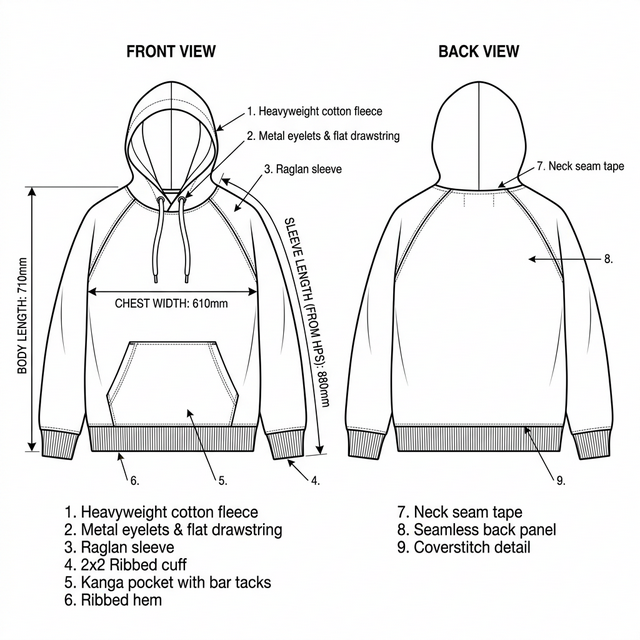
Pattern making translates your design vision into precise, cuttable template pieces
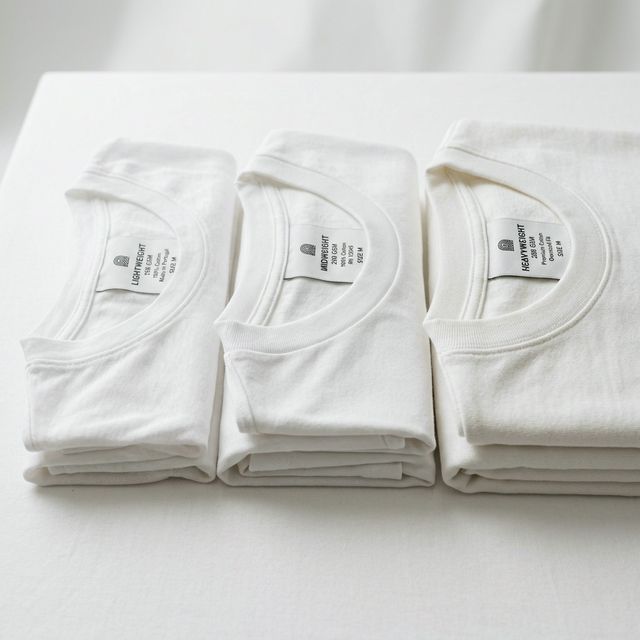
A graded nest showing how the base pattern scales proportionally across every size
What is Size Grading?
Once you have a base pattern that fits your sample size perfectly, grading is the process of scaling that pattern up and down to create every other size in your range. XS, Small, Large, XL, XXL, and everything in between.
Here is the part most people get wrong: grading is not just making the pattern bigger or smaller by a uniform amount. A human body does not scale uniformly. When someone goes from a Medium to an XL, their chest might increase by three inches but their shoulder width might only go up by one. Their torso gets longer. Their armhole deepens. The proportions shift in ways that are different for every measurement point.
Good grading accounts for all of this. It uses specific increment rules for each measurement point so that the silhouette, the design intent, and the overall proportions of the garment stay consistent no matter what size someone is wearing.
Why This Matters More Than You Think
Fit is the single biggest reason customers return clothing. Not color. Not fabric quality. Fit. And in most cases, the fit issue is not in the sample size. It shows up in the sizes that were graded from it. Here is why that happens.
Lazy Grading
Some manufacturers scale every measurement by the same percentage. The chest goes up two inches, the sleeve goes up two inches, the body length goes up two inches. That is not how bodies work. The result is larger sizes that feel boxy and shapeless, and smaller sizes that feel pinched in the wrong places.
Missing Grade Rules
Grade rules are the specific increments applied to each measurement point between sizes. Without a clear grade rule table, the person doing the grading is essentially guessing. Chest might get graded but the neckline does not. Sleeves scale up but the armhole stays the same. The garment technically gets bigger, but it does not fit bigger.
No Fit Testing Across Sizes
Many brands only test the sample size on a fit model. They approve the Medium and assume the rest will be fine. But a size that was graded without live testing often reveals issues that only show up on an actual body. Tight armpits on the XS. Dropped shoulders on the XXL. Sleeves that look right on paper but pull awkwardly in person.
Pattern Making vs. Size Grading: A Quick Comparison
| Aspect | Pattern Making | Size Grading |
|---|---|---|
| Purpose | Creates the base garment shape and silhouette | Scales the base pattern into a full size range |
| When It Happens | First, during development and sampling | After the base pattern is approved |
| Sizes Involved | One base size (usually M or L) | Entire size run (XS through XXL+) |
| Key Skill | Understanding 3D body shape from 2D flat patterns | Knowing how body proportions change across sizes |
| What Goes Wrong | Poor silhouette, bad ease, awkward seam placement | Fit breaks at extreme sizes, inconsistent proportions |
| Who Does It | Pattern maker or technical designer | Grading specialist or CAD technician |
What Good Grading Actually Looks Like
When grading is done right, you should be able to hold up any two sizes from your run side by side and immediately see that they are the same garment. Same proportions. Same design intent. Just scaled to fit a different body.
Here is what that requires behind the scenes.
The Non-Negotiables
- Custom grade rules per style: An oversized hoodie grades differently than a fitted tee. A set of generic rules across all styles will not work
- Different increments per measurement: Chest might jump 2 inches between sizes, but the neckline might only move 0.25 inches
- Armhole and sleeve balance: The sleeve cap and armhole must be graded in relation to each other or the sleeve will pull, twist, or restrict movement
- Length ratios: Body length, sleeve length, and rise should scale proportionally, not uniformly
- Fit testing on real bodies: At minimum, test the smallest, the base, and the largest size before going to bulk
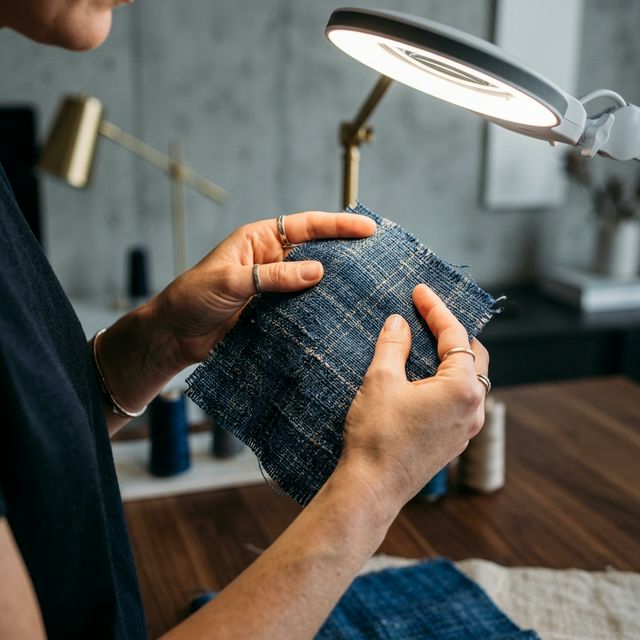
Every size should look intentional, not like a stretched or shrunken version of the sample
Mistakes We See Founders Make with Fit
These are not beginner mistakes. We see established brands run into these problems because fit is genuinely one of the hardest things to get right in garment manufacturing. But being aware of them can save you a lot of money and frustration.
Only Approving the Sample Size
Your Medium fits perfectly. Great. But you never saw the XS or the XXL before approving bulk. When those sizes arrive and the fit is off, it is too late. Always request graded samples across at least three sizes before signing off.
Assuming Grading is Automatic
Some founders think the factory just "makes it in other sizes" once the sample is approved. Grading is a separate, skilled process. If you do not discuss grade rules with your manufacturer, they are going to use whatever default they have. And that default might not match your fit intent at all.
Mixing Fit References from Different Brands
"I want the fit of Brand X in a Medium but Brand Y in an XL." This sounds reasonable, but it creates a grading nightmare. Every brand has its own grade rules, its own proportions, its own fit philosophy. Mixing references across sizes produces an inconsistent product that does not feel like one cohesive collection.
Ignoring the Spec Sheet
A graded spec sheet should list every measurement for every size in your range. If your manufacturer is not providing one, or if you are not reviewing it before bulk, you are flying blind. This document is your insurance policy for consistent fit.
What to Ask Your Manufacturer About Fit
You do not need to become a pattern making expert. But asking the right questions will immediately separate you from 90% of brands that just hand over a sketch and hope for the best.
Ask for Their Grade Rule Table
A competent manufacturer should be able to show you exactly how each measurement scales between sizes. If they cannot produce this document, that is a red flag. At Krazy Kreators, we share grade rule tables as part of every development package.
Request Fit Samples in Three Sizes
Before bulk, ask to see the base size, the smallest size, and the largest size. This gives you a real picture of how the grading holds up at the extremes. Issues are always most visible at the ends of the size range.
Clarify Your Fit Intent Early
Is your brand oversized, relaxed, or true to size? This changes everything about how the pattern is drafted and how the grading rules are set. Do not assume your manufacturer knows your fit philosophy. Spell it out in the tech pack.
Review the Graded Spec Sheet
Before production, you should receive a full graded spec sheet listing every measurement for every size. Check it against your fit intent. If the XL chest measurement does not make sense relative to the Medium, catch it now, not when 500 units land at your warehouse.
Your Customers Should Never Have to Guess Their Size
Inconsistent fit across sizes is not just a production issue. It is a brand trust issue. When a customer buys a Medium from you once and it fits perfectly, they expect the next Medium to fit the same way. And they expect the Large they buy for a friend to feel proportionally right too.
At Krazy Kreators, pattern making and grading are handled in-house by dedicated technical designers who work on your fit from the first sample through to the final graded production pattern. We do not outsource it, we do not use generic grade rules, and we do not let anything go to bulk without a full graded spec review.
You focus on the design. We make sure it fits every body it is supposed to.
Did this guide help you understand fit better?
Discussion (0)
Leave a Reply
No comments yet. Have a question about fit or grading? Ask below!