Why US Fashion Brands
Are Moving Away From China in 2026
And what that means for your next manufacturing decision
Hosted on May 9, 2026
Krazy Kreators Team
If you launched a clothing brand in 2024, you probably picked your manufacturer the way most founders did. A contact in Guangzhou. A friend who knew a sourcing agent in Yiwu. A platform that promised low MOQs out of Shenzhen. That math worked then. It does not work anymore.
Through 2025 and into 2026, the cost of importing finished apparel from China into the US has climbed in ways that have made even loyal brands open their search bar and type something like fashion manufacturing India vs China 2026. If that is roughly the search that brought you here, you are in the right place.
What follows is a plain-English breakdown of what changed, what it actually costs you, and how to think about your next production run without losing sleep over it.
What Changed Between the US and China
Through late 2024 and across 2025, the US layered new tariffs onto Chinese-made apparel. Section 301 duties expanded. The de minimis loophole that let small parcels enter duty-free was tightened. A wave of additional surcharges pushed effective import costs on many garment categories well past the 40 percent mark.
What that looks like in real numbers
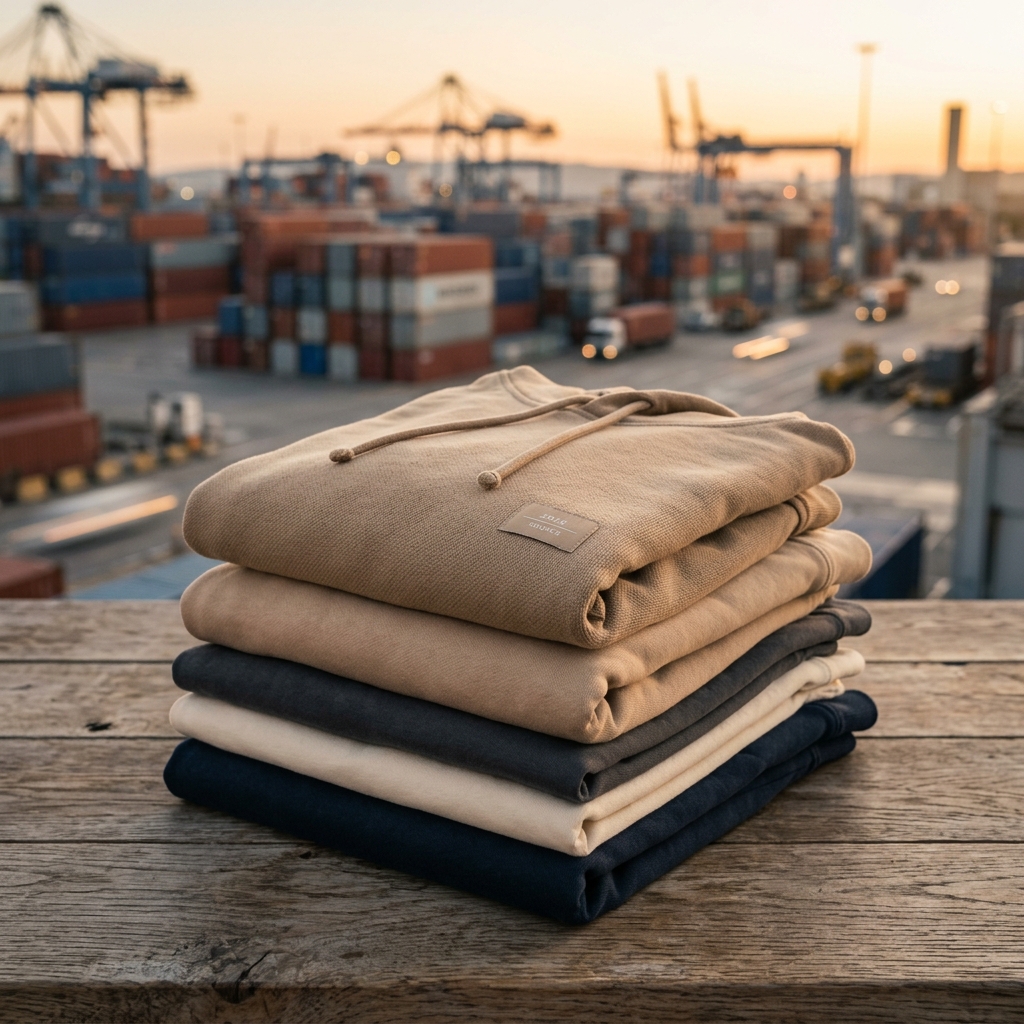
A hoodie that landed in your warehouse for $14 in 2023 may now land for $22 to $26 once duties, broker fees, and the new compliance paperwork are accounted for. Multiply that by a 500-unit drop and the math gets uncomfortable fast.
For early-stage brands running on tight margins, the difference is often the gap between a profitable launch and a sold-out collection that lost money. The brands that adjusted early did three things. They moved final assembly out of China. They restructured their cost sheets. And they quietly told their accountants what they were doing.
Why India Has Become the Most Searched Alternative
There are other options. Vietnam, Bangladesh, Turkey, Portugal, Mexico. Each one makes a case. But search data through the first half of 2026 tells a clear story.
India is the destination US founders are researching the most, and four reasons explain why.
Tariff Treatment
India is not subject to the same Section 301 surcharges that hit China. Standard duty rates apply, and the maturing India-EU FTA conversation has put India in stronger long-term standing than several alternatives.
Capacity at the Right Scale
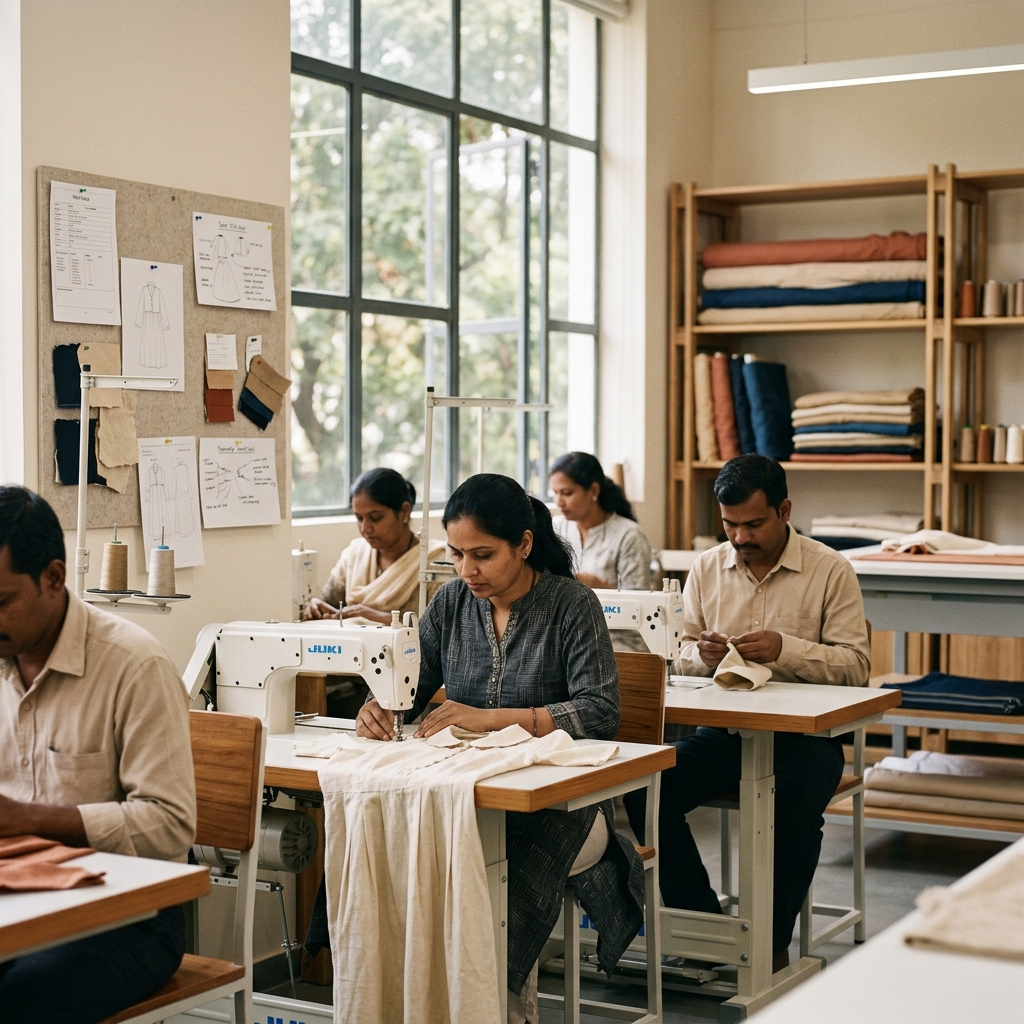
Vietnam is excellent for high-volume basics, but accessing it as a small founder is hard. Indian factories in Tirupur, Ludhiana, and the NCR are set up for the 50 to 5,000 unit range that growing US brands actually need.
English-First Communication
Tech packs, sample feedback, and contracts all happen in English without a translation layer. That alone removes a category of mistakes that costs founders weeks every season.
Technical Depth
India is one of the few countries that handles the full vertical stack. Fabric milling, dyeing, printing, hand embroidery, cut and sew, finishing, often within driving distance. You are not relying on subcontractors you have never met.
The Real Difference Between China and India
Founders ask this question all the time. The honest answer is: it depends on what you make and how you like to work. Here is a fair comparison without the marketing spin.
Quality
Chinese factories built around fast fashion are excellent at producing huge volumes of consistent, simple garments quickly. India tends to outperform when designs involve detail. Embroidery. Custom prints. Garment dyeing. Mixed fabrics. If your brand identity leans on craft, India is usually the stronger choice.
Cost
The headline price in China is sometimes lower. The landed cost in 2026, after tariffs and duty, rarely is. For most US brands, the all-in cost from India now matches or beats China for orders under a few thousand units.
Communication
This is the silent killer. Most production failures trace back to a tech pack misread, a fabric substitution that was never approved, or feedback that took ten days to make it through three middlemen. India removes most of those friction points by default.
Speed
China still has the edge on raw turnaround for very large orders of basics. For smaller, design-led runs, India is competitive and often faster because you are not waiting on Chinese New Year shutdowns or shipping delays out of crowded ports.
What to Look For in an India-Based Manufacturing Partner
Switching countries is not the same as switching factories. You are inheriting a new supply chain, new compliance norms, and a new operating rhythm. Before you sign anything, look for these five things.
A real sampling process
Any partner you work with should commit to a fit sample, a pre-production sample, and a top-of-production sample. If they want to skip straight to bulk after one round, walk away.
Vertical capability or a tight network
You want someone who controls the fabric, trims, printing, and stitching, or who has trusted partners for each. Chains of unfamiliar subcontractors are how things go wrong.
A single point of contact
Not an inbox. Not a WhatsApp group with seven people in it. One project manager who owns your account and answers within a working day.
Transparent pricing
Cost sheets that show fabric, trims, labor, and overhead separately. If you only see one final number, you cannot negotiate intelligently or plan a second order.
Compliance documentation
Your buyers in 2026 will ask. EU shipments increasingly require Digital Product Passport readiness. US wholesale partners are asking for SA8000 or BSCI audit reports. Confirm your partner can produce these.
Five Questions to Ask Before Switching Production to a New Country
Print these out before your next sourcing call.
- 01.
What is your minimum order quantity per style and per color, and is that flexible for a first-time order?
- 02.
Who is the dedicated project manager assigned to my account, and how do I reach them outside business hours?
- 03.
Can you walk me through every step from tech pack receipt to shipment, with realistic timelines?
- 04.
What happens if a sample fails approval. Who absorbs the cost and the time?
- 05.
Can you share three references from US brands at my volume that I can call directly?
If a manufacturer cannot answer any of these clearly, that is your answer.
How Krazy Kreators Supports US Brands Through the Transition
Switching countries is the part most founders dread. Not because the destination is wrong, but because the move itself feels risky. We have helped US brands rebuild their supply chain in India end to end, and the way we structure the transition is designed to take that risk off your plate.
One Dedicated Project Manager
Tech packs, samples, fabric approvals, and production updates all run through one person who answers in your time zone.
Zero MOQ on First Orders
Test a small run before committing to volume. No pressure to over-order on a market you are still validating.
Full Vertical Coverage
Fabric sourcing through finishing under one roof. You do not coordinate between a milling factory, a print shop, and a stitching unit yourself.
Most of the founders we onboard tell us the same thing about three weeks in. It is the first time they have actually been able to focus on their brand instead of chasing factory updates.
The Bottom Line
The 2025 tariff shift was not a temporary spike. It is the new structural reality of sourcing apparel for the US market.
Brands that move thoughtfully now will spend the second half of 2026 building product and marketing campaigns. Brands that wait will spend it doing the same research everyone else is doing, six months later and with less leverage. If you are weighing the move, the most important thing you can do this week is talk to a partner who has actually run the transition for brands like yours. The math is rarely as scary as it looks once you see it on a real cost sheet.
Switching Your Production Partner?
Krazy Kreators manages the entire transition. Zero minimum order. One dedicated project manager. Book a free consultation and we will map out the move based on your real cost sheet.
No comments yet
Be the first to share your thoughts!