
Zero MOQ. No Warehouse.
No Factory Contract.
The 2026 Playbook for Launching Your First Clothing Brand
Published on April 21, 2026
Krazy Kreators Team
The Scenario: You have had the idea for a clothing brand for years. You know your aesthetic. You have a name, a logo, and a clear sense of who you are designing for. What has been holding you back is not a lack of vision. It is the fear of a $15,000 minimum order, a warehouse lease you cannot afford, and a factory contract you do not fully understand.
That fear used to be completely reasonable. As recently as five years ago, launching a clothing brand meant either having significant startup capital or having a connection inside the industry. Neither of those things was easy to come by.
In 2026, it is a different game. The barriers that once kept independent founders on the sidelines have been systematically dismantled by a new generation of flexible production partners. You no longer need a minimum order to start. You no longer need a warehouse to store inventory. And you absolutely do not need to sign a long-term factory contract before you have sold a single unit. Here is the playbook.
Why the Old Rules No Longer Apply
Traditional manufacturing was built for scale — and scale alone. The economics of running a factory made sense only when orders came in the thousands. Setup costs for machinery, dye lots, and labor had to be spread across the maximum number of units possible.
The Shift That Changed Everything
The rise of flexible micro-manufacturing, combined with advances in digital patterning and on-demand dyeing, means that production partners today can profitably run orders of 30, 20, or even a single sample. The infrastructure finally caught up with the demand.
The result is that first-time founders in the USA and Europe no longer need to take a financial leap of faith to test whether their brand idea has legs. They can test it with one piece.
The Three-Step Model
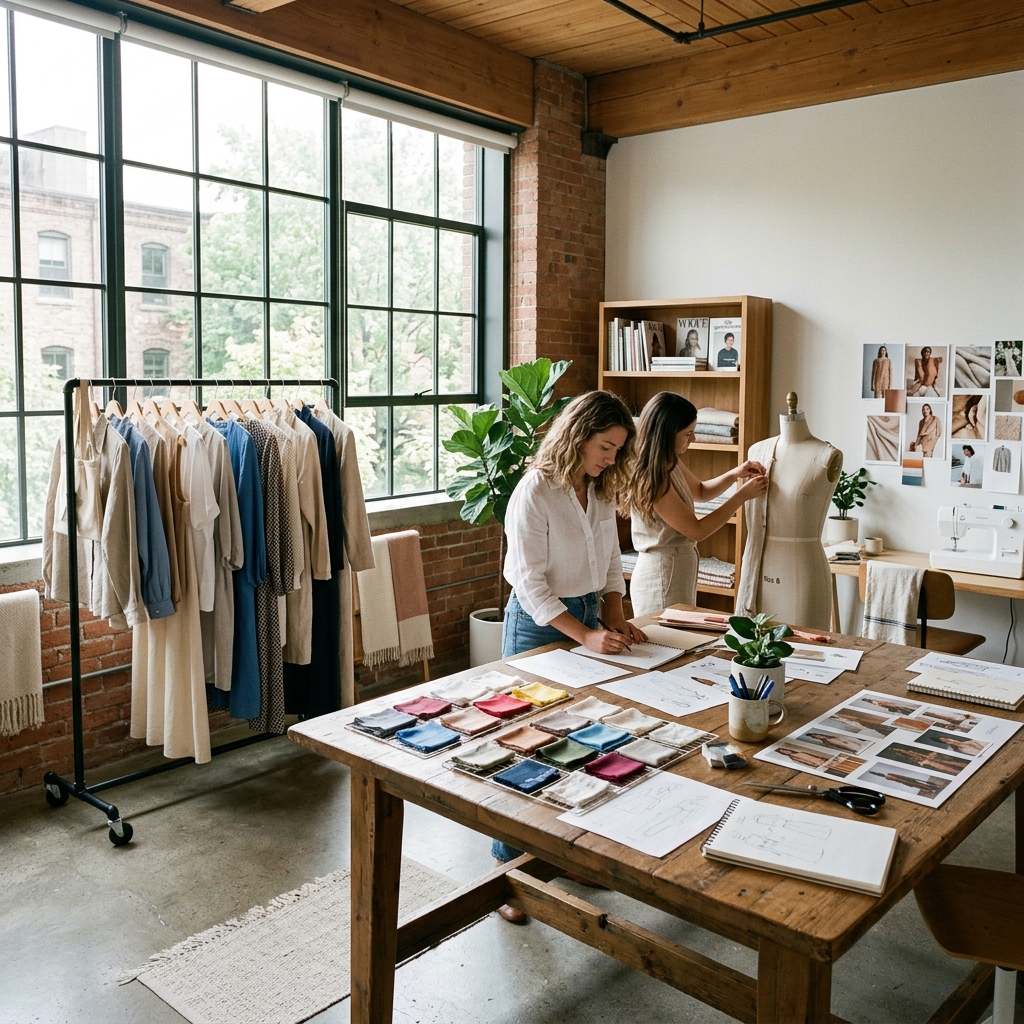
Start small. De-risk everything. Scale only when the market confirms it.
Start with a Tech Pack
Before a single piece of thread is moved, your idea needs to be documented. A tech pack is the blueprint of your garment — a detailed document that specifies every measurable aspect of your design: silhouette, measurements per size, fabric composition, GSM weight, stitch type, print placement, hardware specs, and label requirements.
Without a tech pack, every conversation with a manufacturer is vague, every quote is unreliable, and every sample you receive is a gamble. The tech pack is the single document that transforms your creative idea into something a factory can actually build. Think of it as the architectural drawing before the construction begins.
Pro Tip
At Krazy Kreators, we offer full tech pack development as part of our onboarding process. You do not need prior technical design experience to work with us. We translate your vision, references, and sketches into a factory-ready specification document.
Order One Sample
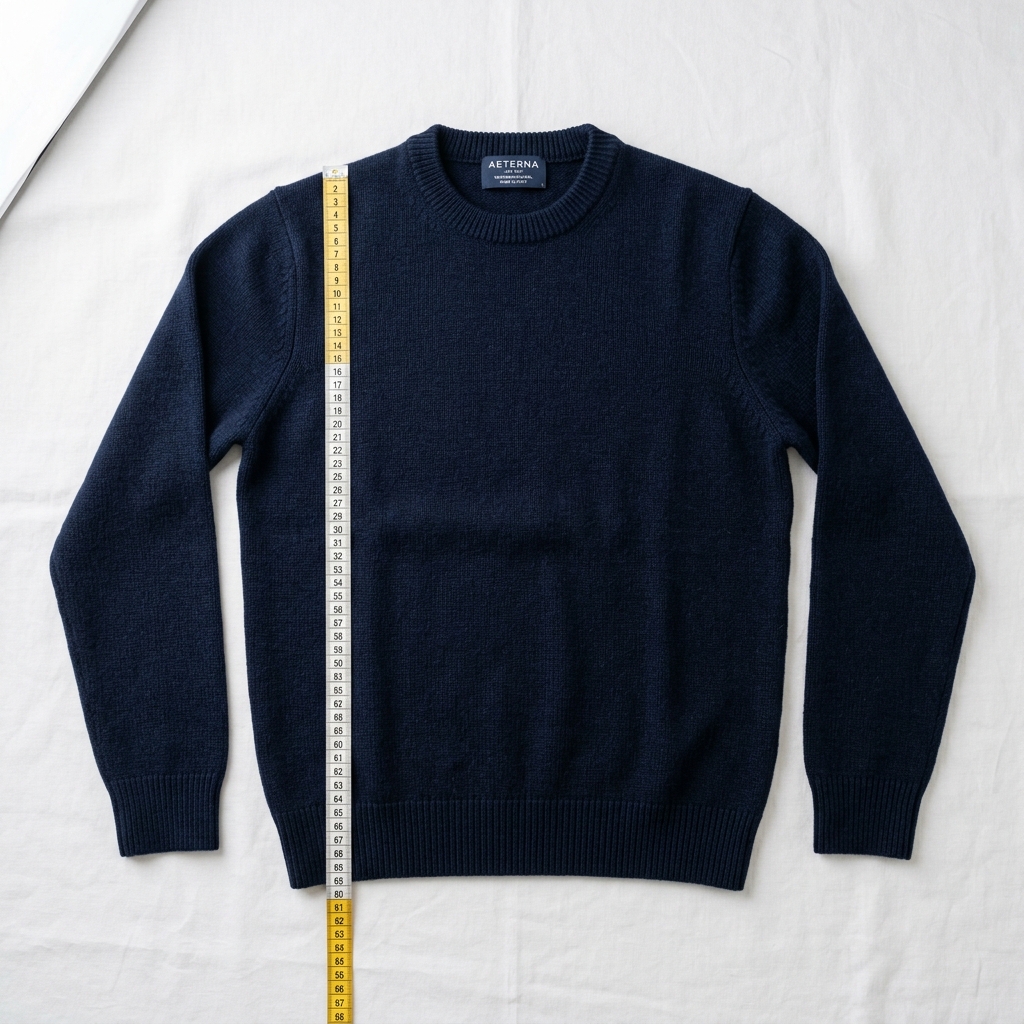
Once your tech pack is complete, you order a single sample. That is it. One physical garment, built exactly to your specifications, shipped directly to your door. No minimum quantities. No bulk fabric commitment. No warehouse deposit.
You try it on, photograph it, test the drape and the stitch quality, and decide whether it represents your brand the way you envisioned. If something needs adjusting — maybe the collar sits slightly differently than you imagined, or the pocket placement feels off — you give that feedback and we revise. You receive a corrected sample before any commitment to scale is even on the table.
Move to Production Only When You Are Ready
Here is where the model fundamentally changes the risk equation. You do not commit to bulk production until you are satisfied with the sample and confident in the demand. Some founders use that approved sample to run pre-orders. Others use it to pitch stockists. Some simply post it on social media to see how people respond before placing a single bulk order.
When you are ready to go into production, our flexible minimum order quantity model means you can start with a run as small as 30 to 50 pieces. There is no requirement to commit to 500 units of a design you have not yet proven sells.
What About Warehousing?
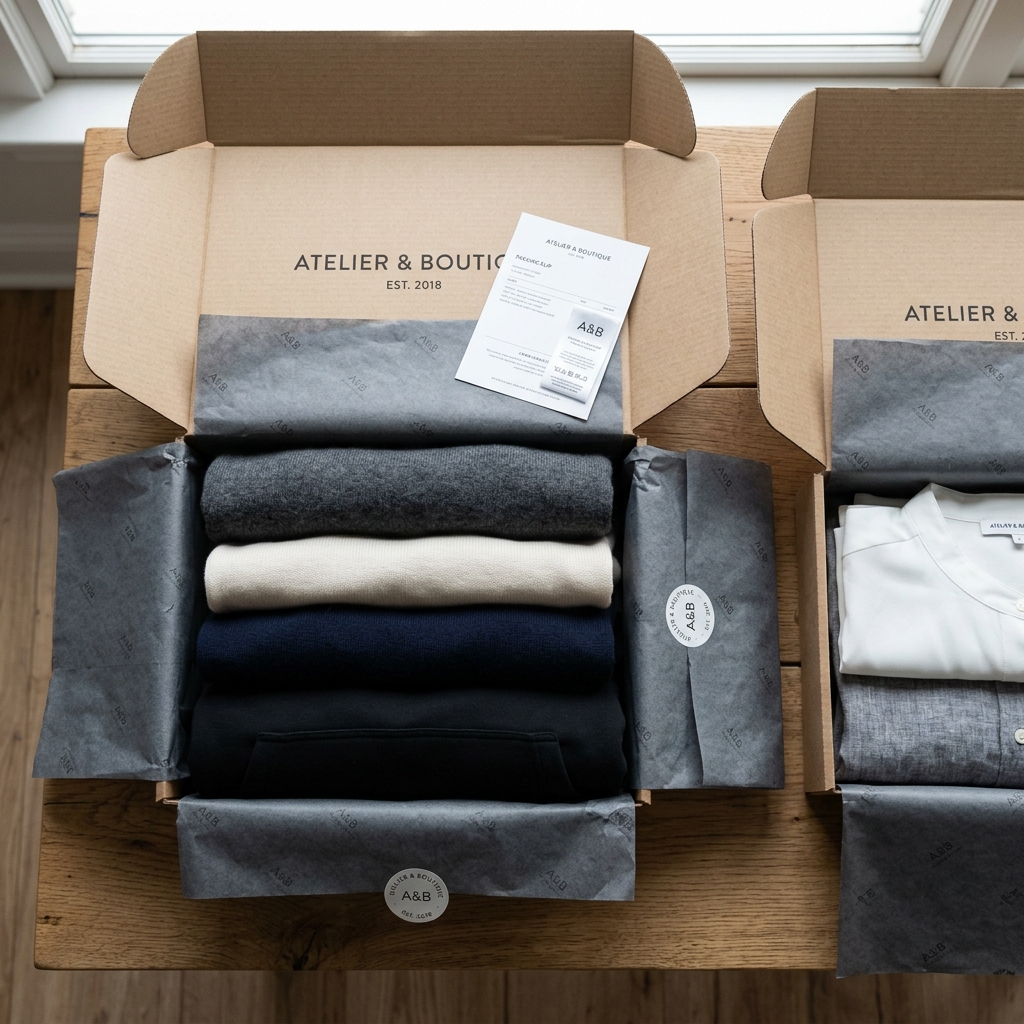
One of the most overlooked cost centers for a new clothing brand is physical storage. A warehouse lease is a fixed commitment that does not care whether you are having a great month or a slow one.
Ship Direct to You
For small initial runs, we ship production directly to your home or studio. No warehouse needed when your first drop is 50 pieces.
Use 3PL When You Scale
As your volumes grow, third-party logistics providers offer flexible, pay-per-unit warehousing and fulfillment — no long-term lease required.
Pre-Order First, Store Later
Many founders use their approved sample to collect pre-orders before going into production. When you sell before you produce, you never have unsold inventory sitting in a warehouse at all.
No Factory Contract. No Long-Term Lock-In.
A factory contract sounds like a formality. In practice, it is often a trap for a brand that is still finding its footing.
What Traditional Contracts Demand
Many factories require founders to commit to a minimum number of orders per season, pay non-refundable tooling fees, or lock in exclusivity clauses. Once signed, you are committed — regardless of whether your first collection sold out or sat unsold.
The Krazy Kreators Model
We work on a project-by-project basis. Your first sample does not obligate you to a bulk order. Your first bulk order does not lock you into a seasonal commitment. You grow at the pace the market dictates, not the pace a contract demands.
Who This Model Is Built For
This is not a model for brands that already have $100,000 in startup capital and retail distribution lined up. This is for everyone else.
The Creative With a Vision
You have designs ready and a strong sense of your brand identity. What you lack is the capital and industry contacts to bring it to life at scale. This model lets you start with what you have.
The Content Creator Going Physical
You have an audience that trusts your taste. Launching a physical product feels risky because you have never manufactured before. A single sample gives you content and proof of concept without the financial exposure.
The Side-Project Founder
You have a full-time job and are building something on the side. You cannot afford to risk your savings on an unproven idea. This model lets you validate the concept before you commit a dollar to bulk production.
The Takeaway
The question is no longer whether you can afford to start a clothing brand. The question is whether you are willing to take the first step.
A tech pack costs a fraction of a bulk order. A sample costs a fraction of a production run. And both together give you something no amount of planning or research can replace — a real, physical product you can hold, photograph, test, and sell. The founders who win in 2026 are not the ones with the largest budgets. They are the ones who started earlier, iterated faster, and scaled only what the market already proved it wanted.
Ready to Build Your Brand — Without the Guesswork?
Start with a tech pack. Order one sample. Move to production only when you are ready. No MOQ, no warehouse, no factory contract — just a clear path from idea to finished garment. We have helped founders across the USA and Europe take their first step. Let us help you take yours.
No comments yet
Be the first to share your thoughts!