Why 80–90% of US Clothing Brands
Fail in 5 Years
The failure is almost never creative. It is four operational decisions made in the first 90 days.
Hosted on May 26, 2026
Krazy Kreators Team
Between 80 and 90 percent of new US clothing brands fail by year five. The One Fourth data is widely cited and rarely interrogated.
The story most founders tell themselves about that data is that the failure was creative. The product wasn't right. The aesthetic didn't land. The market shifted underneath them. A bigger brand happened to launch the same idea three months earlier. That story is almost never true.
The failure is operational. And not in some abstract "execution beats ideas" sense. In a much more specific one: four decisions, all made in the first ninety days, all before a single garment ships, account for most of the closures. None of them are creative failures. All of them are visible at the time they happen, to anyone willing to look. This is the operational map of where US clothing brands actually die — what the four mistakes are, how they compound, and what the surviving ten to twenty percent did differently.
Wrong Manufacturer
The pattern is consistent across the founders who do not make it to year three. Pick a manufacturer on price. The factory turns out to be cheap, slow, or unaccountable — usually all three.
The first sample takes six weeks instead of three. The bulk order ships late, then ships defective. The founder spends the next four months chasing the factory by email, by WhatsApp, by escalation, and through a relationship that was never built to absorb that level of accountability in the first place.
The cost is not the cheap unit price.
It is the season-long delays that destroy the launch calendar. Bulk orders that cannot be sold at full margin because the product was already discounted by the time it shipped. Founder time consumed entirely by factory management when it should be on brand-building.
The harder part: this mistake is highly visible before signing. The signal is in the sourcing conversation itself. A factory that takes four days to respond to a sourcing inquiry will take six days to respond to a production crisis. A factory that will not share its AQL standards is a factory whose QC standards are negotiable. A factory that will not connect you with two comparable-size brand references is a factory that knows those brands would not recommend it.
A founder who treats the manufacturer-selection conversation like a vendor pitch instead of a long partnership audit pays for that compression later, at a multiple. The full cost of getting this one wrong is its own piece.
Wrong MOQ Math

The pattern is simpler. The factory's minimum order quantity is 5,000 units. The brand needs 500.
The founder runs the math, decides 5,000 units is "fine because it lowers the per-unit cost," signs the PO, and ships the first collection into a warehouse. Eight months later, the brand has sold 700 units. The other 4,300 are tying up the capital that was supposed to fund the next collection. The brand has no runway, and the next collection has no money, and the cycle ends.
The math is more brutal than that summary makes it sound. If the brand sells 500 units at $150 each in eight months, that is $75,000 in revenue against a production cost that was probably $200,000 to $250,000 for the full 5,000-unit run. The "lower per-unit cost" looks like savings on paper. It is a forty-percent capital sink in practice.
The fix is structural, not tactical. The brand does not need to negotiate the factory's minimum down. It needs a manufacturing partner whose model accommodates small-batch from the start. The brands that built around small-batch from the first run are the ones still operating in year five — the Zero MOQ playbook is what that looks like operationally. Founders who interpret "MOQ is just how the industry works" as fact have already made the mistake. It is no longer how the industry works. It is how a specific tier of factories still works.
Wrong Sampling Cycle
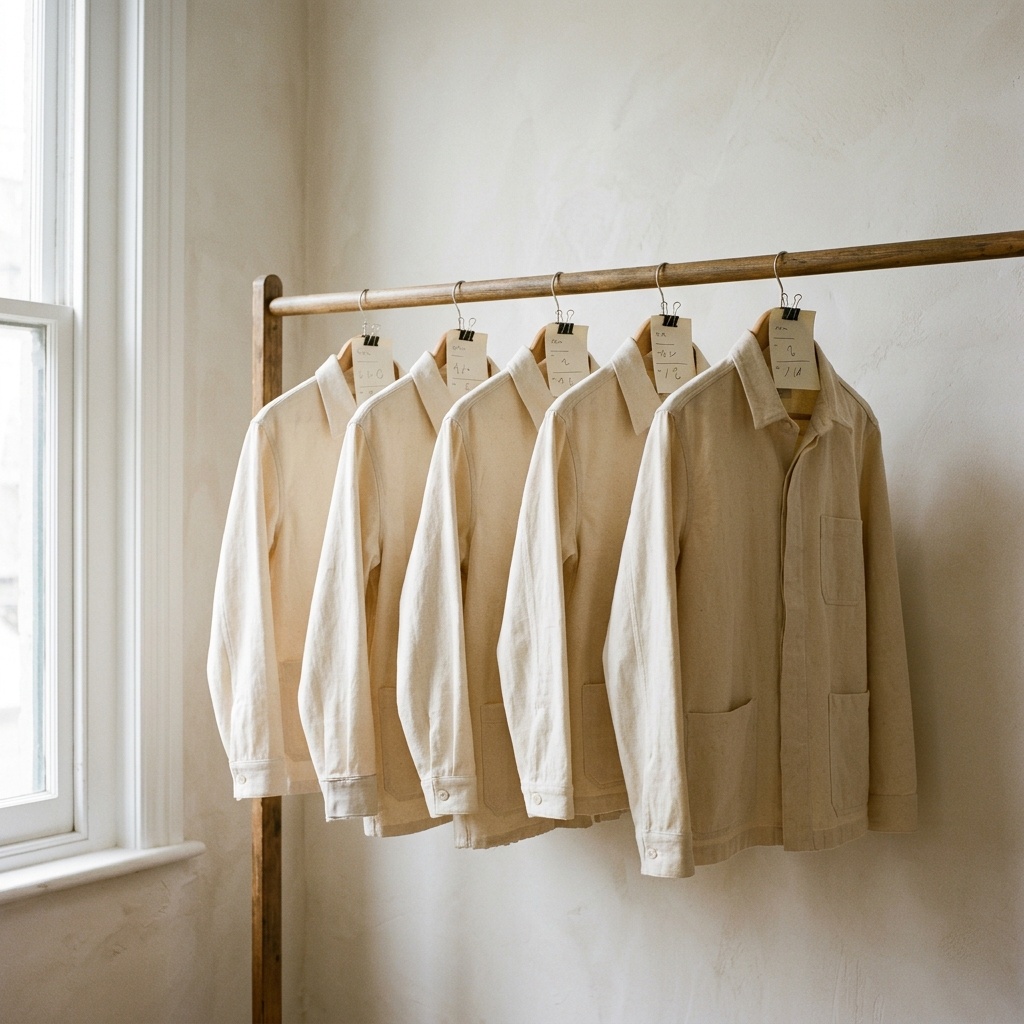
The pattern shows up in the calendar.
A brand that should take two sample iterations to get to production-ready takes five. Each iteration burns one to three weeks of calendar time, depending on shipping, fabric availability, and the factory's queue. Five iterations instead of two is, conservatively, eight extra weeks. Eight weeks is the difference between launching with a season and missing it.
The cost is rarely visible in the moment because each individual iteration feels reasonable. "We just need to revise the placket." "The fabric weight is a touch off." "Let's tweak the rib at the cuff." Every revision is justifiable in isolation. The aggregate is a launch date that slips by two months, a marketing campaign that gets spent on product that is not on the shelf, and a brand that runs out of attention before the product is ready.
The fix is upstream. A partner that reads the tech pack the first time, asks the questions that prevent the second and third iteration upfront, and ships the second sample close to production-ready is solving a calendar problem before it becomes a cash problem. The number of sample iterations a brand needs in its first season is a clean diagnostic for whether the manufacturing relationship is going to survive year two. Two samples is healthy. Three is acceptable. Five is the failure mode in motion.
Wrong Fabric Sourcing
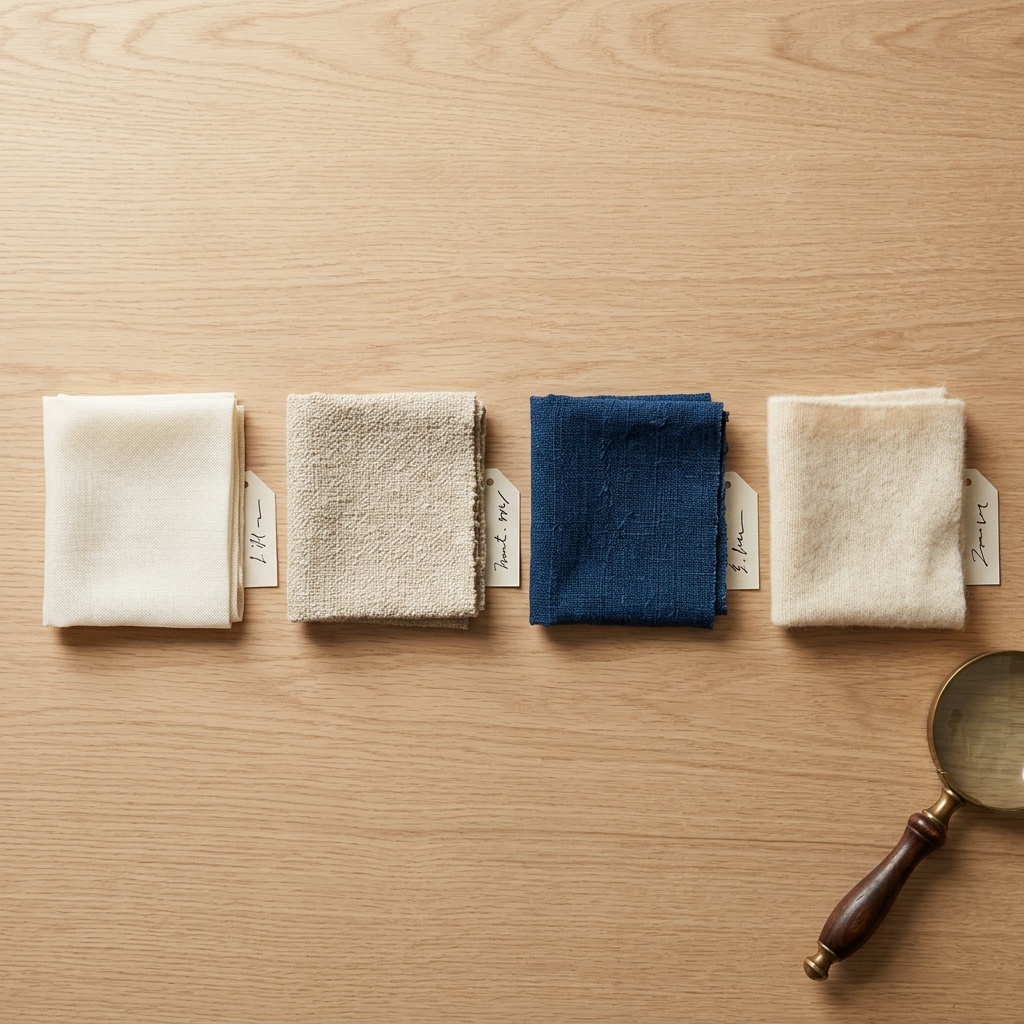
The pattern is the most expensive of the four because it does not show up as a single failure event. It shows up as a slow erosion of every other metric.
The brand prices the product into the premium band — somewhere between $150 and $400 per piece — but the fabric was sourced on a procurement basis. Generic mill, no name on the product page, no story the customer can repeat. The garment arrives. The customer can feel the gap between the price and the hand. The return rate climbs. The reviews soften from "love it" to "fine for the price." Repeat purchase rates drop. Customer acquisition cost, which was already expensive, effectively doubles because retention is no longer absorbing the spend.
This is the mistake that founders almost always misdiagnose as a marketing problem. "The brand needs better positioning. The campaign isn't landing. The audience isn't right." None of that is true. The product is undermining the brand on first touch, every time.
The fix is to treat fabric as a positioning lever, not a procurement decision. Name the mill on the product page. Source from suppliers whose hand actually matches the price point the brand is asking the customer to pay. Specify yarn count, weave structure, and finish on the spec sheet the way a wine list specifies vintage. The brands that win the premium contemporary band in 2026 are the brands whose fabric story is on the product page in the first paragraph, not under "details."
The Common Thread
All four mistakes share a single feature.
They are all decisions made in the first ninety days, before a single garment ships. They are pre-product. They are pre-launch. They are pre-the-moment-the-founder-thinks-the-real-work-starts. By the time the first collection is in the field, the four decisions have already been made, and the brand's chances of being in business in year five have been substantially set.
This is the part of the failure rate that the lazy creative narrative misses entirely. The brands that fail are not the ones with bad ideas. The brands that fail are the ones who protected a creative idea from operational scrutiny in the months when scrutiny would have been free. The brands that survive year five are not the most original. They are the ones who got the manufacturer right, the MOQ math right, the sampling cycle right, and the fabric story right, before the brand had a single follower. A founder who treats year-one operations as something to figure out after launch is a founder writing year-five's obituary in advance.
Operational Discipline, Not Originality
The ten-to-twenty percent of US clothing brands that survive year five share a pattern. Operational discipline in the first ninety days. None of the four mistakes above, or at most one of them caught early enough to course-correct without burning the cash runway.
The brands that fail share the opposite pattern. A creative idea protected from operational scrutiny long enough to become the entire brand. By the time the operational reality lands, the brand is too late to absorb the correction. See how this looks on the production side of brands that crossed year five.
Build to Survive Year Five
US founders building to survive year five — partner with Krazy Kreators in the first ninety days. We take the operational risk off the table before your product ships.
No comments yet
Be the first to share your thoughts!