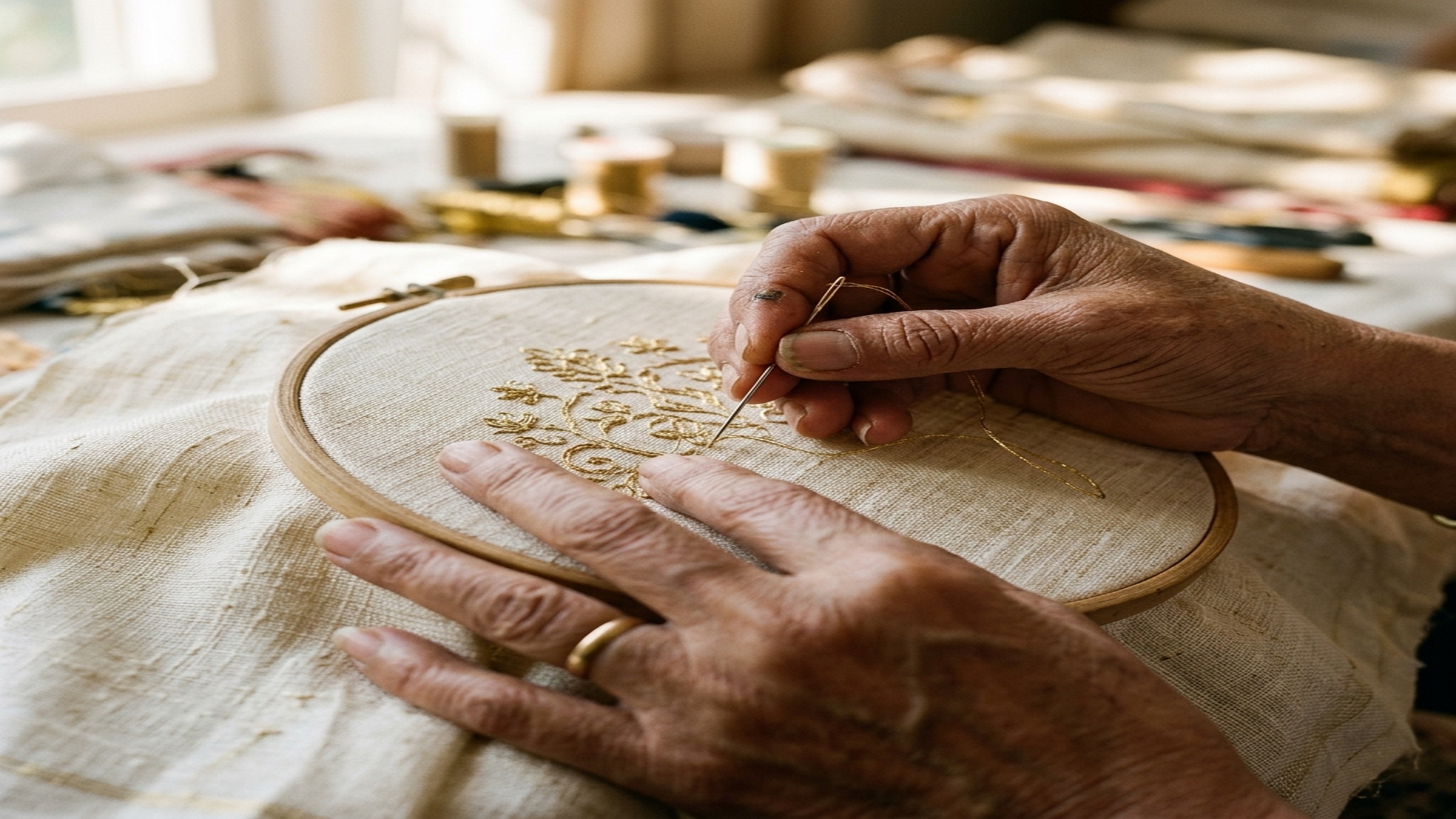
The ‘Made in India’ Trend
Reshaping American Luxury in 2026
The reframe is from cost to craft. The window is open for one year.
Hosted on May 22, 2026
Krazy Kreators Team
Prada announced a Made-in-India Kolhapuri chappal collection for fall 2026. Harry Styles wore hand-embroidered Harago, a small menswear label out of Jaipur, in public this spring. Sabyasachi is opening more flagship doors this year than any single luxury house. India's domestic luxury fashion market is on track to clear $2.12 billion by 2028.
These are not isolated stories. They are a pattern. And for US clothing founders, the pattern is happening in real time.
For most of the last twenty years, "Made in India" meant cost. In 2026 it means craft. The capability — hand embroidery, complex construction, premium fabric sourcing — was always there. It was just unbranded. The brands that name it openly in the next twelve months will own the next decade of premium India-coded positioning. The ones who wait will compete for spillover. This is what changed, why it is not reversing, and how to position around it.
What "Made in India" Actually Means Now
For roughly two decades, the phrase "Made in India" lived in the same sentence as terms like "low cost" and "high volume."
That framing came from a specific era of fashion sourcing — the early 2000s rush to find cheaper alternatives to a maturing Chinese supply chain. India absorbed that demand at the low end of the spectrum. The capability at the high end — the workshops doing hand-finished couture for Paris and Milan houses, the ateliers running zari and chikankari for European maisons under non-disclosure — never went anywhere. It was simply never named on the product page.
Three converging moves.
First, the European luxury houses started naming Indian craft openly. Prada's Kolhapuri collection is not a one-off; it is the loudest signal of a multi-year shift where craft attribution has become a marketing asset. Second, a generation of India-rooted founders — Sabyasachi, Manish Malhotra, Anita Dongre, the Harago team — has built global retail without code-switching the origin. Third, the customer at the top of the market has caught up. India-coded craft, named and visible, reads as desirable in 2026 in a way it simply did not five years ago.
The reframe is not a marketing fad. It is the same shift that happened to Japanese denim in the 2000s and Portuguese knitwear in the 2010s. The underlying capability existed in both cases for decades. The repositioning was what unlocked the premium. For India, that repositioning is the story of 2026.
The Capability Map
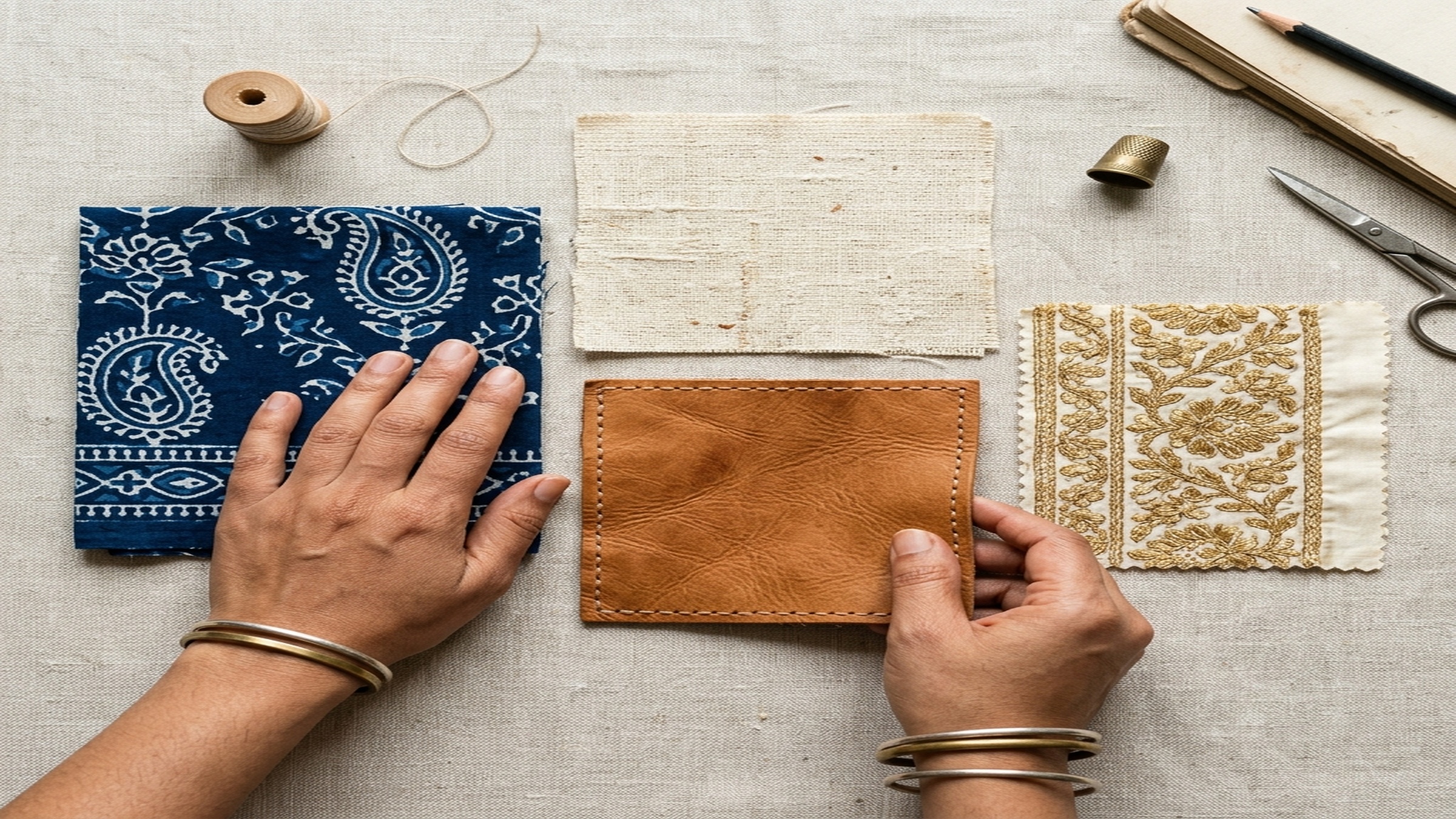
Strip the trend layer and look at what India actually does best, at a level that is hard to replicate inside any other sourcing geography at small-batch volumes.
Hand embroidery
Chikankari, zari, threadwork. Ateliers in Lucknow and Mumbai run hand embroidery at a level European mills can no longer staff for. A single chikankari panel can run two to three weeks of artisan work. The technique reads in a single product image; the customer does not need a video to understand the value.
Block printing and natural dyeing
Bagru and Jaipur house multi-generation block-printing workshops. The carved wooden blocks, the hand-mixed indigo, the layered registration — every step is visibly different from a digital print. The aesthetic is also distinct enough that it can carry the entire product story.
Hand-finished leather
Kolhapuri is the obvious anchor, but the broader tradition of hand-burnished, vegetable-tanned leather extends across Tamil Nadu and Rajasthan. Prada's announcement is downstream of capability that has been quietly servicing Italian leather goods houses for years.
Complex construction at small batch
Gussets, plackets, hand-rolled hems, hand-bound buttonholes, French seams. Indian ateliers can hold this kind of construction on small runs — 50 to 200 pieces — where many large factories cannot.
Premium fabric weaving
Handwoven khadi, raw silk, fine mulmul cotton. The mills around Varanasi, Maheshwar, and Bhagalpur produce yardage with named provenance and identifiable weave structure — the kind of fabric you can name on a product page the way a wine is named on a menu.
None of these are speculative. All five are operating capabilities that can be plugged into a US-bound product line within a single development cycle, with the right partner — the kind of partner most US founders find after they stop trying to compete on Vietnam pricing and start moving sourcing decisions out of China.
The Tariff Math
Pure cost is no longer the right frame, but the math should still close.
For craft-intensive categories at small-batch volumes, India's tariff-adjusted landed cost is competitive with Vietnam and beats China on quality at the same price point. The 2026 US tariff picture has reshuffled the deck. Where China-sourced apparel now carries duty rates that push small-batch landed cost well above where it sat in 2022, India has remained inside a workable band for product where the per-unit margin is set by craft rather than commodity weave.
The math is not "save money by switching to India." The math is "pay roughly what you would pay for a high-end Vietnam run, and get the hand-finishing your brand needs to defend a premium price." For a brand pricing into the $200 to $600 per-unit retail band — the band where most contemporary US labels live — the difference shows up entirely in what the customer sees and feels in the garment. That is the only argument that closes.
How US Founders Should Position
Three rules. Treat them as product-page architecture, not marketing tone.
- 01.
Name it openly in the first paragraph.
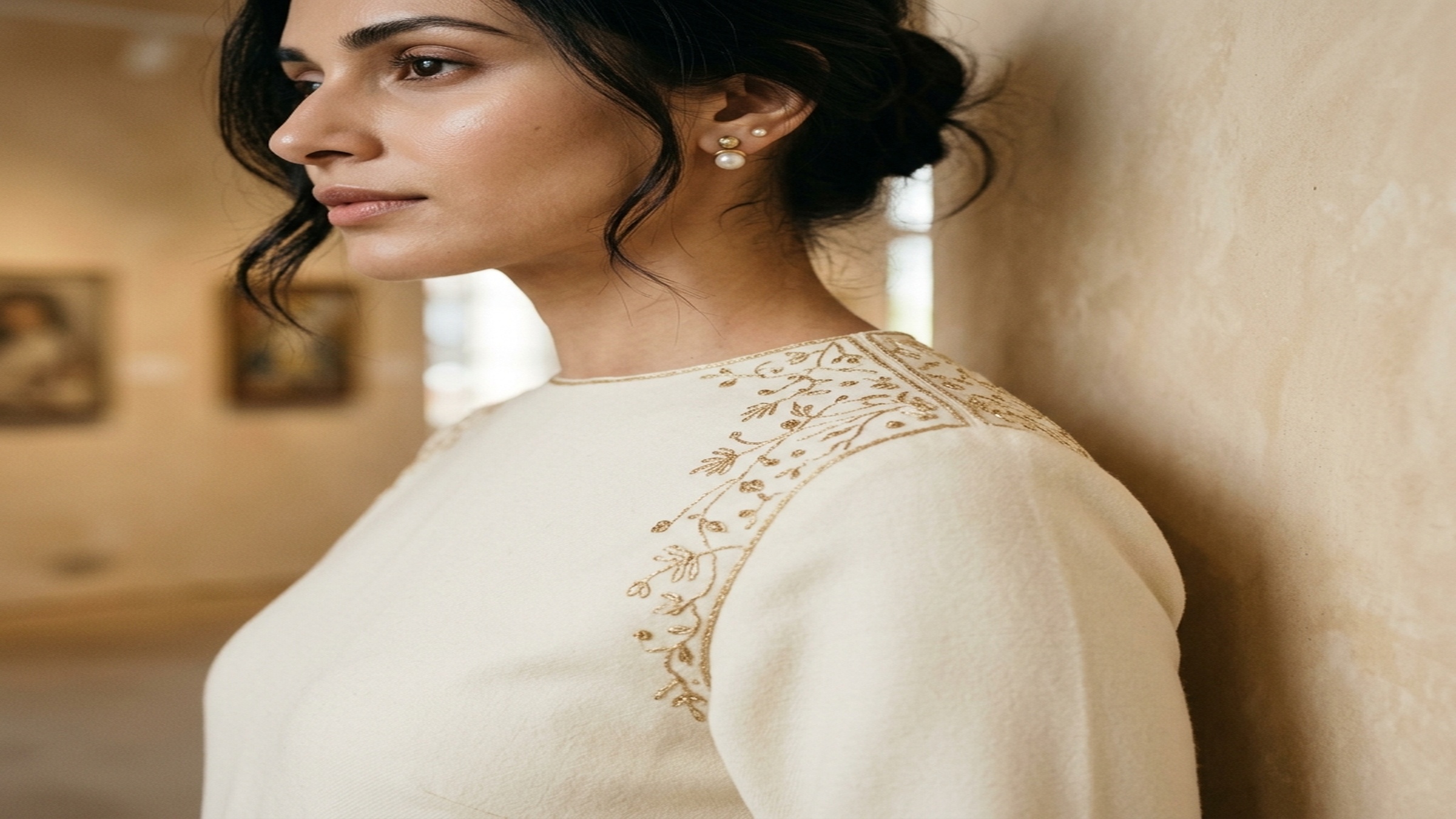
Not under "Details." Not behind "See more." The first paragraph of the product page should name the country, the region, and the technique. "Hand-embroidered in Lucknow." "Block-printed in Bagru." "Hand-finished in Kolhapur." Specificity is what reads as authentic in 2026; vague "imported" or "globally sourced" language reads as evasive, and the customer can tell.
- 02.
Lead with craft, not cost.
The framing on the product page should never imply that India is where the brand goes to save money. The framing should be the framing the European houses use: India is where this technique is done at the highest level, by people who have been doing it for generations, on equipment and with materials that cannot be reproduced anywhere else. Cost is a private operational fact. Craft is the product story.
- 03.
Use city or region anchors, not country labels.
"Made in India" is the starting point. The version that converts is more specific. "Hand-loomed in Maheshwar." "Zari work from a Lucknow atelier." Cities and regions activate the craft tradition; the country label by itself reads generic. The brands doing this well are already at the city level, and the customer rewards them for it.
What NOT to Do
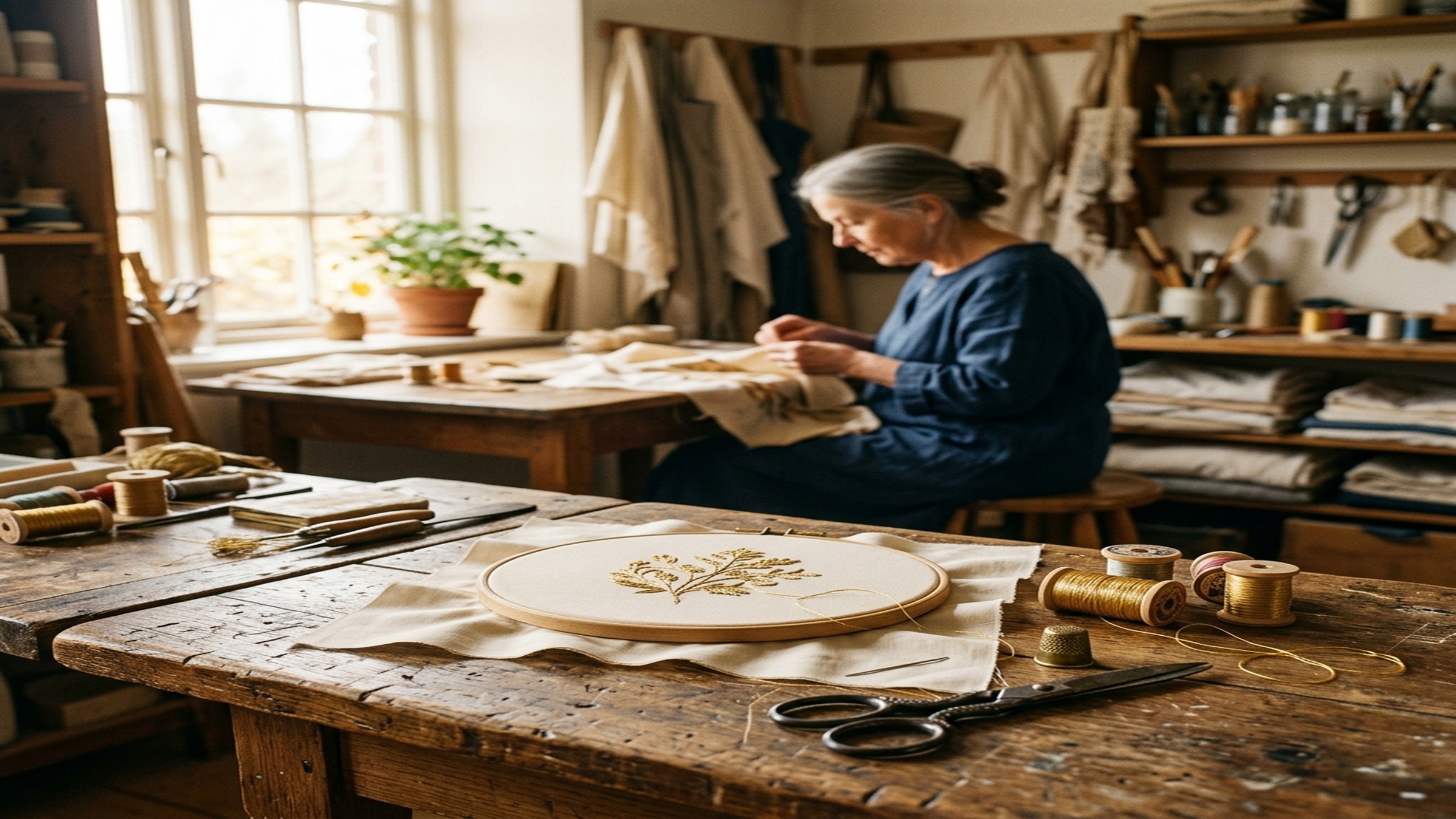
The downside of a cultural moment opening up is that brands without the actual sourcing relationship try to ride the aesthetic. The customer notices.
Don't appropriate the aesthetic.
Block prints designed in a US studio, manufactured in a Chinese commodity factory, marketed with vague "inspired by India" language — this combination breaks in 2026. The customer paying attention to Prada and Sabyasachi is the customer who can spot the gap between marketing and product.
Don't bury the origin.
Putting a "Made in India" tag inside the garment but writing "imported" on the product page is the worst of both worlds — you lose the positioning lever without gaining anything in return. Either commit to the origin as a brand asset or do not put your product in this category.
Don't use "imported" language.
In 2026, that word reads as evasive. The brands moving into the premium India-coded segment are saying exactly where, exactly who, and exactly how. Anything less reads as a brand trying to obscure the answer.
This is not a tone preference. The customer in this segment is doing more product diligence than any cohort the apparel industry has ever sold to.
The Window
The cultural moment is open right now. The brands moving in 2026 will own the premium India-coded positioning for the next decade. The brands waiting will compete for spillover.
The pattern is identical to two previous shifts. Japanese denim repositioned in the early 2000s; the brands that named the mill, the loom, and the indigo dye process in that window built defensible premium positions that have held for twenty years. Portuguese knitwear repositioned in the 2010s; the contemporary brands that named the Vila Nova de Gaia mills in their first three years of operation have outperformed brands that quietly sourced from the same mills without naming them. The repositioning was where the premium lived.
India is in the same moment, larger in scale. The brands that name the city, the technique, and the workshop tradition openly in the next twelve months are the brands that will sit on top of the category in 2030. Building this kind of supply chain is also the kind of decision that pairs naturally with on-demand production, where small-batch craft runs are the unit of operation rather than the exception.
The Closing Move
Prada did not pioneer the craft. The Kolhapuri tradition is centuries old; the workshops Prada announced as partners were operating before the brand opened its first store. What Prada did was name it. The capability was already there. The naming made it commercial.
US clothing founders are in the same position, with a smaller scale of decision to make. The craft is available. The cultural framing is already in motion. The only question is whether you put your customer on a product page that names it, or one that does not. See how craft-led production reads on a real product line.
Build a Brand on Indian Craft, Named Openly
US founders ready to build on Indian craft — end-to-end design, sourcing, and craft-led production from India to your US customer. Partner with Krazy Kreators.
No comments yet
Be the first to share your thoughts!