Why US Brands Aren't Leaving China in 2026
— They're Adding to It
Plus-one sourcing is the move that decides premium positioning. The country you add is the playbook.
Hosted on May 28, 2026
Krazy Kreators Team
Prada's Kolhapuri collection. Harry Styles in Harago. Sabyasachi at New York scale. Every US founder watching this thinks the story is celebrity. The story is sourcing.
Every US brand sourcing predominantly from China in 2024 is facing the same 2026 math. Tariff-adjusted landed cost no longer covers the margin model. The reflex is to move. The smarter brands aren't moving — they're adding.
The industry has a name for it. Plus-one sourcing. One country can no longer hold the whole footprint. The country you add to your sourcing map decides what you can charge, what story you put on the product page, and what shelves you can land. For US apparel in 2026, India is winning that second slot decisively. Here's how the math actually works.
Why Plus-One, Not Move
The reflex when tariffs hit your sourcing country is to move everything to the next cheap one. Most US founders who tried that in 2024 are now retracing the steps in 2026.
Wholesale moves are slow. They burn the launch calendar. They cost the relationship you spent two years building with your original factory. And they replicate the original mistake — one country holding everything.
Plus-one keeps the existing relationship for what it does well and adds a second country for what the first one can't do, or can't do without a tariff penalty you can no longer absorb. The result is real: redundancy if a tariff event or a port closure pulls one country offline. Optionality on routing each category to the country that does it best. Faster iteration, because small-batch experimentation can live in the country with the right MOQ infrastructure. Knitwear in India and Turkey at the same time. Technical sportswear through Vietnam and Indonesia. One brand, two operating contexts.
Two partners, not one.
Most US brands will run two sourcing partners for the next decade. One for volume. One for craft. The plus-one question is which country becomes the second — and which category it serves first.
Where the Money Is Actually Going

Strip the narrative noise and the 2026 picture is category-specific. Different US brand categories are landing on different plus-one countries based on what the category actually needs.
Premium apparel with craft and complex construction → India
India is winning this slot decisively. Hand embroidery, hand-finishing, named-mill fabric, and small-batch capability that used to be Italy-exclusive at much higher prices.
Mass-volume basics → Vietnam, Bangladesh
Vietnam and Bangladesh remain the volume answer. Scale economics, mature export infrastructure, and tariff treatment that still works for unit costs measured in single digits.
Technical and performance sportswear → Vietnam, Indonesia
Both have the fabric mills, the seam-sealing capability, and the construction precision that performance categories require. The category is also where Vietnam holds the deepest bench of factories with proven export experience to US retailers.
Knitwear → India, Turkey
India and Turkey split this. India for the price and the small-batch flexibility. Turkey for the proximity to European customers and the heritage on certain fabric types where the mill tradition matters.
Leather goods and shoes → India, Portugal
India for the hand-finishing tradition and the small-batch leather workshops. Portugal for the European premium positioning and the proximity to Italian leather supply chains. The split is brand-positioning driven, not cost driven.
Most US brands ship across more than one category. The country that fits the brand's flagship category becomes the primary plus-one. A second country sits in reserve for what the primary can't serve. Founders who try to route everything through a single country in 2026 are repeating 2018's mistake on a new map — the cost shows up twelve months in, when the second category needs something the first country can't deliver.
Why India Is Winning the Premium Plus-One
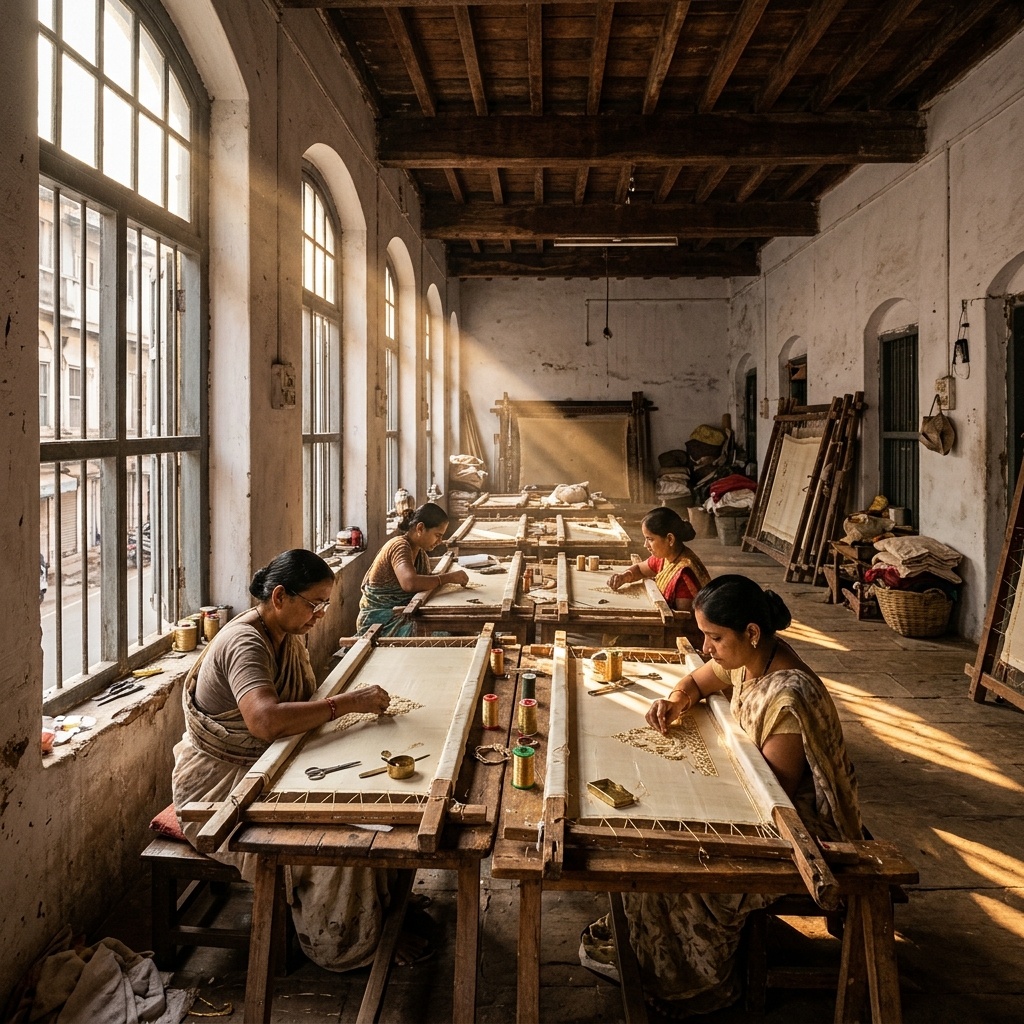
For US apparel brands at the premium end, India is pulling the largest share of plus-one reshoring in 2026. Four conditions converge — and they only converge here.
Capability
Hand-finishing at scale
Indian ateliers run hand-finishing, embroidery, and complex construction at a level European mills can no longer staff for. The work that used to be quietly serviced for Paris and Milan luxury houses under non-disclosure is now available to US brands by name.
Tariff Math
Premium at Vietnam-level cost
Landed cost from India is competitive with Vietnam and beats China on quality at small-batch volumes. The math is not about saving money. It is about paying roughly what a high-end Vietnam run costs and getting the hand-finishing that justifies a premium price point.
MOQ Economics
Built for 500-unit runs
Indian small-batch infrastructure is built for 500-unit runs. Chinese factories are not. For US brands that are running drops or testing SKUs before committing to scale, the difference is whether the brand can pilot the product at all.
Cultural Moment
Craft-coded in 2026
"Made in India" reframed from cost-coded to craft-coded over the last twenty-four months. Prada's Kolhapuri collection, Harry Styles in Harago, Sabyasachi at global scale. The customer the US brand is selling to has been taught by the highest stages in fashion to read Indian craft as desirable.
The four don't operate independently — they compound. A craft technique the customer recognizes. A tariff-adjusted price that holds the margin model. MOQ economics that let the brand test a SKU before betting on it. A cultural backdrop that lets the founder name the origin openly on the product page. None of these conditions were aligned for India in 2022. All four are now. The full cultural reframe is its own piece.
The Plus-One Playbook
Five moves. Sequenced. None are tactical.

- 01.
Audit the current sourcing footprint by category.
List every SKU. Tag the country it currently ships from, the lead time, the per-unit cost, and the tariff classification. The audit is the only document the playbook depends on. Most brands have never built it.
- 02.
Identify which categories carry the most brand-positioning weight.
Usually the highest-priced items, the craft-heavy items, and the items most photographed for the brand's marketing. These are the categories where the Plus-One decision will move the brand the most. The volume basics are not the priority for the first move.
- 03.
Pilot Plus-One sourcing on ONE high-positioning SKU first.
Pick the single product where the brand's story most needs a country with craft credibility. Run it through the candidate Plus-One country. Measure four things: landed cost, finish quality, lead time, and customer response in the first thirty days post-launch. The pilot answers in one quarter what a whole-line move would take three years to answer.
- 04.
Scale the Plus-One country to all categories where it outperforms.
After the pilot lands, route the next adjacent categories to the same country. Build the relationship across multiple categories. The Plus-One country becomes the brand's craft and small-batch backbone over six to nine months.
- 05.
Keep the original sourcing country for volume basics where craft positioning does not matter.
The brand's $30 unisex tee does not need to move. The brand's $250 hand-finished overshirt does. Plus-One is about routing the right product to the right country, not replacing one with the other. The full case for why US brands are restructuring around this is its own piece.
The Mistakes That Cost the First Year
The mistakes are predictable. Four patterns cost US brands the first year of plus-one execution and most are avoidable on paper before the first PO ships.
Treating Plus-One as a cost decision instead of a brand decision.
The whole point is positioning, not procurement. If the only metric is per-unit cost, the wrong country will win every time. The brand will discover within a year that the cost saving was a positioning loss the customer paid for.
Picking the wrong country for the category.
Routing technical sportswear to a craft country, or routing craft product to a volume country. The country has to match what the category actually needs, not what is convenient. A mismatch is felt in the product on first touch and the customer reads it before the marketing can.
Trying to switch everything at once instead of piloting.
The pilot is the de-risking step. Skipping it means absorbing a year of unknowns at full scale before any of them are answered. Brands that move whole categories before piloting one SKU usually rebuild the relationship from scratch six months later.
Not naming the new origin in product copy.
If the product page still reads "imported" after the Plus-One sourcing is in place, the brand has paid the cost of the Plus-One without claiming the positioning lift. That is the most expensive of the four — full cost, zero return.
Where the Right Partner Changes the Math
Plus-one lives or dies in one place — the manufacturing relationship.
Founders who pull off the move in 2026 share one trait: they have a partner who can route the right category to the right country, hold the spec sheet across reorders, and let the brand name the origin openly on the product page. The brands trying to retrofit plus-one onto a 5,000-unit factory model fail on the first reorder. See how this looks on a real US production line.
The Capacity Race Closes in 2026
The plus-one decision is in front of US brands right now. Capacity is going to allocate itself over the next twelve months whether founders move on it or not.
The brands that lock their plus-one country in 2026 own the decade. They'll have the operational relationship, the named origin on the product page, and a customer trained to read the story. The brands that wait will be sourcing from whoever has capacity left after the leaders pick first. The math on that gap compounds every quarter.
Lock In Your Plus-One
US founders building toward a craft-anchored plus-one in 2026 — partner with Krazy Kreators.
About Krazy Kreators
Krazy Kreators is a US-facing fashion manufacturing partner. End-to-end design, sampling, premium fabric sourcing, and retail-grade production — built in India for US clothing brands. krazykreators.com
No comments yet
Be the first to share your thoughts!