
You send a factory three photos, a sketch and a paragraph describing the fit you want. Six weeks later a box arrives, and the garment inside is technically exactly what you asked for.
It is also two inches too wide across the chest, hemmed with the wrong stitch, and made in a cotton that feels nothing like the one in your head. Nobody lied to you. You simply never said.
The document that would have prevented all of it is called a tech pack, and it is the single most requested and least understood file in apparel. This is what one contains, why every manufacturer asks for it before quoting, and what it costs when it is missing.
What a tech pack actually is
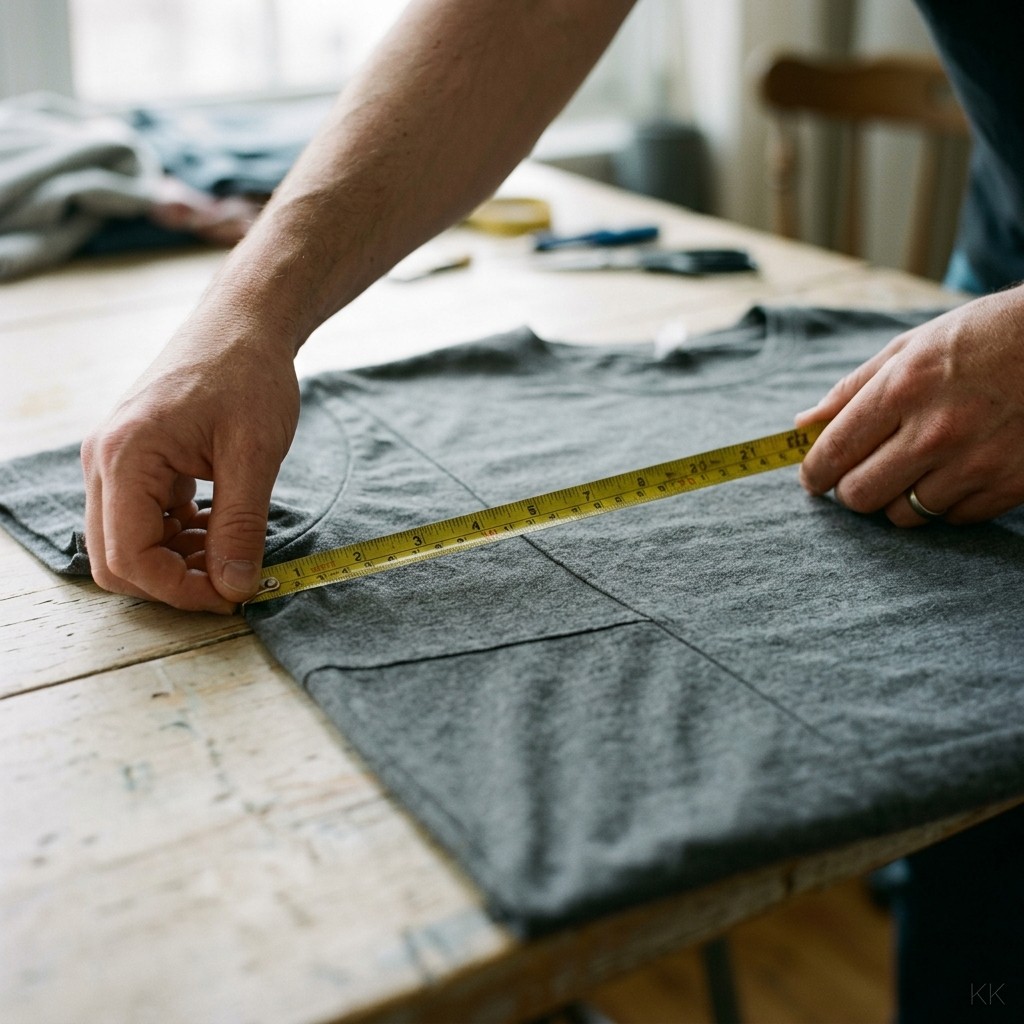
A tech pack (the technical specification document a brand gives a factory to build a garment) is a set of pages that turns a design into instructions. Not a description of the garment. Instructions for making it.
The distinction matters more than it sounds. A description leaves room for interpretation, and a factory floor is the worst possible place for room. An instruction has a number attached to it, and a number can be checked.
Think of it the way a builder thinks of a drawing set. Nobody hands a construction crew a photograph of a house they admire and expects the right building. The photograph is the reference. The drawing set is the contract. A tech pack for clothing does the same job, and the step from one to the other is the one we walked through in how mood boards become manufacturable garments.
“A photograph is the reference. The tech pack is the contract. Only one of them can be checked against a finished garment.”
That last part is the quiet function nobody advertises. A tech pack is also the written record of what you asked for — which is what turns “this isn’t what I wanted” from an opinion into a measurement.
Why no factory will quote without one
Ask a manufacturer to price a garment from a photo and the honest ones will decline. It is not gatekeeping. It is that a price is built from a list of costs, and the photo does not contain the list.
Fabric weight changes the fabric cost. Stitch type changes the machine and the minutes. A bartack at each pocket corner adds seconds per unit, and seconds per unit is how sewing is priced. Change any of those after quoting and the quote was never real.
So a factory looking at an underspecified design has two choices. Guess, and risk making the wrong thing correctly. Or ask, which means a fortnight of email that the tech pack would have answered on page three. Most of the friction founders blame on communication is really a missing document, a point we made at length in bridging the gap between designers and factories.
Signs your spec is too thin to quote
- • The supplier’s first reply is a list of questions rather than a number.
- • Two factories quote the same garment 40% apart — they are pricing two different garments.
- • Your quote arrives with the words “approximate” or “subject to sample” attached to the unit price.
- • You are asked to approve a fabric you never specified.
There is a second reason, and it is the one that costs money later. A tech pack is what a quality checker inspects against. With no written spec, “pass” means the garment matches the sample the factory made from its own guess.
The eight pages, and what each prevents
There is no legally fixed format. There is, however, a set of pages that every competent factory expects to find, and a shorthand for judging any tech pack template you are handed: does it have these eight, and does it fill them in with numbers rather than adjectives?
Infographic 01
The eight pages of a tech pack
Every page answers a question the factory would otherwise answer for you. Read the third column as the reason the page exists.
- 01
Cover / style summary
Which style is this, for which season, in which sizes?
Prevents: The wrong style getting cut when three of yours are in the factory at once.
- 02
Technical flats
What does it look like from the front, the back and up close?
Prevents: A pocket in the wrong place, a hood without a drawcord channel.
- 03
Points of measure
How big is it, at every named place on the garment?
Prevents: A sample that fits nobody and an argument about whose fault that is.
- 04
Grading rules
How does each measurement change from XS to XXL?
Prevents: A small that fits beautifully and a large that fits like a tent.
- 05
Bill of materials
What fabric, thread, trim and label goes in it, and where?
Prevents: Your 340 GSM hoodie arriving in 240 GSM because nobody named the weight.
- 06
Construction & stitching
How is every seam joined, and with which stitch?
Prevents: A single-needle hem where you specified a coverstitch, on all 500 units.
- 07
Colorways & artwork
Which colors, which print, at what size and placement?
Prevents: A chest print sized for a men’s XL landing on a women’s XS.
- 08
Labeling & packing
What has to be on the label, the hangtag and the carton?
Prevents: A shipment that clears the factory and then sits at the border.
Four of those pages deserve a closer look, because they are where founders lose the most money.
Points of measure. A POM (a single named place on the garment that gets measured) is only useful with a tolerance (how far the finished garment may differ before it is rejected) beside it. A chest width of 21 inches with no tolerance is a wish. The same number at plus or minus a quarter inch is a standard.
Page 03 — points of measure
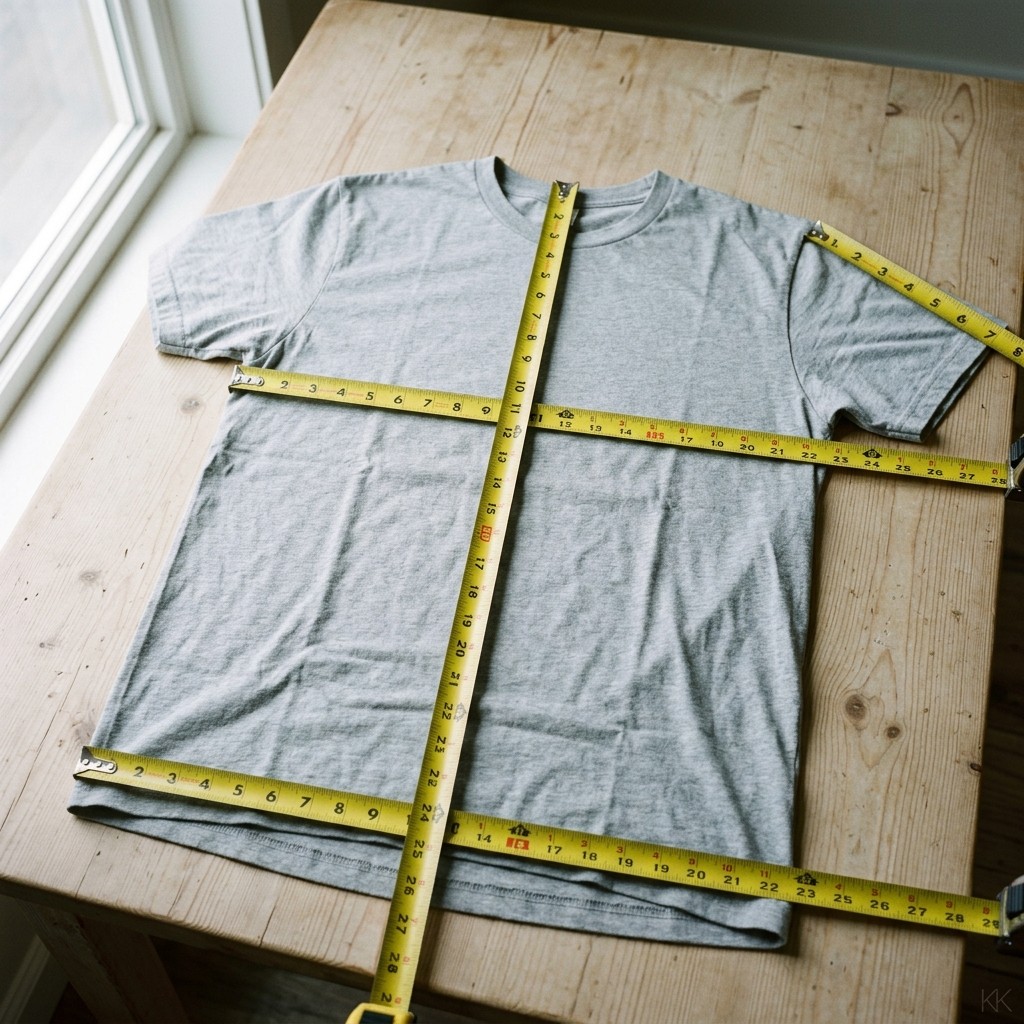
Grading rules. This is the page that decides whether your size run works. Bodies do not scale evenly, so a garment cannot either — and the industry has published tables for exactly this, such as ASTM D5585-21, the standard body measurements for adult female misses sizing. Why a great small can become a poor large is the whole subject of grading vs. pattern making.
Page 04 — grading rules
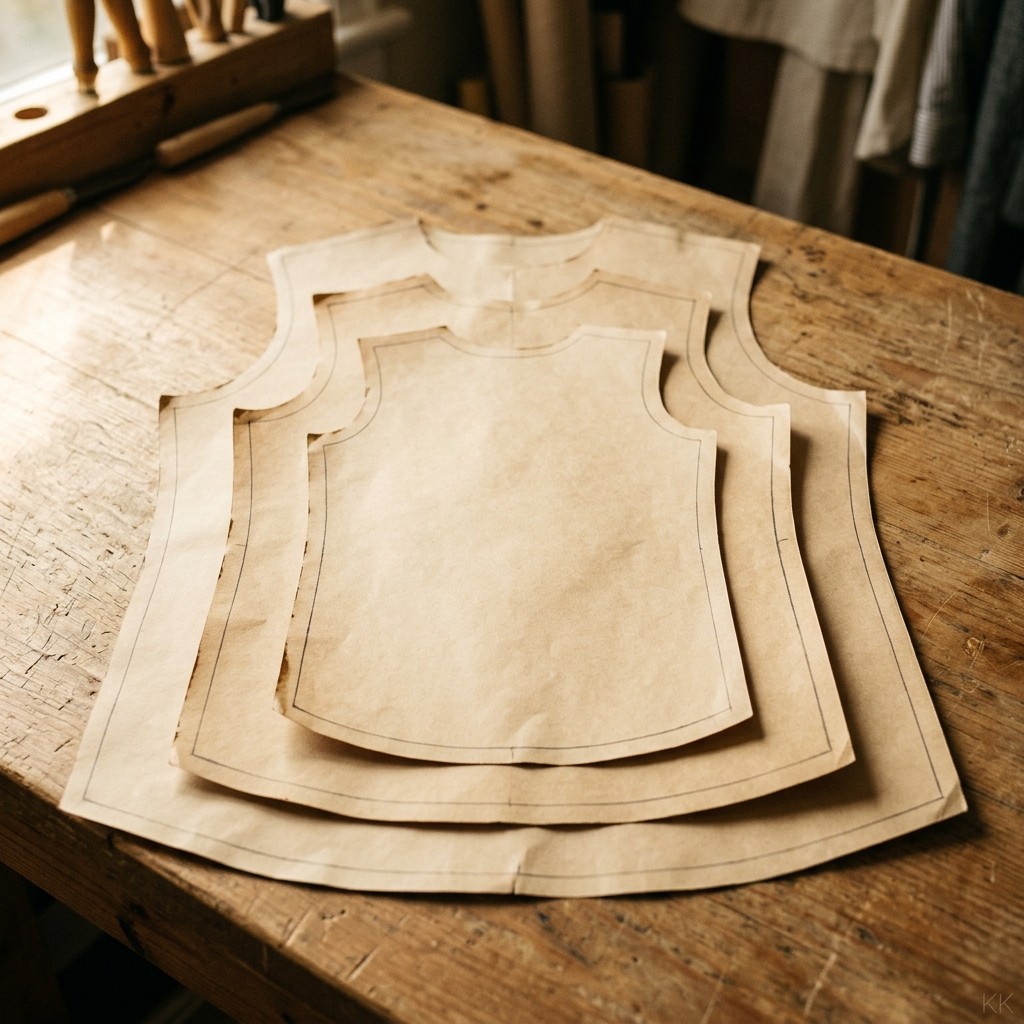
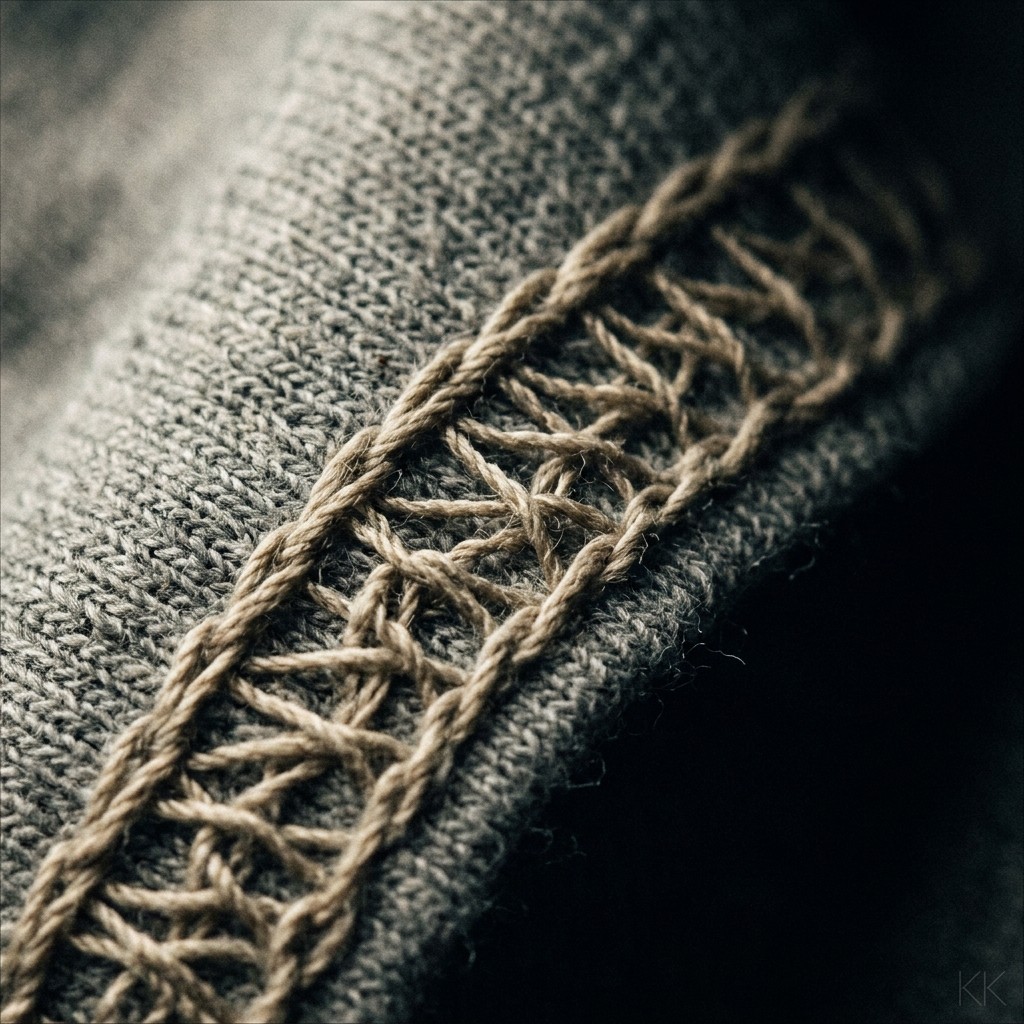
Bill of materials. Name the fabric by composition, construction and weight, not by feel — “heavyweight French terry” is not a spec, and 340 GSM is. The same discipline applies to every zipper, cord tip and label, because trims are where perceived quality actually lives.
Page 05 — bill of materials

Construction and stitching. There is a shared vocabulary here, set out in ASTM D6193, which classifies stitches into six classes and seams into eight types. Writing “coverstitch hem, 1/4 inch” instead of “neat hem” is the difference between an instruction and a hope.
“Adjectives are how designers talk to each other. Numbers are how designers talk to factories.”
Page eight, labeling and packing, is the one that gets skipped most and carries the most legal weight. In the United States most textile garments must carry fiber content, country of origin and the identity of the responsible company, all set out in the FTC’s guide to the Textile and Wool Acts. Care instructions are separately mandated by the Care Labeling Rule, and the fabric itself has to pass the flammability standard at 16 CFR Part 1610. None of that is your factory’s job to remember for you.
Tech pack, CAD or spec sheet?
These three words get used as though they mean the same thing, and the confusion is expensive. Two of them are pages. One of them is the document those pages live in.
Page 02 — the technical flat (CAD)
| What you send | What it is | What it answers | Who reads it |
|---|---|---|---|
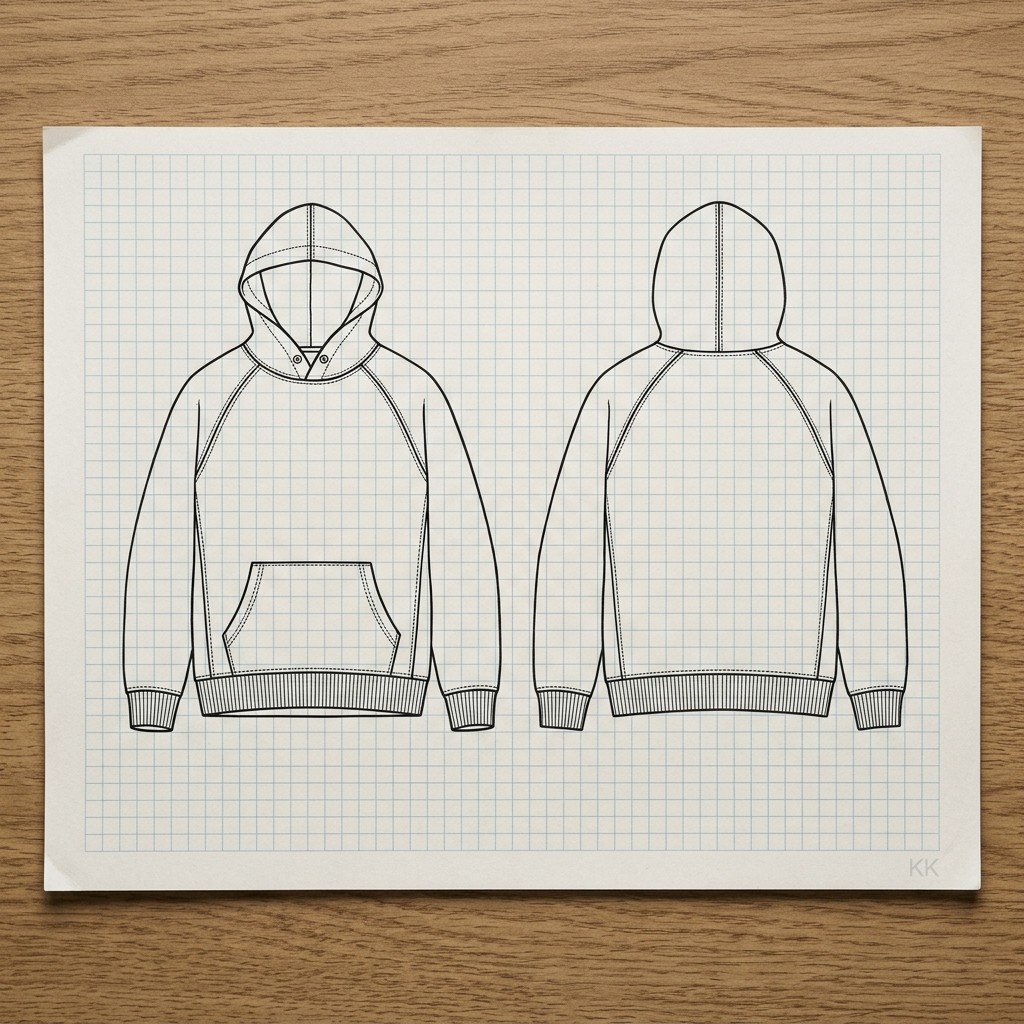
| CAD / technical flat | A scaled, straight-on line drawing of the garment, seams and details included, with no body in it. | What does it look like? | Designer, pattern maker |
| Clothing spec sheet | The measurement chart on its own: every point of measure, its target value, and its tolerance. | How big is it? | Sample room, quality control |
| Tech pack | All eight pages: flats, spec, grading, materials, construction, colorways, labeling and packing. | How is it made, in what, at what size, with what on the label? | Everyone above, plus cutting, sewing, compliance and shipping |
So the answer to “tech pack vs CAD” is that it is not a versus. Sending a CAD alone tells a factory the shape you want and nothing about the garment. Sending a spec sheet alone tells them the size of something they cannot picture.
Free download
The Tech Pack Starter Kit
A blank tech pack template covering all eight pages, a points-of-measure sheet for tees, hoodies and woven shirts with standard tolerances already filled in, and the 12-point check on this page as a printable list. Spreadsheet + PDF.
What skipping it actually costs
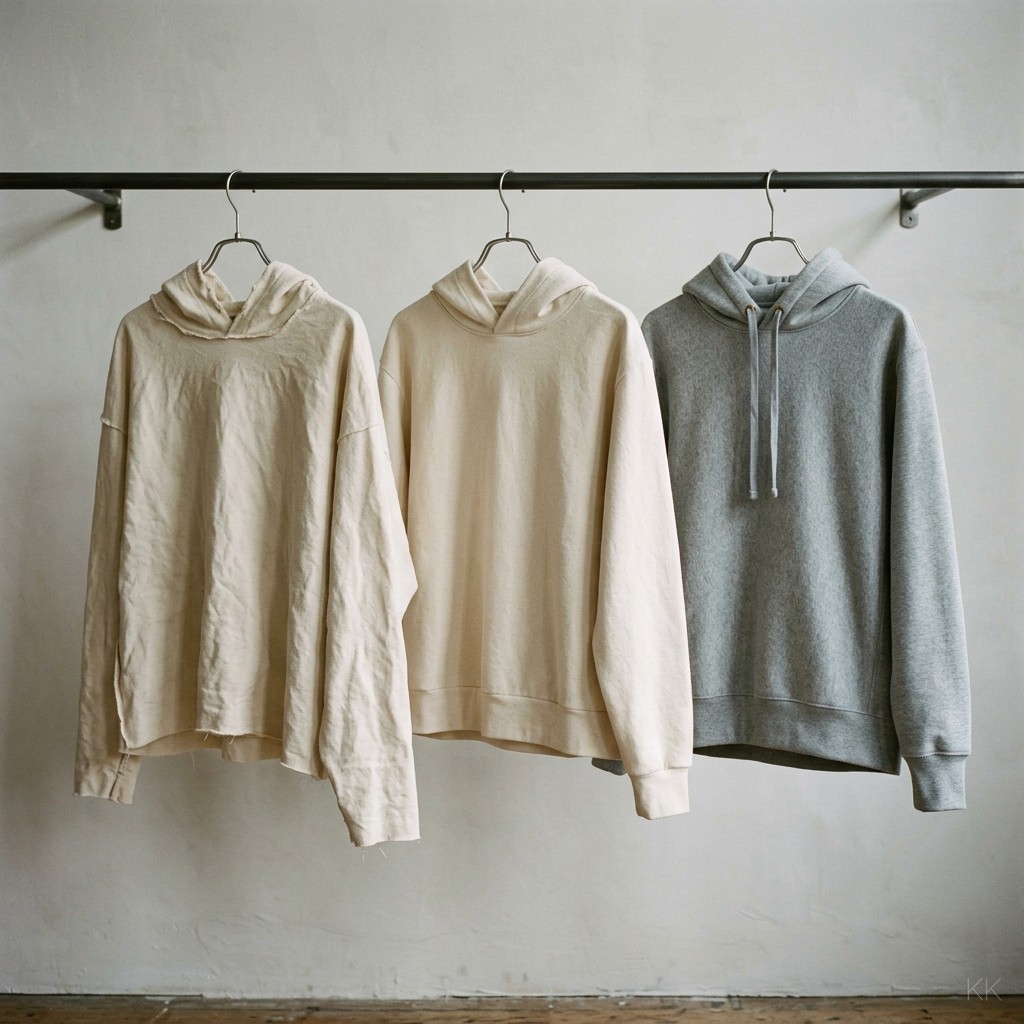
Development work feels like the easiest line to cut, because at the moment you cut it nothing bad happens. The bill arrives later, and it arrives multiplied.
Take one error — a sleeve half an inch short of what you pictured — and follow it forward through the four places it can be caught.
Where errors get caught — the sample rounds
Infographic 02
One wrong sleeve length, four places to catch it
The same half-inch error, priced at each stage it survives to. Worked example on a 500-unit run, not a price list.
- 01 You change a numberTen minutes and a new version number. Nothing has been cut yet.
- 02 One extra sample roundRe-sew, re-ship, re-review. Roughly ten days off your calendar.
- 03 Re-grade and re-cutThe pattern moves, every size moves with it, and you buy another PP sample. About three weeks.
- 04 The whole run is wrong500 units at $23 all-in, made correctly to an instruction that was wrong.
The garment is not defective at any point in that sequence. It is built correctly, every time, to an instruction that was wrong. That is what makes specification errors so expensive: no inspection catches them, because there is nothing to catch.
Then there is the slower cost, the one that shows up as a refund. Retailers expect to take back 15.8% of everything sold, rising to 19.3% of online sales, according to the National Retail Federation. For a direct-to-consumer brand, a size run that grades badly is a return rate you pay for every month, quietly, forever.
And an undocumented order removes your recourse. When the spec lives in an email thread, a dispute is two memories arguing — which is the mechanism behind most of the horror stories in the real cost of choosing the wrong manufacturer.
How a tech pack gets built
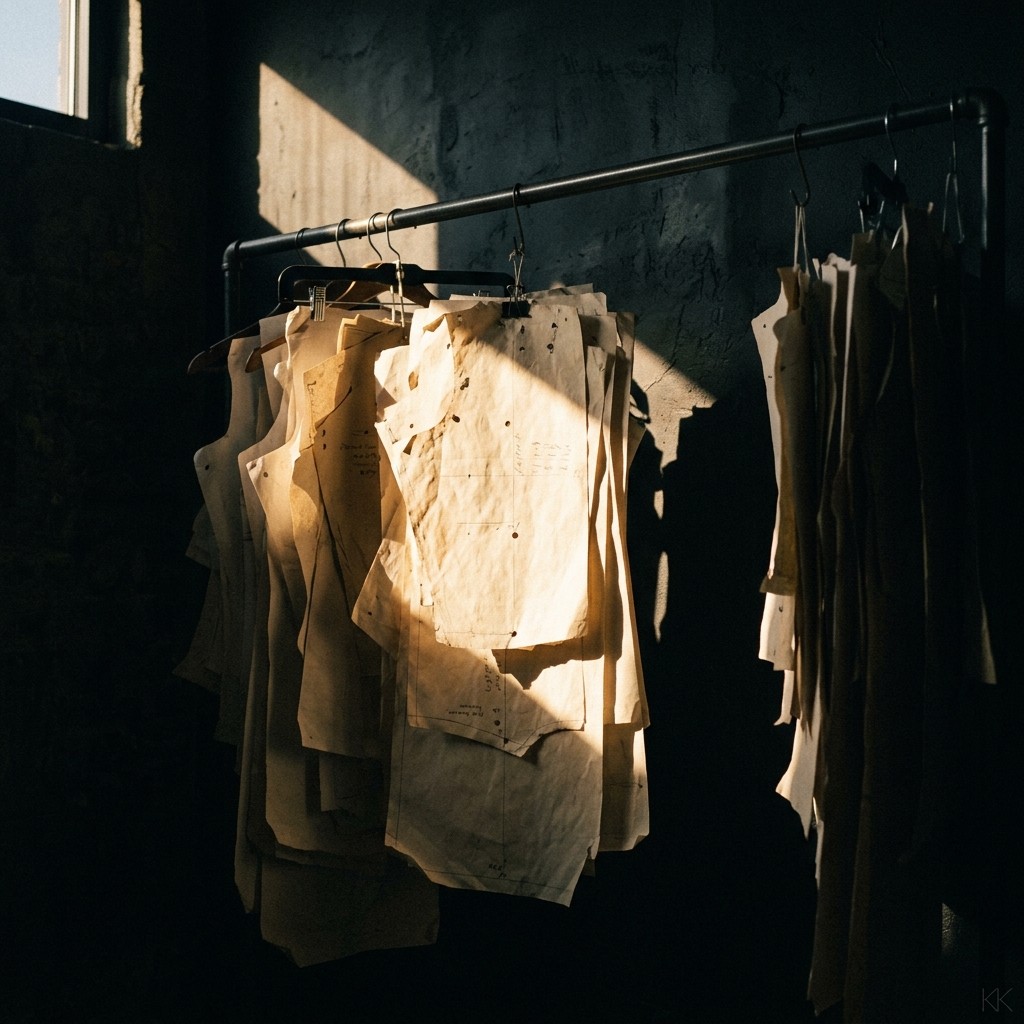
It is less mysterious than it looks. Four passes, each one finished before the next begins, because each pass depends on a decision made in the one before it.
Infographic 03
Twelve working days, four passes
A typical build for one straightforward style. Each pass is finished before the next starts, because each one depends on the last.
- 01 Flats & measurementsSketches become straight-on line drawings, then a points-of-measure chart in one base size.
- 02 Bill of materialsEvery fabric, thread, trim and label named, with weight, composition, supplier and placement.
- 03 Construction & gradingSeam and stitch type at each join, then the rules that turn one size into your whole size run.
- 04 Labeling & packingFiber content, country of origin, care instructions, hangtags, polybag and carton markings.
Two things about that calendar are worth internalising. It runs before your first sample, not alongside it — a sample cut from an unfinished spec is a sample of nothing. And it repeats, in miniature, after every fit session, because a tech pack is a living file with version numbers, not a document you finish once.
Where it sits in the wider schedule matters too, and it sits early: everything downstream of it — sampling, fabric booking, bulk, shipping — is laid out week by week in the lead-time timeline from design to doorstep.
The check before you hit send
Run this before a tech pack leaves your desk. Each line is here because leaving it out has cost somebody a sample round.
The garment
- • Every point of measure has a tolerance next to it.
- • The measurement chart names its base size, and the grading page covers every size you intend to sell.
- • Flats show the back and any detail that is hard to see — cuff, placket, pocket bag, drawcord channel.
- • Every seam has a named stitch type, including the hem and the neckline finish.
- • Fabric is written as composition, construction and weight, never as a texture.
- • Every trim has a supplier reference or a physical sample attached.
Everything after the garment
- • Artwork is supplied as a vector file with a printed size in inches, not a percentage.
- • Colors are given as a physical standard or a lab dip reference, not a screen color.
- • The label page lists fiber content, country of origin and your responsible-party identity.
- • Care instructions are stated, and someone has confirmed the fabric can survive them.
- • Packing says how each unit is folded, bagged, labeled and cartoned.
- • The file carries a version number and a date, and the factory has the latest one.
The last line is the one people laugh at and then get caught by. A factory working from version two while you review version four is the most common self-inflicted wound in production.
The terms, in plain English
Most of the intimidation in this subject is vocabulary. Here is the whole vocabulary.
- Tech pack
- The technical specification document a brand gives a manufacturer so a garment can be built exactly as intended.
- Technical flat (CAD)
- A scaled, straight-on line drawing of the garment showing seams, stitching and details, drawn without a body in it.
- Point of measure (POM)
- A single named place on the garment that gets measured, such as chest width or sleeve length.
- Tolerance
- The amount a finished garment is allowed to differ from its target measurement before it is rejected.
- Grading
- The rules that turn one base size into a full size run by changing each point of measure by a set amount.
- Bill of materials (BOM)
- The itemised list of every fabric, trim, thread and label in the garment, with supplier and placement.
- Colorway
- One specific color combination a style is produced in; the same style in three colors is three colorways.
- Pre-production sample (PP sample)
- The last sample, made in the real fabric on the real line, that you approve before bulk cutting starts.
When you don’t need the full document

Honesty demands the exception. If you are printing your artwork on a blank garment somebody else already manufactured, you do not need a tech pack. You need an artwork file, a placement diagram and a print size. The garment’s construction is not yours to specify.
Similarly, if you are buying a factory’s existing block and changing the fabric and labels, most of the spec already exists in their system. You are editing a tech pack rather than writing one, and pretending otherwise wastes money on both sides.
There is also a version of this document that is too heavy. A forty-page pack for a single jersey tee, full of pages copied from a template and never filled in, is worse than a tight eight-page one — because a factory that finds three empty pages stops trusting the other five.
“A factory that finds three empty pages stops trusting the other five.”
The test is not length. It is whether a stranger could build your garment from it without calling you.
What we’d do in your shoes
Before you email another factory, take your best-fitting existing garment off its hanger and measure it at ten points. That single sheet will tell you more about the fit you actually want than another week of reference images, and it is the honest start of a real spec.
Then get the rest of it drawn properly — by a technical designer, a pattern maker, or the design and product development team at Krazy Kreators, who build the tech pack alongside your first order rather than billing it as a separate project. So: if you handed your current spec to a factory on the other side of the world tomorrow, which page would they call you about first?
Common questions
What is a tech pack in fashion?
A tech pack is the technical specification document a clothing brand hands its manufacturer to get a garment made exactly as intended. It is not a mood board and not a sketch. It is a set of pages that together answer every question a factory would otherwise have to guess at: what the garment looks like from every angle, what it measures at every point and in every size, what fabric and trims go into it, how each seam is sewn, what colors it comes in, and what has to appear on the label and the carton. A fashion tech pack is the difference between ordering a garment and describing one.
What should a tech pack include?
Eight things, at minimum: a cover sheet with the style number, season and size range; technical flat sketches of the front, back and every detail; a points-of-measure chart in one base size; grading rules showing how each measurement changes across the size run; a bill of materials listing every fabric, trim, thread and label with placement; construction and stitching notes naming the seam and stitch type at each join; colorways and artwork with print placement and scale; and labeling and packing instructions covering fiber content, country of origin, care, hangtags and cartons. Anything you leave out becomes a decision somebody on the factory floor makes for you.
What is the difference between a tech pack and a CAD?
A CAD, or technical flat, is one page inside a tech pack. It is a scaled line drawing that shows what the garment looks like, drawn straight on rather than on a body. A tech pack is the whole document the CAD sits in, and it also carries the measurement chart, grading rules, bill of materials, construction notes, colorways and labeling. Sending a factory a CAD alone tells them the shape you want. It does not tell them the fabric, the fit, the stitch, or the size run, so they will either come back with questions or fill the gaps themselves.
Is a clothing spec sheet the same as a tech pack?
No, though the terms get used interchangeably. A clothing spec sheet is usually just the measurement chart: the list of points of measure and their target values, plus tolerances. It answers how big the garment is. A tech pack contains the spec sheet and everything else needed to actually build it. If a supplier asks for your spec sheet and you send only measurements, expect a follow-up email asking for fabric, trims and construction.
Do I need a tech pack for a single sample or a small order?
Yes, and arguably more so. On a small run the development cost is spread across very few units, so a wasted sample round hurts proportionally more. A tech pack also gives you something a small order cannot otherwise buy: a written record of what you asked for. Without it, a fit problem in the finished garment is a disagreement about memory. With it, it is a measurement against a number both sides already agreed to.
Can I build a tech pack myself from a template?
You can, and for a simple garment such as a tee or a hoodie a good template will get you most of the way. The parts founders most often get wrong are the ones a template cannot fill in for you: grading rules across the size run, stitch and seam types at each join, tolerances, and the labeling requirements that apply once the garment enters the United States. If you build your own, have a pattern maker or a technical designer read it before it goes to a factory. An hour of review is cheaper than a sample round.
Read next
8 min read
Mood Boards to Manufacturable Garments
The step before the tech pack: turning a reference wall into something buildable.
7 min read
Understanding Fabric GSM
How to write your fabric page in numbers instead of adjectives.
10 min read
Costly Mistakes Fashion Startups Make
The spec gap is one of them. Here are the rest, and what they cost.
About Krazy Kreators
Krazy Kreators is the end-to-end brand-building partner for US clothing founders — design, sampling, fabric sourcing, retail-grade production, and packaging, under one roof, from first sketch to shelf. krazykreators.com
Comments
No comments yet
Be the first to share your thoughts!