The founders who stayed calm through the last three tariff shocks weren't the ones sourcing from the cheapest country. They were the ones who already knew, to the cent, what their top styles cost somewhere else.
That's the whole idea behind a “plus-one” origin: a second, proven place to make your product, held in reserve so a single ruling can't reprice your entire buy. The strategy has a name and a case — we made it in the US-Plus-One sourcing playbook.
This is the execution. How you actually stand a second origin up — costed, sampled, and ready to take a PO — in about 30 days rather than a season. The realities that decide whether you make it: sampling rounds, MOQ, and lead time.
One origin is a single point of failure
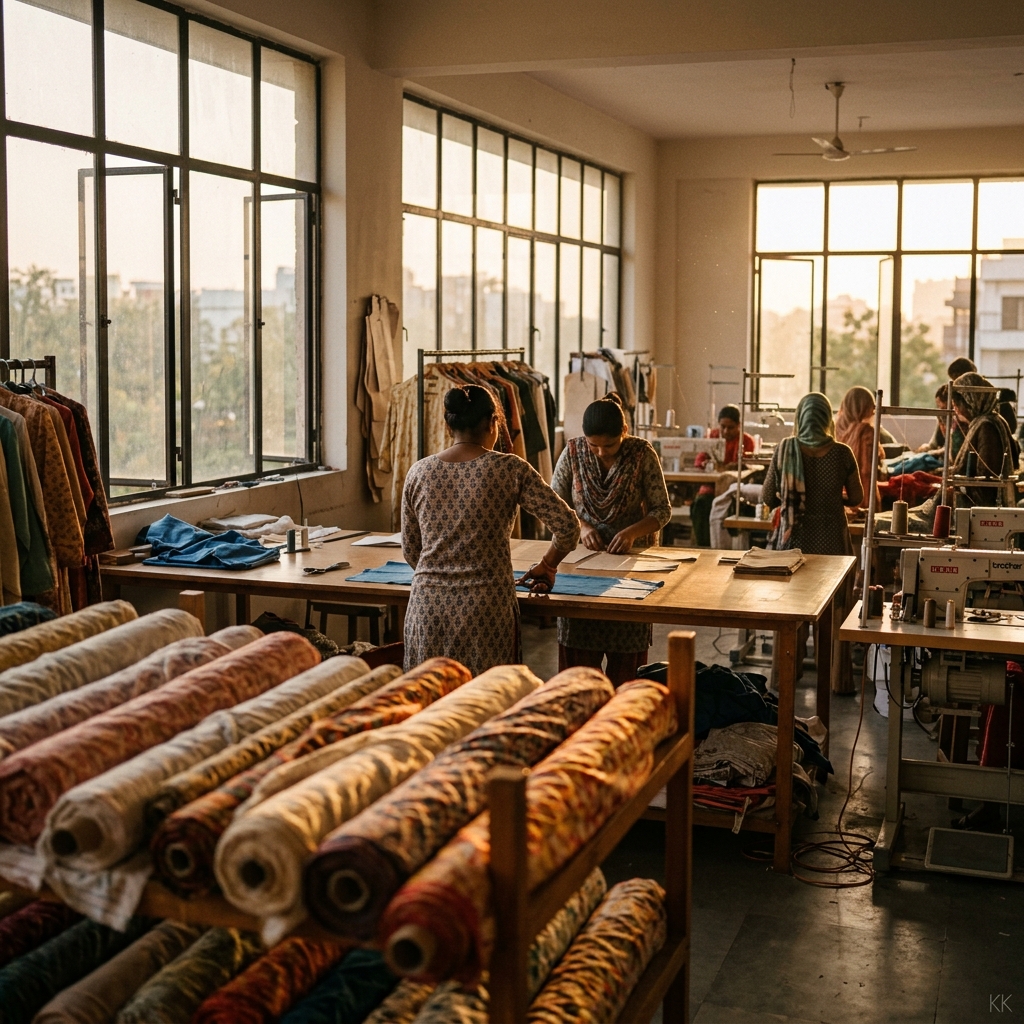
Concentrate your production in one country and you've tied your cost sheet to that country's trade politics. A tariff action, a forced-labor ruling, a port disruption — any one of them reprices goods you've already designed and can't easily move. The exposure isn't theoretical: US apparel imports have been shifting origin steadily as brands hedge exactly this risk (OTEXA).
Put a number on it. A fleece hoodie at $16 FOB (free on board — the supplier's price at the origin port, before freight and duty), and a single Section 301 action (a US trade investigation that can add duties by country) lands 12.5 points of new duty on your origin. That's about $2 a unit — roughly $8,000 appearing overnight on a 4,000-piece buy, on one style.
There are multiple Section 301 investigations open at any given time, which is why supply-chain diversification has moved from prudent to standard practice (McKinsey, State of Fashion). A second origin is how you cap that exposure before it lands.
“A second origin isn't a hedge you buy once and forget. It's a line you can turn on the week a ruling reprices your primary buy.”
What a “costed second origin” actually is
It is a fully costed, sample-approved production line in a country other than your primary one — ready to take a real order, not just a quote on paper. The point isn't to move your whole buy. It's to hold a proven backup for the styles that carry the most revenue and the most risk.
That word proven is the whole job. A price emailed by a factory you've never sampled with is not a second origin — it's a hope. A second origin means an approved fit sample, a landed cost you trust, an MOQ you can live with, and a lead time you've confirmed. India has become the default second slot for many US brands for exactly these reasons — capability depth across the full stack, at workable minimums.
One honest counterpoint: a second origin isn't free, and it isn't for everyone. If you run a single hero style at low volume, or your primary origin is already low-risk or domestic, the sampling and management overhead may not pay for itself. The move earns its keep when you have real tariff exposure across a few high-revenue styles — not as a reflex for every line.
A second origin is real only when it has all four
- • An approved sample — fit and construction signed off, not just quoted.
- • A landed cost you trust — duty, freight and fees in, not FOB alone.
- • An MOQ you can absorb on the styles you'd actually shift.
- • A lead time you've confirmed against a real production calendar.
The 30-day sprint: parallel, not relay
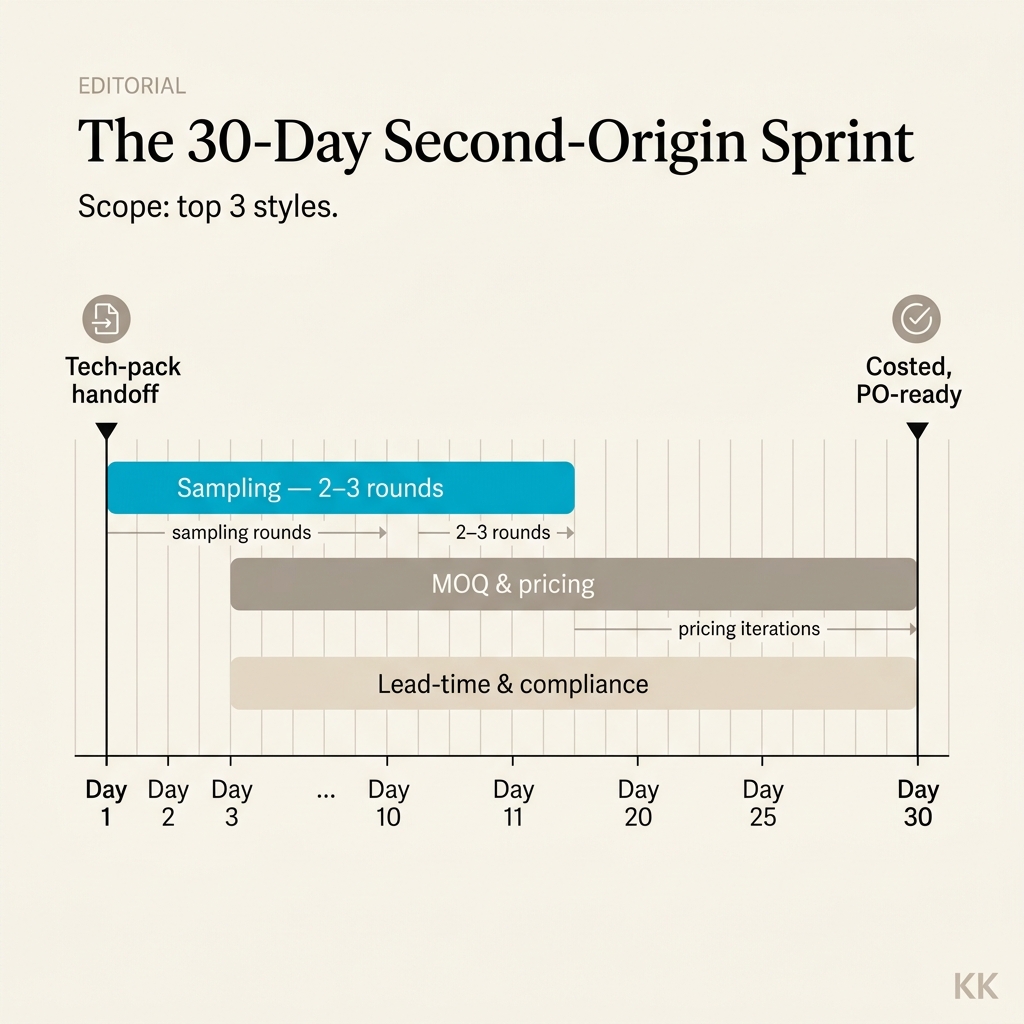
Thirty days is enough — but only if the workstreams run at the same time. The mistake that blows the timeline is treating sampling, MOQ negotiation and lead-time validation as a relay, where each waits for the last to finish. Run them as three parallel tracks over the same month.
Scope it first: your top 3 styles. The three that pair the highest revenue with the thinnest margin — where a tariff swing does the most damage. Prove the model there before you extend it across the range.
The three tracks, Day 1 to Day 30:
- Track A — Sampling: tech-pack handoff on Day 1, then 2–3 rounds (proto → fit → approval).
- Track B — MOQ & pricing: negotiated in parallel, not after the sample lands.
- Track C — Lead-time & compliance: capacity, social-compliance and origin docs validated to close it out.
Day 1 is a clean tech-pack handoff; Day 30 is a costed, PO-ready line. What makes it fit in a month isn't a faster factory — it's refusing to let the three tracks queue behind each other.
“The 30 days aren't won on the sewing floor. They're won by starting sampling, pricing and lead-time on the same morning.”
Free download
The 30-Day Second-Origin Sprint Checklist
A one-page plan that runs the three parallel tracks — sampling rounds, MOQ & pricing, lead-time & compliance — with the Day-1 tech-pack handoff and the Day-30 PO-ready gate laid out for your top 3 styles. PDF.
Sampling: two to three rounds, decided upstream
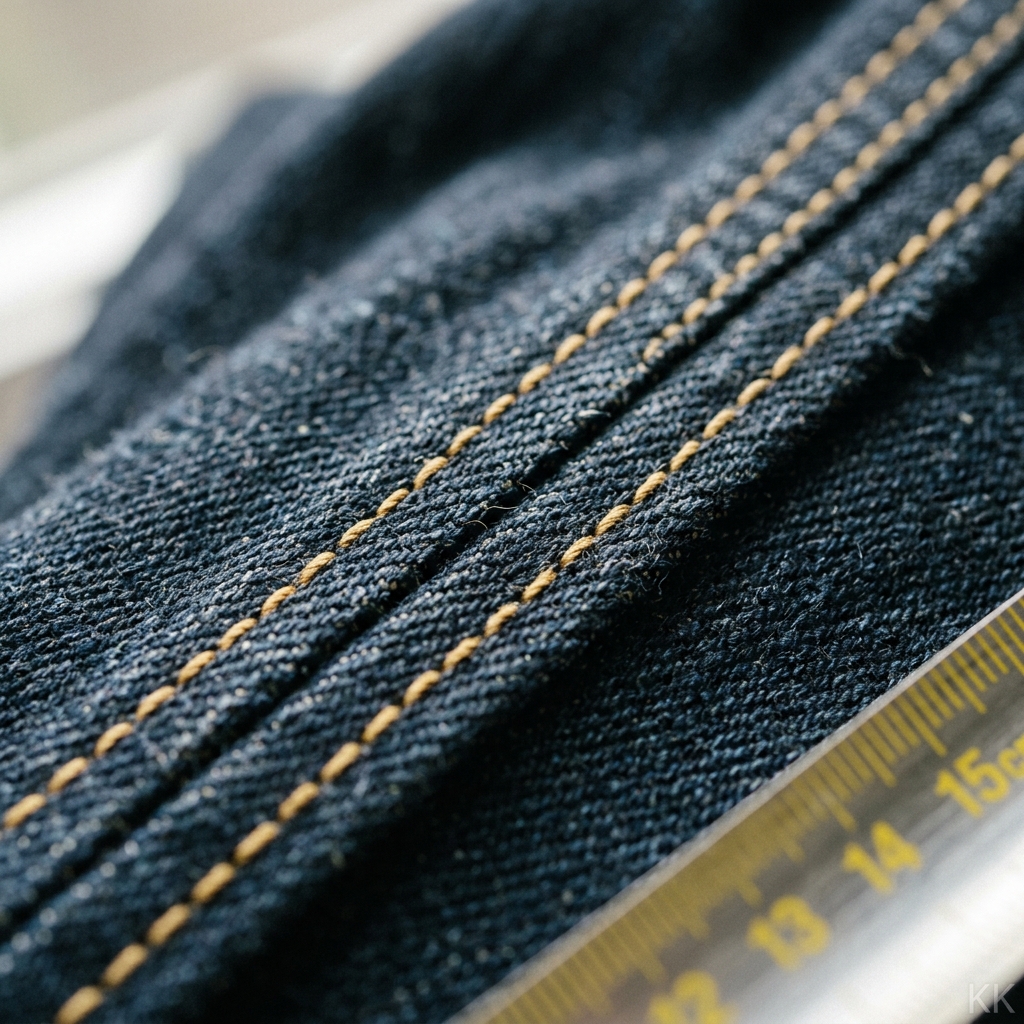
Plan for two to three sampling rounds — proto, fit, then approval. A well-documented handoff can land the fit right on the first or second round; a vague one pushes it to four or more and breaks the 30-day math. The quality of your inputs, not the factory's speed, usually decides this.
That handoff is the tech pack (the spec document — measurements, materials, construction, tolerances — a factory builds from). Hand a new origin a graded, unambiguous tech pack and the first proto comes back close; hand it a sketch and a hope and you'll spend your month in revision emails. If yours isn't airtight, fix that before you start the clock — here's what a production-ready tech pack contains.
Sample the styles you'd actually shift under pressure, not the easy ones. A knit tee samples fast and tells you little; the hoodie with the tricky panel or the bonded seam is where a new origin's real capability shows — and where the wrong factory quietly costs you later.
MOQ and lead-time, negotiated honestly
MOQ (minimum order quantity — the smallest run a factory will take) feels like a wall, but it's usually a negotiation. It moves when it's framed as the first tranche of an ongoing relationship rather than a one-off trial — and when you start with a focused style count instead of your whole range.
Lead time is the number brands validate last and regret most. Confirm it against a real production calendar — fabric availability, capacity in your window, and the compliance and origin paperwork a new supplier needs — not a best-case quote. A second origin that can't deliver inside your season isn't a backup; it's a brochure.
And cost the comparison correctly. A slightly higher steady-state landed cost at the second origin is not a loss — it's the premium on an option. Measure it against what your primary origin costs the day a ruling hits, the same way you'd rebuild a landed-cost sheet when duty changes at the dock — not against today's undisturbed number.
Signs your “second origin” is really just a quote
- • You have a price, but no approved fit sample in hand.
- • The MOQ was quoted once and never negotiated against a real order.
- • Lead time is a best-case number, unchecked against your season.
- • Nobody has confirmed the compliance and origin paperwork.
What we'd do in your shoes
We'd pick the three styles on next season's PO with the thinnest margin cushion and the most tariff exposure, and start all three tracks on the same morning — tech pack out, MOQ conversation open, lead-time and compliance in validation. We'd aim for an approved sample and a landed cost we trust by Day 30, while the window is open and nobody's negotiating under a deadline.
We wouldn't wait for the ruling that forces the move — that's when leverage is lowest and lead times are longest. So: what are your three styles, and is there a costed alternate origin sitting behind each one yet?
The bottom line
A second origin isn't a hedge you buy once and forget — it's a live capability. A costed, sampled, MOQ-cleared line you can turn on the week a ruling reprices your primary buy. Thirty days is enough to build it, but only if sampling, MOQ and lead-time run in parallel rather than in sequence.
Start with the three styles that carry the most revenue and the most exposure. Cost them in a second origin now, while the window is open — so the next ruling meets a plan, not a scramble.
FAQs
What does “a second origin” actually mean for a clothing brand?
A fully costed, sample-approved production line in a country other than your primary one — ready to take a real PO, not just a quote on paper. The point isn't to move your whole buy; it's to hold a proven backup for your highest-exposure styles so a single ruling or disruption can't reprice your season.
Can you really stand one up in 30 days?
For your top few styles, yes — if the workstreams run in parallel. Tech-pack handoff and first sampling start on Day 1, MOQ and pricing negotiate alongside, and lead-time and compliance close it out. What blows the timeline is treating sampling, costing and MOQ as a relay instead of a sprint.
How many sampling rounds should I budget for?
Plan for two to three — proto, fit, approval. A well-documented, graded tech pack can land it on the first or second round; vague inputs push it to four or more and break the 30-day math. The quality of your handoff, not the factory's speed, usually decides this.
Won't a smaller order at a new origin mean punishing MOQs?
Not necessarily. MOQ is negotiable when it's framed as the first tranche of an ongoing relationship rather than a one-off trial. Starting with a focused style count — rather than your full range — keeps per-style minimums workable while you validate quality.
Does a second origin mean my landed cost goes up?
Sometimes — and that's the wrong number to optimize. The comparison isn't “second origin vs. today's cost,” it's “second origin vs. what today's origin costs the day a ruling hits.” A slightly higher steady-state landed cost is cheap insurance against a buy that gets repriced overnight.
Which styles should I cost first?
The three that pair the highest revenue with the thinnest margin — the ones where a tariff swing does the most damage. Prove the model on those, then decide whether to extend it across the range.
Read next
8 min read
The US-Plus-One Sourcing Playbook
The strategy this piece executes on — why, where, and the math.
7 min read
Why Fashion Brands Are Moving Manufacturing to India
Why India keeps winning the second-origin slot for US brands.
7 min read
Why US Fashion Brands Are Moving Production From China
The exposure a pre-costed plus-one origin is built to cap.
Comments
No comments yet
Be the first to share your thoughts!