When the Consumer Product Safety Commission added up the paperwork its new import rule would create, clothing came out on top by a distance: 16,290,891 certificate filings a year — more than ten times the number it expects from toys.
Since 8 July, all of them are supposed to arrive electronically, the moment your goods reach the border. A week before that, California started a list of its own.
Here is the part almost everyone gets wrong. Neither rule is going to fine you this month.
Two rules, one week apart
The federal rule is about the border. Since 8 July 2026, your safety certificate has to be filed electronically with Customs as the goods arrive, instead of being dug out weeks later when an inspector asks.
The Californian one is about what happens after the garment wears out. SB 707 told every covered brand to join the state’s approved recycling body by 1 July 2026.
They look unrelated. You answer both out of the same folder: the fabric spec, the test report, the bill of materials, the factory address. In most young brands that folder belongs to the factory.
What you actually have to file
eFiling means the data goes into ACE, the system Customs already uses for your entry. Section 1110.11 lists seven things, and no others.
The seven fields
- A product identifier and enough description to match the certificate.
- Every safety rule you are certifying to, listed separately.
- The certifier’s name, address, email and phone.
- The same for whoever keeps the records behind it.
- Date and place of manufacture.
- Date and place of testing, or the exclusion you claim instead.
- An attestation that it is true.
Send all seven with every shipment, or load them into CPSC’s Product Registry once and send a reference number after that. Small parcels are no way around it either — the rule covers de-minimis parcels too.
Infographic 01
Two calendars a US clothing brand is now on
Federal dates in dark, California dates in bronze. The first two have already passed; the rest are the ones worth putting in a diary.
The exemption most brands do not know they have
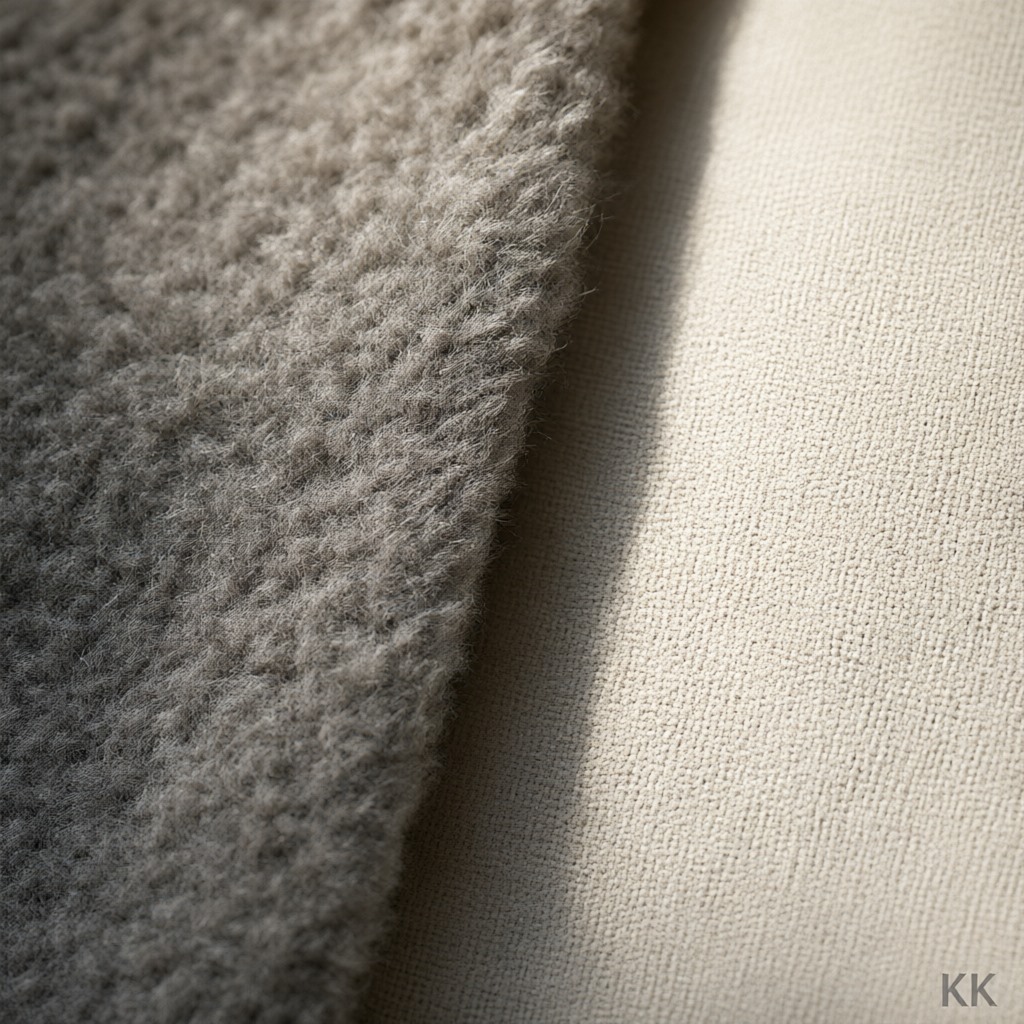
Ordinary adult clothing is touched by exactly one CPSC rule: 16 CFR 1610, the flammability standard. And section 1610.1(d) lets most of what the industry makes off the hook.
Two kinds of fabric are exempt from testing. Any smooth-faced cloth weighing 2.6 ounces per square yard or more, whatever it is made of — roughly 88 g/m², lighter than any jersey you would cut a tee from. And any cloth at all, at any weight, made entirely from acrylic, modacrylic, nylon, olefin, polyester or wool.
CPSC said so directly in the new rule: no certificate is required where a product relies on enforcement discretion, “such as adult wearing apparel relying on 16 CFR 1610.1(d).” So a cotton tee, a polyester dress and a wool coat need no filing.
Infographic 02
Does this adult garment need a certificate?
Three questions, all answered off the fabric spec sheet. They come straight from 16 CFR 1610.1(d), which is the only place the real answer lives.
Now the half that catches people. Smooth-faced means no deliberately raised fibre — no pile, no nap, no tuft. Brushed flannel, fleece, terry and corduroy are all raised, so unless they are made from those six fibres they are outside the exemption at any weight. So is a light rayon blouse or a silk georgette. Those need testing, a certificate, and a filing at the border.
Weight and surface. Two lines on a spec sheet now decide whether a style is a customs filing or nothing at all.
Free download
The Certificate Readiness Checklist
One page per style: the seven fields, the exact question to ask your factory for each, and the decision chart above as a printable.
Nobody is being turned away. That is the trap.
Six weeks in, the disaster everyone braced for has not arrived. CPSC has said it does not intend to reject entries purely because the data is missing. You get a warning instead.
That is not a grace period. CPSC is still enforcing the certificate requirement, and it wrote the real mechanism into the rule: importers who consistently file good data should “see a reduction in their risk scores, which may result in fewer holds for exams, fewer warehouse charges.”
That works both ways, and nobody writes to tell you your score has slipped. The cost of a sloppy first year is not a fine. It is that in eighteen months your containers get pulled and a competitor’s sail through.
California, and what it will really cost
SB 707 catches any brand selling into California with more than $1m in annual global sales — global, not Californian. Covered products run past clothing into bedding, towels and footwear. Registration for this early phase is a flat $1,000 a year.
Do not let anyone rush you into spending beyond that. The fees are not set and the real penalties do not bite until 2030. The scheme is also being challenged in court by the industry’s own trade body, though a judge declined to halt it on 6 August.
What will cost you eventually is the fee design: lower rates for garments that are easy to recycle, penalty rates for the ones that are not. Those choices get made in the tech pack — the fibre blend, the trims, and whether you built something a recycler will take or a poly-cotton-elastane sandwich none of them will.
What we’d do in your shoes

Pull your ten biggest styles. Weigh the cloth, note whether the face is smooth or brushed, and split them into two piles: needs a certificate, does not. A brand with a proper tech pack already holds most of this. One running on email threads will be rebuilding it under pressure.
One caveat: this is enforcement discretion, not a permanent exemption, and it can be narrowed without a new rule. Keep the test reports you have. And a question worth sitting with — if someone asked you this afternoon for the factory address behind your best-selling style, how long would it take you to answer?
Common questions
Does adult clothing need a CPSC certificate to import in 2026?
Usually not. If your fabric falls inside the 16 CFR 1610.1(d) exemption, no certificate is needed, and CPSC said so in the new rule. Two kinds qualify: any smooth-faced cloth weighing 2.6 ounces per square yard or more, whatever it is made of; and any cloth at all made entirely from acrylic, modacrylic, nylon, olefin, polyester or wool. A brushed fleece or a light rayon blouse does not qualify, and needs testing, a certificate and an electronic filing. Note this is enforcement discretion, not a permanent exemption in law.
Will my shipment be rejected if the certificate data is missing?
Not right now. CPSC has said it does not intend to reject entries or refuse goods purely because the eFiling is missing, and sends a warning instead. It is still enforcing the certificate requirement itself and still using your filings to set a risk score on each entry. That score is why this is worth getting right now rather than in a year.
Who has to register under California SB 707, and by when?
Any brand selling covered apparel or textiles into California with more than $1 million in annual global sales had to join the state's approved recycling body by 1 July 2026. The million is measured globally, not just in California, and it applies wherever your office is. Covered products include bedding, towels, curtains and footwear as well as clothing.
What should I be asking my manufacturer for?
Five things, in writing, before the goods ship: the fabric spec with a measured weight and whether the surface is smooth or raised; the test report from a CPSC-accepted laboratory for styles that need one; the full factory address with month and year of production; the bill of materials down to trims; and the laboratory's own name and address. If a factory cannot hand you these, that is not a problem you can solve at the port.
About Krazy Kreators
Krazy Kreators is the end-to-end brand-building partner for US clothing founders — design, sampling, fabric sourcing and retail-grade production, and packaging, under one roof, from first sketch to shelf. Recent work is in the luxury wear portfolio. krazykreators.com
Read next
7 min read
Fabric GSM, and Choosing the Right Weight
The number that now decides whether a style is a customs filing or nothing at all.
8 min read
The Rules Behind a “Made in USA” Label
The other claim on your garment that has to survive a regulator reading it.
9 min read
The Forced-Labor Duty Regime
What else your country of origin is now deciding at the moment of entry.
Comments
No comments yet
Be the first to share your thoughts!