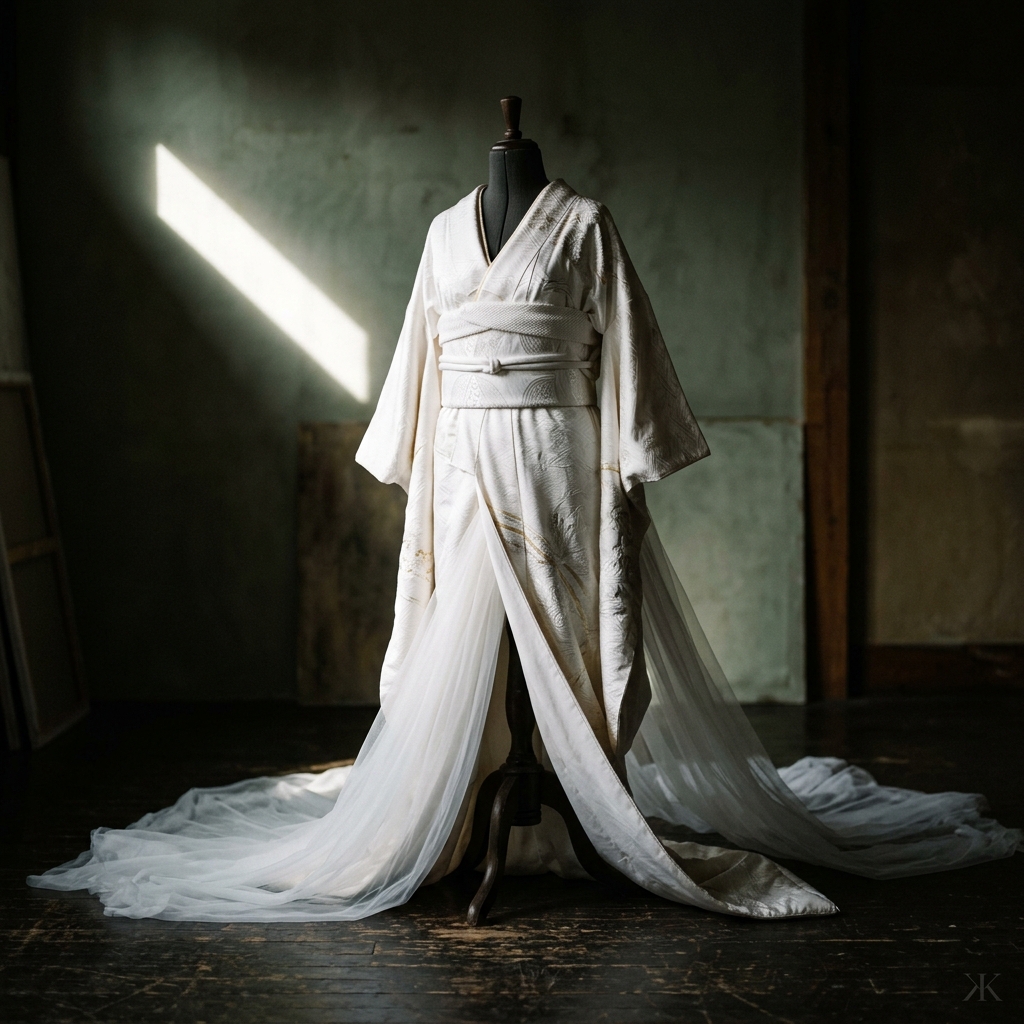
On June 29, Naomi Osaka walked onto Court 3 at Wimbledon in a floor-length white kimono — worn over her tennis kit, for a walk she'd finish in under two minutes.
She played the match in a Nike dress; the kimono came off before the first serve. But the walk-on is the part the internet kept — and the part that ended up on a product page.
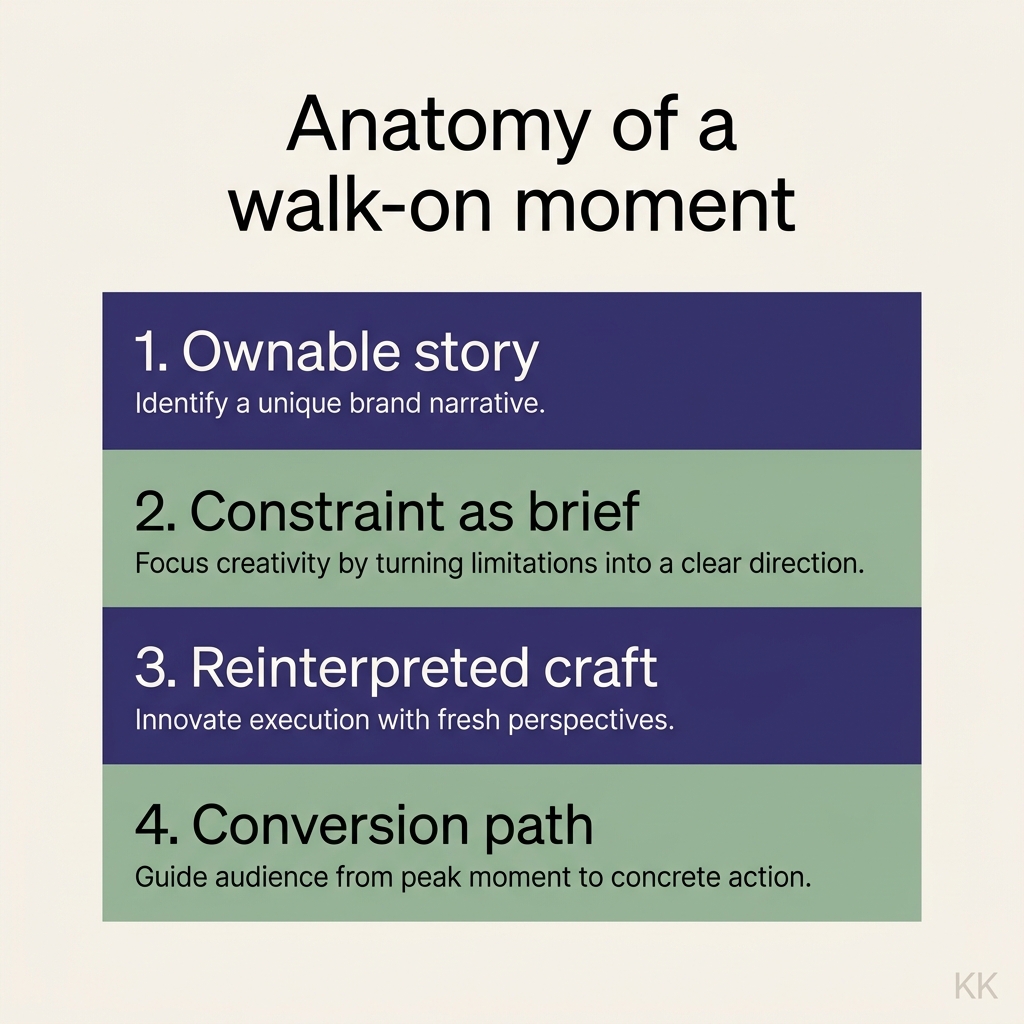
For US founders, the lesson isn't “stage a couture stunt.” It's the discipline underneath a garment built to be a moment — an ownable story, a constraint turned into a concept, real craft, and a way to buy it afterward. Here's how the whole thing was engineered.
What she actually wore
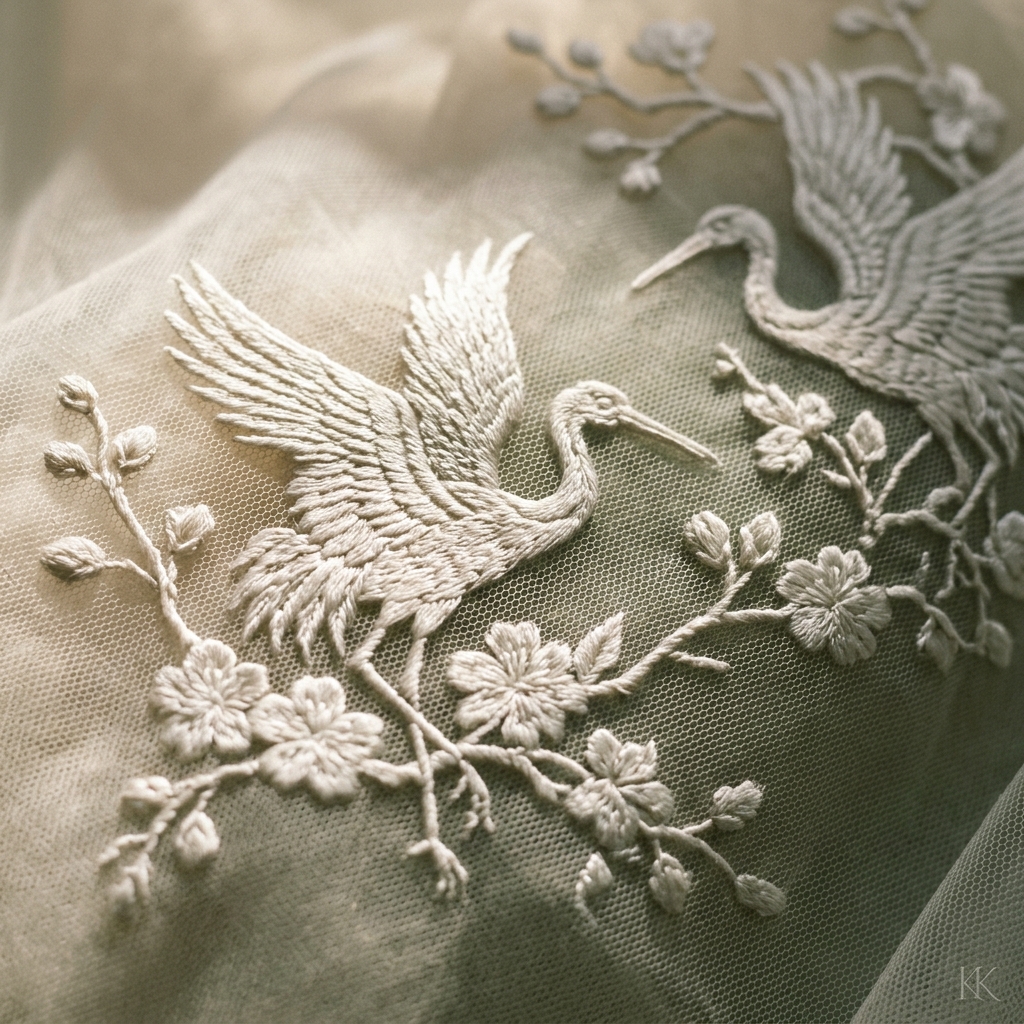
The look was a custom white robe by Tokyo-based designer Hana Yagi, with stylist Marty Harper. It drew on the shiromuku (the all-white kimono traditionally worn at a Japanese wedding) — furisode-style sleeves, an obi sash, embroidered cranes and cherry blossoms, and a semi-sheer tulle train, finished with a kanzashi hair ornament.
Underneath was a sleeveless Nike competition dress. The ceremony layer was designed to come off. That split was the whole point.
“I wanted the garment to exist as the moment before performance. The walk-on surrounds Naomi in ceremony, while the Nike kit represents the athlete in competition.” — Hana Yagi
The entrance is a product now
This wasn't a one-off. Osaka has turned the tennis walk-on (the pre-match entrance onto court) into a recurring designer runway — AMBUSH's Yoon Ahn at the 2024 US Open, a Robert Wun “jellyfish” at the 2026 Australian Open, a Kevin Germanier reveal at the French Open, now the kimono at Wimbledon. Tennis writers have started calling it the art of the entrance.
And it converts. Within days, Nike put the Wimbledon dress online. The ninety-second walk becomes a product page.
That's the shift worth naming: the entrance is now its own product category — the “arrival look” — and it can carry more attention than a season of paid media. We've watched the same physics in another arena, where the NBA tunnel turned a hallway into a runway.
The constraint became the concept
Wimbledon enforces the strictest dress code in sport — near-total white. Osaka didn't fight it. She used it: white pointed her to the most iconic white silhouette she could claim as her own, and the code became the brief rather than the cage.
The founder translation: constraints are a brief, not a cage. A single-color capsule, one hero fabric, a tight budget, a high minimum — the limit that feels like a wall is usually the most direct route to something ownable.
Signs you're fighting your constraint instead of using it
- • You describe your limits as “what we couldn't do,” never as the brief.
- • Your line looks like a watered-down version of a bigger brand's.
- • Remove the constraint and the idea has no point of view left.
Reinterpret heritage, don't reproduce it
The dangerous part of any heritage look is appropriation. Yagi's move avoided it: she didn't reproduce a kimono — she reinterpreted one, reworking vintage bridal and ceremonial dresses and studying contemporary kimono-dressing.
The pop reference sat on top of real heritage, not instead of it. Osaka has said the white-kimono idea came partly from Lucy Liu's O-Ren Ishii in Kill Bill — but it was anchored in her own Japanese-Haitian identity and built with a Japanese designer.
The founder translation: a cultural story works when you reinterpret with specificity and the right collaborators, and credit them out loud. Borrowed reads as costume; reinterpreted and attributed reads as a brand — the same reason craft-led positioning only lands when it's real.
“A borrowed aesthetic is a trend. A reinterpreted, credited one is a brand.”
The show still has to perform
A show piece that can't be worn is a photo, not a product. Yagi chose lightweight materials and researched real dressing techniques so the robe could be worn onto grass and taken off in seconds. The spectacle still had to function.
Then it had to convert — which is why the Nike drop matters. A moment with no product path behind it is just spend. The drop is the mechanism that turns attention into orders.
The honest caveat: most brands aren't Osaka, and a walk-on stunt without craft or a conversion path is just an expensive costume. Plenty of brands win quietly on product alone and never need a “moment.” The transferable part isn't the spectacle — it's the four things holding it up.
Free download
The Brand-Moment Playbook
A one-page checklist that runs any launch through the four layers — ownable story, constraint-as-brief, reinterpreted craft, and a conversion path — so a “moment” ends in orders, not just likes. PDF.
What we'd do in your shoes
We'd stop treating the “moment” and the “product” as two separate jobs — take one constraint you already have, turn it into a concept you can own, and make sure there's a real drop behind the spectacle. If your brand got ninety seconds on the biggest screen in your category tomorrow, which single piece would you want the camera on — and could people buy it that night?
Read next
7 min read
The Tunnel-Fit Economy Reshaping US Menswear
The NBA-tunnel version of the same lesson — the entrance as a discovery engine.
8 min read
The Jersey Standard: Product as Global Stage
Identity woven in, not printed on — craft that survives a 4K close-up.
9 min read
The 'Made in India' Trend Reshaping American Luxury
When heritage and craft become the brand's whole argument.
Comments
No comments yet
Be the first to share your thoughts!