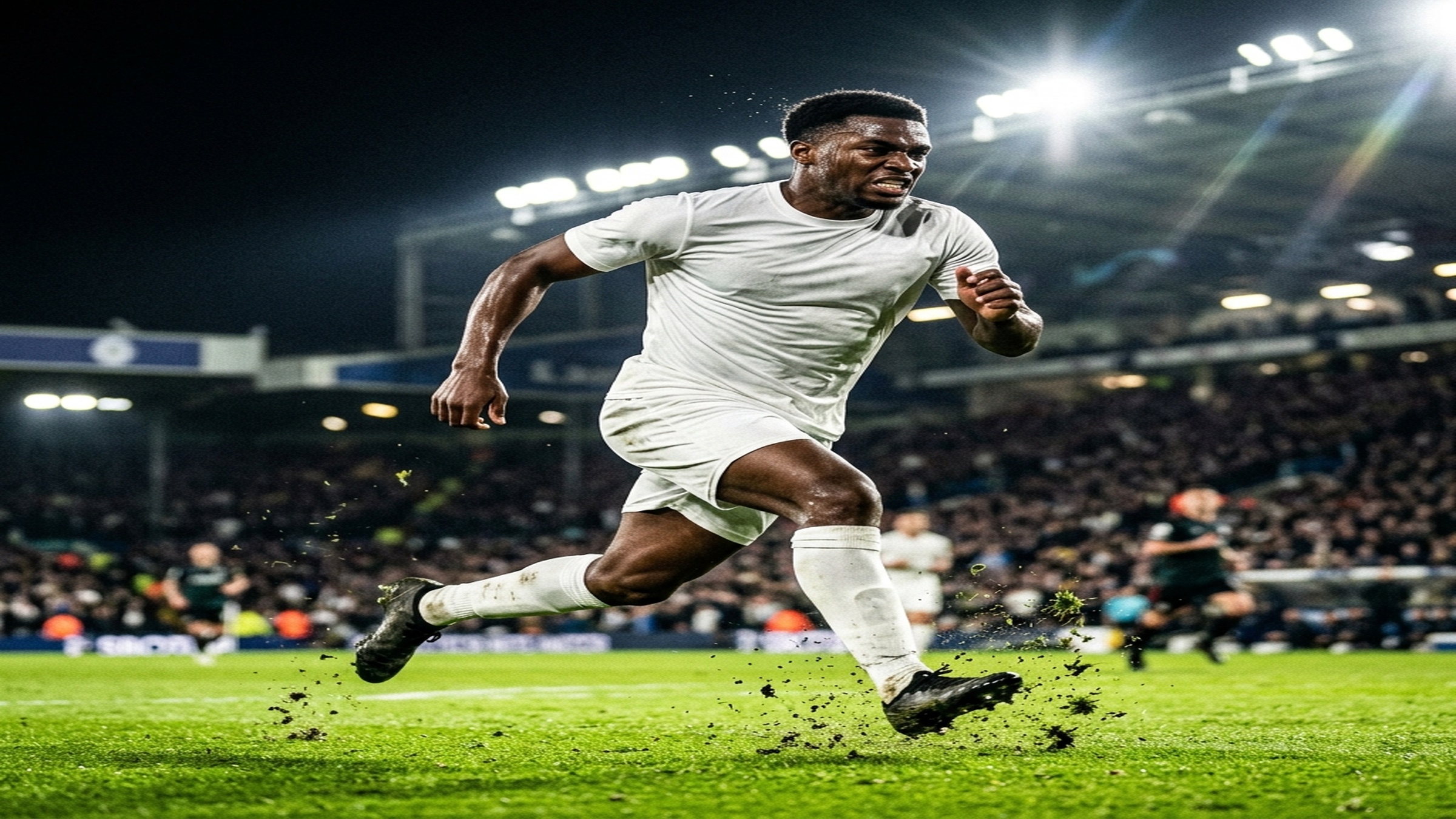
Right now, one shirt is being judged in 4K by more people than any other object on earth. Not a phone, not a car — a football jersey.
The 2026 World Cup is projected to draw roughly six billion engagements across broadcast and streaming. Every crest, seam, and fibre on the pitch sits under that lens. You don't have six billion viewers — but the discipline it takes to survive that scrutiny is the same discipline that builds a brand at any scale.
Nike, adidas, and Puma each spent four years engineering a single shirt to hold up to the close-up. Here's what they obsessed over — fibre, tiering, identity, the launch itself — and how each move ports down to a line you're building today.
The most-scrutinized garment on earth

The June 11 opener was already the most-watched World Cup match in US history — about 13.4 million viewers on Telemundo and Peacock for the Spanish-language broadcast alone. No consumer product gets that many eyes on its construction at once.
That is exactly why kit makers over-invest in detail. A puckered seam or a muddy crest doesn't just look cheap — it looks cheap to a stadium, a broadcast, and a hundred million phones running the replay. The garment has to be right at four feet and at four hundred.
We've made this argument before in a different arena: the NBA tunnel turned a hallway into a runway, where a hero piece either survives the close-up or files a return. The World Cup is the same lesson at the largest scale sport has.
“The jersey is the most over-engineered shirt on earth because it's the most-watched. Discipline, not budget, is what survives the close-up.”
Quality moved into the fibre
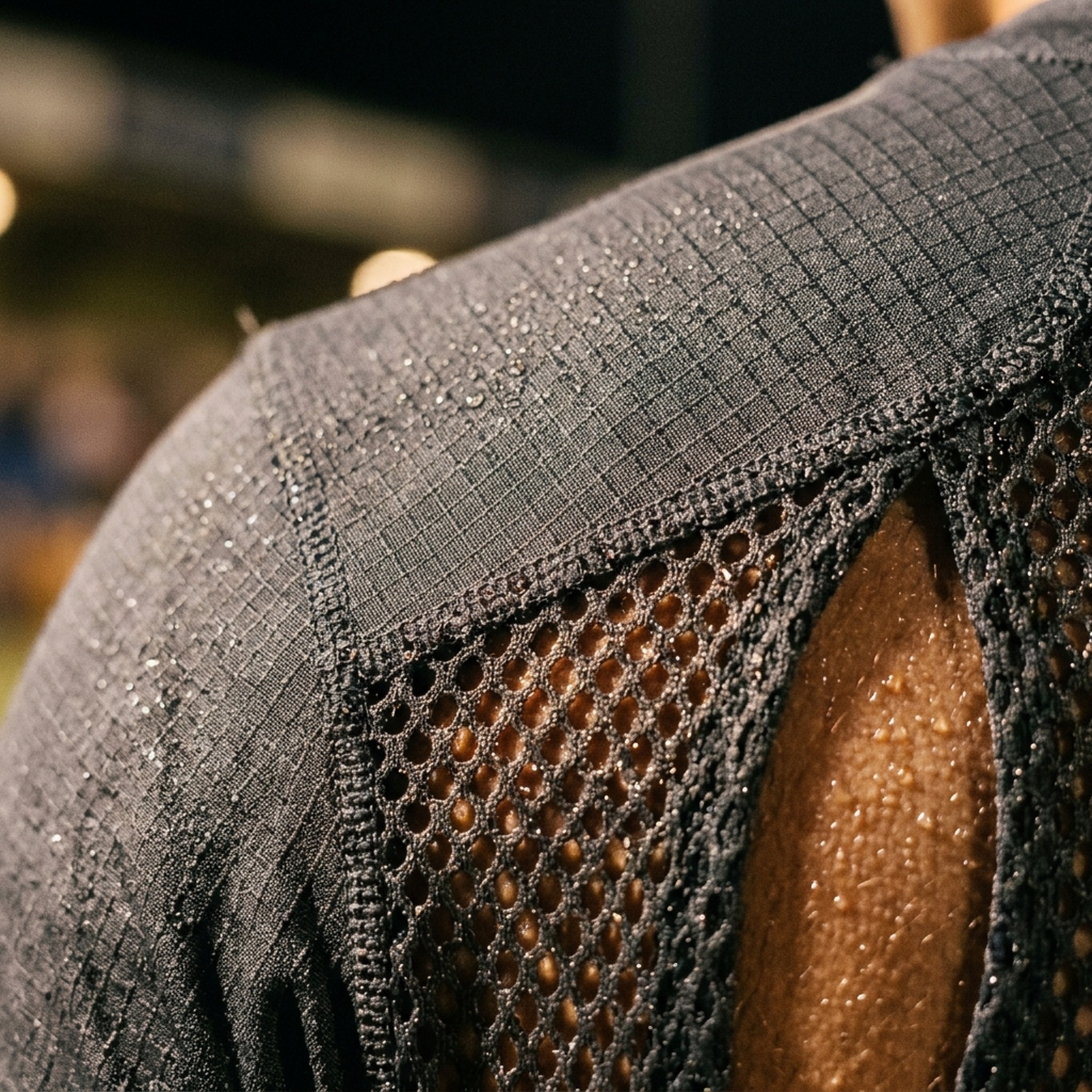
The three giants converged on the same answer this cycle: lighter weight, fewer seams, and ventilation engineered into the textile instead of printed on top. Nike's Aero-FIT kits claim more than twice the airflow of legacy fabrics, with the graphics knitted in rather than added on.
Puma went further into the weave. Its ULTRAWEAVE authentic jersey runs a 72-gram woven ripstop chassis with the panel count cut from four-to-eight down to two — fewer seams, fewer chafe points, less to fail under a zoom.
A few terms worth pinning down. Knit vs woven (knit is looped yarn, the default for football shirts; woven interlaces threads — Puma's woven ripstop is the unusual, technical choice). Ripstop (a weave with a reinforcing grid that stops small tears spreading). Laser-cut ventilation (airflow holes cut or bonded into the fabric, no stitch holes or seam bulk). And GSM — grams per square metre, the measure of fabric weight that separates a featherweight on-pitch shirt from a heavier fan one.
The founder lesson is not "buy Nike's machines." It's that performance now lives in the material choice and the construction — and those are the parts of the story worth telling, because they're the parts a camera can see.
“Quality stopped being something you print on a shirt. It's now something you build into the yarn.”
One design, two SKUs, a 45–70% gap
Every federation kit ships in two versions off one design. The authentic (the exact on-pitch, player-version shirt) and the replica (the relaxed-fit fan version). The authentic runs around $150 to the replica's ~$100 — a consistent 45–70% premium.
What you're paying for is construction, not a different logo. A heat-pressed crest (applied flat with heat, not stitched) instead of an embroidered badge; laser-cut vents instead of heavier double-knit; a slim athletic cut instead of a relaxed one.
For a founder, this is the most copyable move in the whole tournament. One silhouette can serve a performance buyer and a price-sensitive one — if the gap between your tiers is real, and you can name it in a sentence.
Signs your tier ladder is fake
- • The only thing that changed between tiers is the trim or the hangtag.
- • The fit is identical across the "good" and "better" versions.
- • You can't name the construction difference in one sentence to a customer.
Free download
The Tier-Ladder Spec Sheet
A one-page template that maps the five construction levers — seam/panel count, crest application, ventilation, fit, and weight — into a real good/better/best grid for your own product. PDF.
Material as a public signal — and where it gets dangerous
Recycled content is now table stakes at the elite tier, not a budget compromise. Nike says its 2026 federation kits are its first elite apparel made from 100% textile waste, via chemical recycling (breaking old textiles down to molecular building blocks to spin new yarn — distinct from bottle-to-textile recycling, which critics call downcycling). Puma supplies 11 nations with replica kits made via RE:FIBRE from at least 95% recycled textile waste.
Notice what makes those claims land: a named figure. A specific recycled percentage reads as quality; "made with recycled materials" reads as a hedge.
“Specificity is the trust signal. A named recycled percentage reads as quality; ‘made with recycled materials’ reads as a hedge.”
Here's the part the marketing skips. A December 2025 study found recycled polyester sheds roughly 55% more microplastic than virgin in the wash. And adidas's decade-long Parley partnership collapsed amid claims its flagship kits contained little to none of the advertised ocean plastic.
The giants can absorb that scrutiny. A smaller brand can't — the same fact-check that's a footnote for Nike is a brand-ending headline for a startup. So claim only what you can document.
Signs your material claim is a liability
- • You say "recycled" or "sustainable" without a number or a certificate behind it.
- • You can't name the feedstock or trace the chain of custody.
- • You haven't asked what an NGO fact-check would actually find.
Identity woven in, not printed on
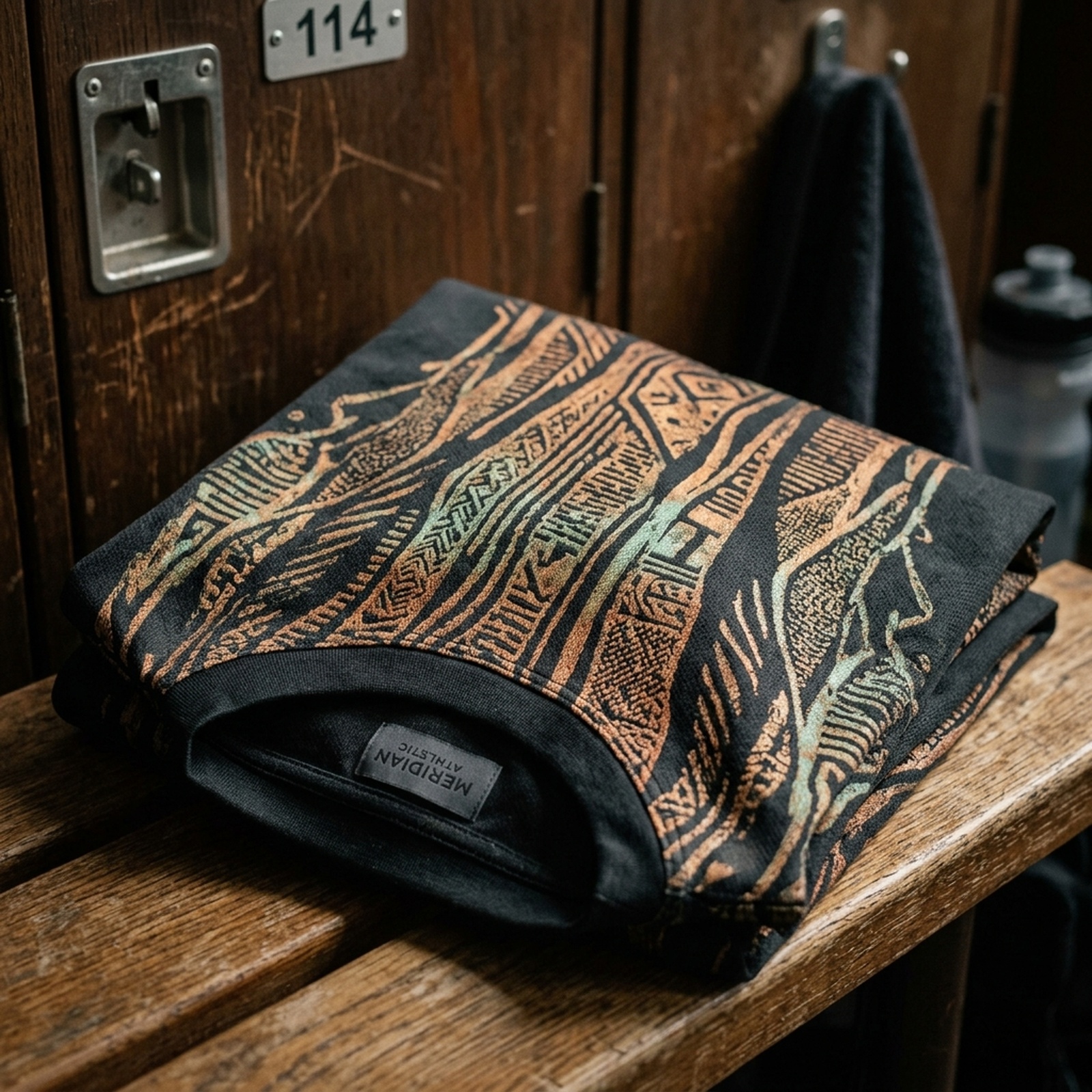
The strongest 2026 kits tell a story you can read in a glance. For the first time, U.S. Soccer commissioned fully bespoke "Stars" and "Stripes" typefaces exclusively for the federation — owning a visual language rather than borrowing one.
Mexico's home kit carries an Aztec Sun Stone motif used under license from a national museum. France built a Statue of Liberty concept across two shirts, home in original copper, away in oxidized patina. The motif is in the material, not slapped on as a print.
The founder move: tie one specific, ownable story to your colour, motif, and even type — and build it in. A borrowed aesthetic is a trend; an owned one is a brand.
There's a hard limit, though. FIFA forced Haiti to strip a depiction of its 1803 independence battle from its shirt days before kickoff. Heritage and licensing carry real legal edges — know where they are before you weave a story in.
The launch is the product
The 2026 reveals were run as fashion drops, not catalogue updates. Nike's X2 capsule paired seven federations with seven collaborators, Drake's NOCTA designed Canada's, and adidas marked Messi's 20-year anniversary with a Kith collaboration.
It converts. adidas's football-category sales rose sharply in Q1 2026 on World Cup demand, with roughly €250M of tournament product booked before kickoff (the ~49% football figure comes from earnings-call coverage; adidas officially reports its broader Performance line). Treating a release as a timed, collaboration-driven event is the move.
Signs your launch is just a restock
- • There's no date, no window, no reason to show up on day one.
- • No collaborator, no story, no point of view beyond "it's available now."
- • It's last season's drop with a new colourway and the same energy.
You don't need Nike's scale to run this
The obvious objection: this is a giant's game. The evidence says otherwise. Challenger brand Castore scaled from £4.3M in 2019 to £250M+ by 2024 and a ~£950M valuation — on a pure technical-quality narrative, not scale.
And the biggest stage is increasingly open: challenger kit brands supply 23% of teams at the 2026 World Cup, up from 18% in 2022. The four moves — material as signal, a real tier ladder, an owned identity, a launch with intent — are scale-independent. The giants just run them at extreme stakes.
Lead with a credible quality story and a legible identity. That is what survives the close-up at any size.
What we'd do in your shoes
We'd pick one move to run this quarter — usually the tier ladder, because it monetizes a single design twice, or one material claim we could document to the letter. We'd make the quality visible and specific, make the story ownable, and never claim what we couldn't stand behind under a zoom.
The jersey works because every choice on it can survive a freeze-frame. So: which choice on your best piece would you be glad to see zoomed in on by the whole world — and which one are you quietly hoping nobody looks at too closely?
Read next
7 min read
The Drop-Culture Model — When It Works, When It Doesn't
Turning a release into a timed, scarcity-built event — the discipline behind it.
9 min read
The 'Made in India' Trend Reshaping American Luxury
When craft becomes the positioning — quality as a brand's whole argument.
7 min read
Where US Fashion Is Heading After NYFW Men's
Craft over spectacle, menswear in front — the directional read for founders.
Comments
No comments yet
Be the first to share your thoughts!