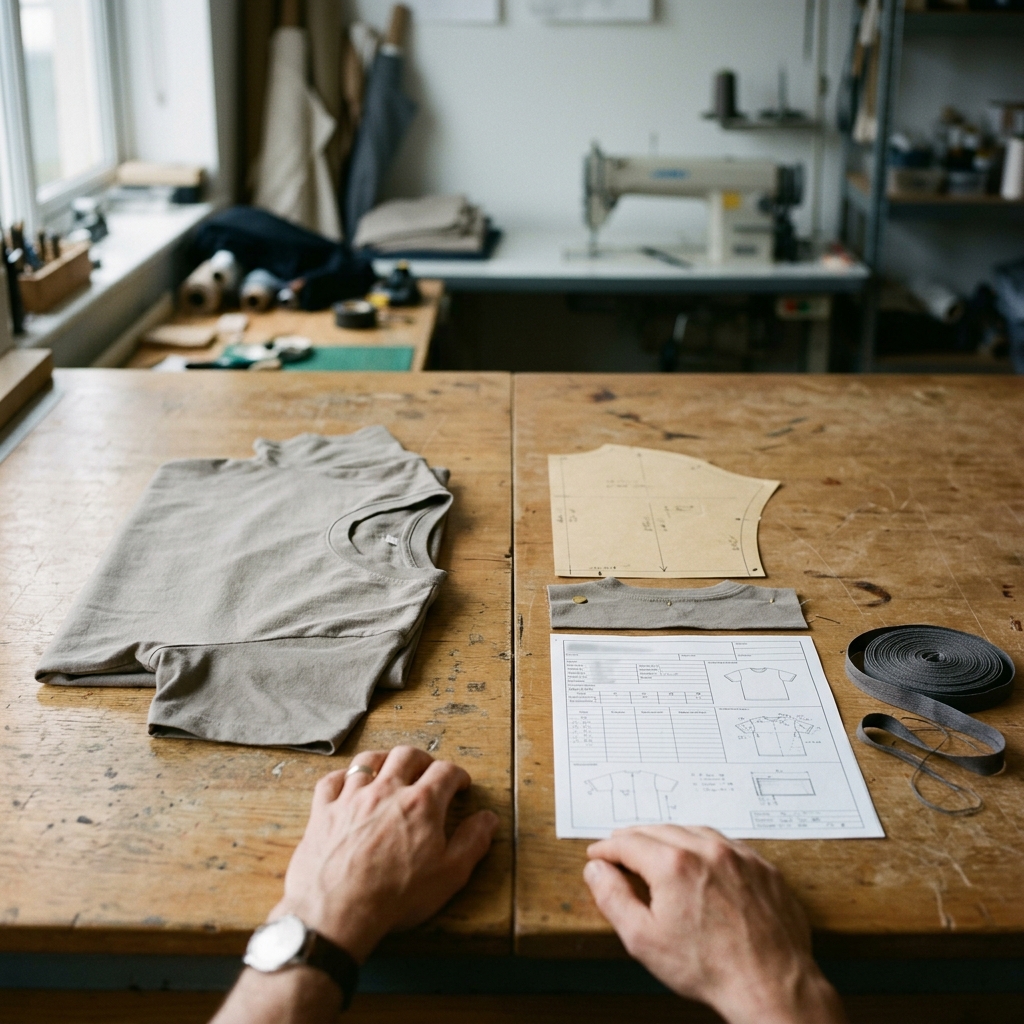
Two suppliers quote your tee. One says $9 a piece, 50 minimum, three weeks. The other says $12, 300 minimum, four months.
The first is not better at their job. They are selling two different things. Here is the difference between private label and custom clothing manufacturing, without the jargon.
The two models, in plain English
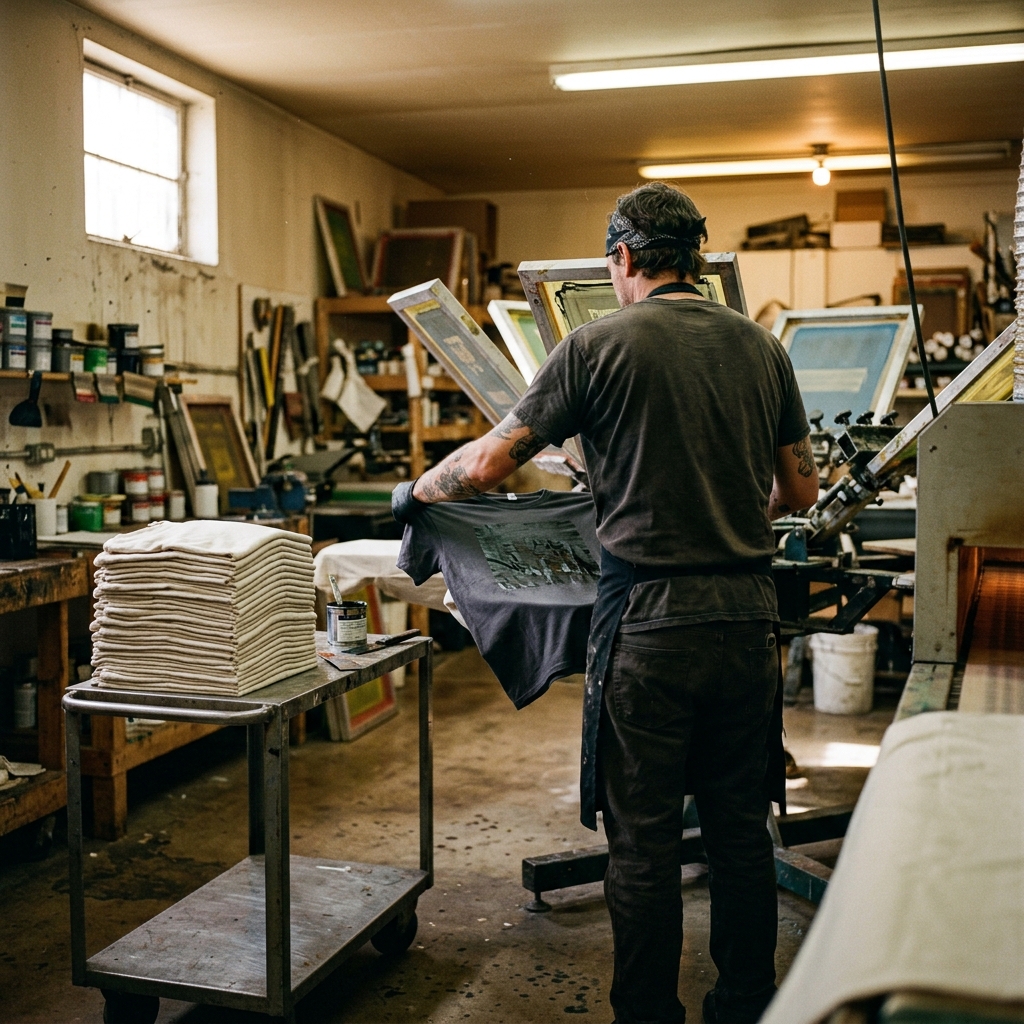
Private label starts from a garment that already exists. A supplier drew the pattern, chose the cloth, made the tee in bulk. You buy it, they sew your label in, you add a print.
Custom — the trade calls it cut and sew — starts from nothing. You pick the fabric, fit, seams and trims. That is the whole difference; price, minimums and timing all follow from it.
The one-line test
If a customer could buy the same garment from another brand with a different logo on it, you are doing private label. If they could not, you are doing custom.
Three words, three different deals
Suppliers use these three terms loosely, and the gap between them is where founders get surprised.
Infographic 01
The exclusivity spectrum
These are not three industries. They are three points on one line, and the line runs from “anyone can buy this” to “only you can.”
White label
A finished, unbranded garment sold to anyone who wants it. You add your label. So can your competitor, on the identical piece. Cheapest and fastest, and the least defensible.
Private label
The same idea, but with some exclusivity attached — often a colourway, a print or a small spec change made only for you. Sometimes it means a genuinely exclusive make. Sometimes it means a white label garment with a nicer word on the invoice.
Custom / cut and sew
Your pattern, your fabric, your construction. Nobody else can order it because it does not exist anywhere else. Slowest and most expensive to start, and the only one that leaves you owning something.
One question separates them: who owns the pattern? If the answer is the supplier, you are renting. Ask it early, in writing.
The comparison, on one screen
Typical ranges for a simple knit style. Your numbers will move with fabric, country and complexity.
| Private label | Custom (cut and sew) | |
|---|---|---|
| You start from | A finished garment that already exists | A sketch and a roll of fabric |
| Typical minimum | 24–100 per style and colour | 300–500 per style and colour |
| Cost per piece (worked tee, 300 units) | $8.48 all-in | $14.80 all-in |
| Money up front before stock | ~$250 in screens and label setup | ~$900 in pattern, tech pack and samples |
| Time to delivered stock | 3–5 weeks | 14–26 weeks for the first style |
| You control | Colour, artwork, labels, packaging | Fabric, fit, weight, seams, trims, everything |
| You cannot change | The fit, the cloth, the way it is built | Very little — but every change costs time |
| You own afterwards | Your artwork and your customers | A graded pattern and a fabric spec, reusable forever |
| Can a rival sell the same garment? | Yes, often literally the same one | No |
| Best when | Testing demand, graphic-led product, tight cash, fast drops | Fit or fabric is the product, proven demand, repeat styles |
Read the last two rows first — everything above them is logistics. The minimums are typical, not fixed; how far they bend is worked through in what a no MOQ clothing manufacturer really costs.
What each one costs per piece
One mid-weight cotton crew tee, priced both ways at 300 pieces.
Infographic 02
The same tee, both ways, at 300 units
One mid-weight cotton crew tee, 300 pieces, all-in cost per garment before freight and duty. Worked example, not a price list.
Private label
- Finished blank garment$4.50
- Your label sewn in$0.60
- Print / decoration$2.20
- Finishing and pack$0.35
- Development, spread$0.83
Custom cut and sew
- Fabric, 240 GSM cotton$6.30
- Trims and labels$0.90
- Cut and make$3.80
- Finishing, QC, pack$0.80
- Development, spread$3.00
Custom is $6.32 more a garment, which reads as a loss. It is not: $3.00 of that gap is development — tech pack, pattern, grading, samples — paid once per style, however many you make.
| Units in the run | $900 development, per garment | Gap vs private label |
|---|---|---|
| 100 | $9.00 | widest |
| 300 | $3.00 | $6.32 |
| 500 | $1.80 | narrowing |
| 1,000 | $0.90 | narrow |
| 5,000 | $0.18 | effectively gone |
On private label you also pay someone else’s margin on the cloth. Buy it yourself and the weight you specify moves cost more than order size does — see the GSM guide, and costs at every MOQ tier.
“Private label rents you a garment. Custom builds you one you own.”
How long each one takes
Private label is quick because the slow part already happened, in someone else’s factory, months ago.
Infographic 03
Weeks to delivered stock, first style
Typical ranges for a first order. A repeat order on the same pattern and fabric skips most of the custom bar.
Private label
- Pick blank, confirm colour
- Label + print setup, strike-off
- Decorate, relabel, pack
Custom
- Tech pack + pattern
- Fabric sourcing + lab dips
- Sampling, 2–3 rounds
- Production
- Freight + customs
Two things shorten it: deciding fabric early, because lab dips (test swatches dyed to your colour) sit on the critical path, and a complete tech pack up front — the difference between two sample rounds and five.
Work backwards from the date you need stock: a November drop is a June decision.
What you own when it’s over
Two years of private label leaves you your artwork, audience and customer list. Real assets — but not the garment. The supplier owns the pattern and can sell it to whoever asks next.
Two years of custom leaves you a graded pattern (your fit, sized across the range), a fabric spec and suppliers who know your standard. Season two starts from there, not from zero.
Neither route protects your brand. That takes a trademark — a US Class 25 filing starts at $350 per class. Own the name whichever model you pick.
Free download
The Production Model Decision Sheet
One page. Both models costed side by side with your own numbers, the eleven questions to ask a supplier before you compare quotes, and the pattern-ownership clause to look for in writing. Spreadsheet + PDF.
The cost line both models share
The factory price is not the price. Cotton knit tees enter the US at 16.5% duty under heading 6109.10.00, and since CBP’s indefinite suspension of the $800 de minimis exemption in June 2026, nothing arrives duty-free.
Infographic 04
Where the quote stops and the real cost keeps going
The custom tee from earlier, carried from the factory floor to your warehouse door.
- Factory price$11.80
- Freight and insurance$0.85
- Duty at 16.5%$1.95
- CBP processing fees$0.30
- Customs brokerage$0.45
| Line | Per garment |
|---|---|
| Factory price (the quote you were given) | $11.80 |
| Freight and insurance | $0.85 |
| Duty at 16.5% | $1.95 |
| CBP processing fees | $0.30 |
| Customs brokerage | $0.45 |
| Landed cost | $15.35 |
The factory quote is 77% of the real number. Miss that and a range planned at 60% margin ships nearer 50%.
Private label carries the same costs, hidden: buy US blanks and the duty is baked in, with the importer’s margin on top. Convenient, impossible to audit. Parcel-level version: the de minimis hangover.
Three questions that decide it
Forget price for a moment. The model is chosen by where your product’s value sits and how much room you have to be wrong.
Infographic 05
Three questions, one answer
Answer honestly. The model you should use is the one you say three times.
Question one does most of the work. If people buy your tee for the graphic, a good blank carries it. If they keep saying the fit is boxy, no artwork fixes that.
Question three is the one founders skip. Only 34.7% of establishments born in 2013 still traded a decade later. A first order you cannot survive losing is the whole company on one guess about a colour.
Signs you should stay private label
- • Nobody outside your circle has paid full price yet.
- • The design is the graphic, not the garment.
- • You are testing several ideas at once.
- • You need stock this quarter, not next season.
- • A dead order would end the business.
Signs you have outgrown it
- • Customers ask for a fit the blank cannot give.
- • The same style has sold out at full price twice.
- • A competitor is selling your identical blank, cheaper.
- • Your supplier discontinued a style you depend on.
- • You want a fabric nobody stocks as a blank.
When custom is the wrong call
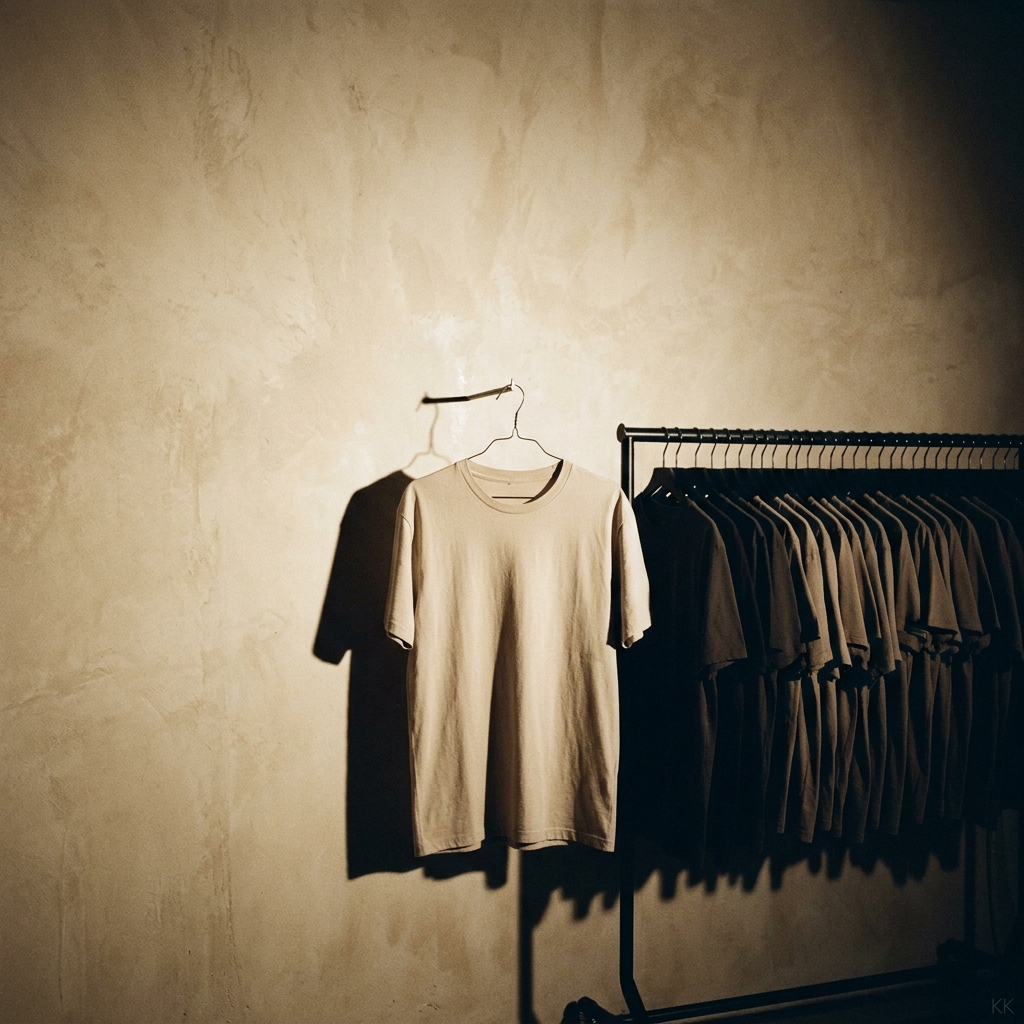
Custom is not the mature choice; private label is not the beginner one. Plenty of profitable brands never leave blanks, because their product genuinely is the artwork. A mediocre bespoke tee at $18 loses to an excellent blank at $9.
Timing argues for caution too. Clothing retailers carried 1.99 months of inventory against monthly sales in May 2026, and in McKinsey and BoF’s State of Fashion 2026, 46% of executives expected conditions to worsen.
The mirror failure is real too. A brand that has sold the same borrowed tee out five times and still owns no pattern has built years of demand for a garment it cannot protect.
What we’d do in your shoes
Treat it as a sequence, not an identity. Prove demand on private label, then move your one proven best-seller to custom. So: which single style has earned its own pattern — and what is stopping you moving just that one?
Common questions
What is the difference between private label and custom clothing manufacturing?
Private label starts from a garment that already exists: a supplier designed and made it, you buy it and sew your own label in. Custom, or cut and sew, starts from your own pattern — you choose the fabric, fit and construction, and the factory builds something that did not exist before you ordered it. Everything else, price, minimums and lead time, follows from that one difference.
Is private label clothing manufacturing cheaper than custom?
Per piece yes, especially in small runs. On a worked 300-piece cotton tee, private label lands near $8.48 a unit against about $14.80 for custom. But $3.00 of that gap is one-time development, which falls to $0.90 a garment at 1,000 units and $0.18 at 5,000. At volume the two converge, and custom often wins on fabric because you buy the cloth directly instead of paying someone else's margin on it.
What is the minimum order for private label vs custom manufacturing?
Private label minimums are low because the hard part is already done — commonly 24 to 100 pieces per style and colour, and sometimes as few as a dozen if you are decorating stock blanks. Custom cut and sew usually starts at 300 to 500 per style and colour, and the constraint is the fabric mill rather than the factory: knitting and dyeing a specific cloth carries its own minimum that no sewing floor can waive.
Which manufacturing model should I choose for my brand?
Choose by where your product's value sits. If customers buy you for the artwork, a good blank carries it and private label is enough. Move to custom when the fit or the fabric is the product — and when the same style has sold out at full price twice, so a 300-piece run is a restock rather than a guess. On timing, expect 3 to 5 weeks for private label against 14 to 26 weeks for a first custom style.
Read next
10 min read
No MOQ Clothing Manufacturers
What a small first run really costs, and when staying small stops being smart.
6 min read
What Is a Tech Pack?
The spec document that decides whether custom takes two sample rounds or five.
15 min read
How to Start a Clothing Brand in 2026
The eight-step build order, from niche to first production run.
Comments
No comments yet
Be the first to share your thoughts!