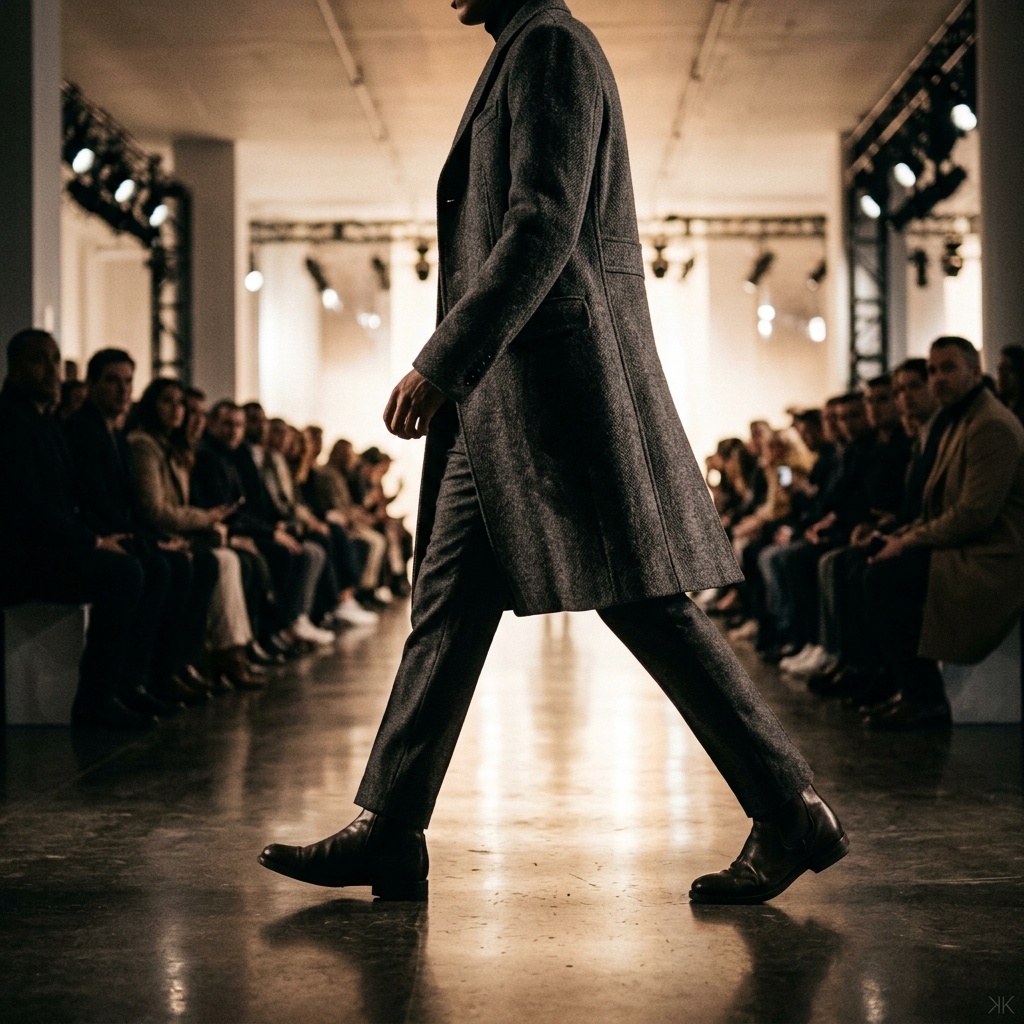
NYFW Men's just wrapped. The signal worth catching isn't any single look. It's the throughline you can now draw across the year's major fashion moments — and the direction it points US founders toward.
Craft is winning over spectacle. Menswear is the category pulling the signal forward. The brands deciding their 2027 lines right now have one moment to read this clearly.
What follows is the directional read — the throughline from the spring shows, the Fashion Fund roster as a confirming signal, and four founder moves the data supports.
What June showed: craft beat spectacle
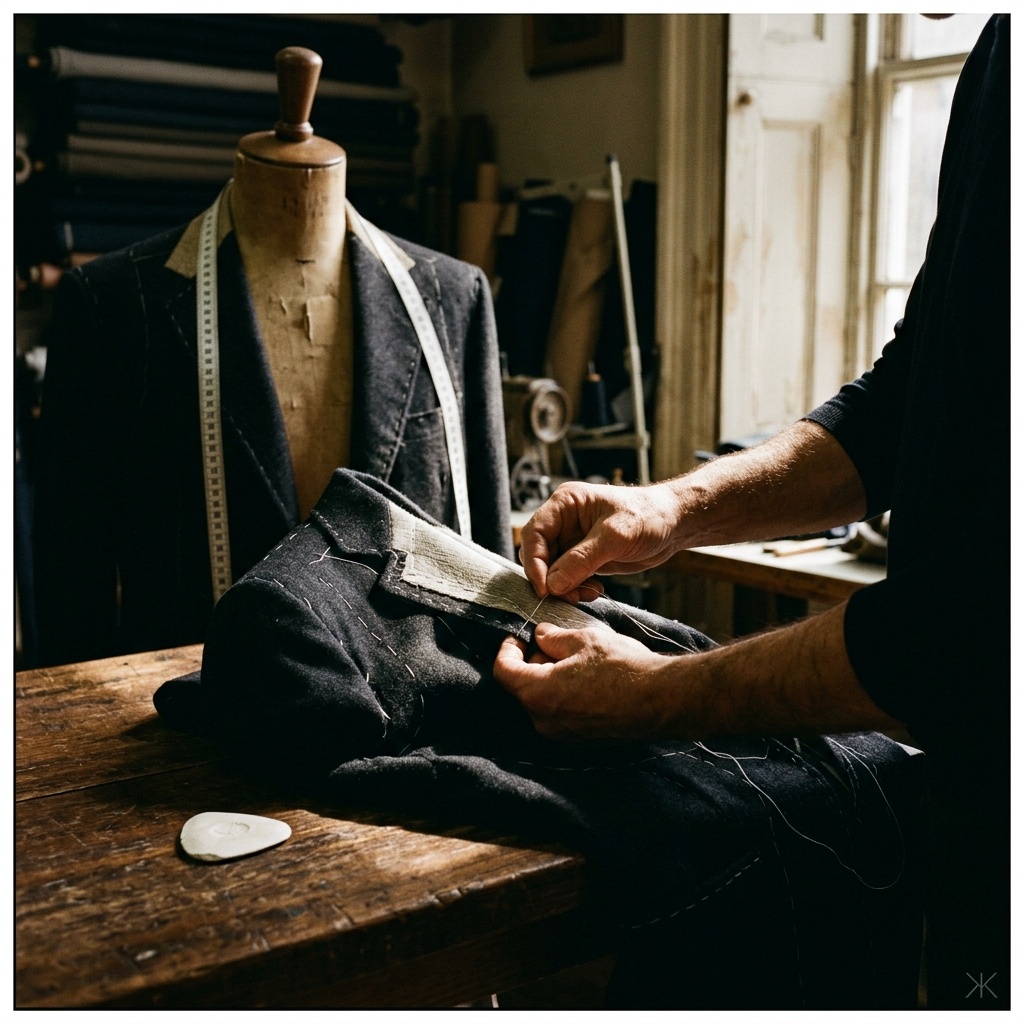
The 2026 Met Gala made the most-shared garment of the year a piece with 761 hours of visible hand-work behind it. Cannes pushed that further — the carpet's breakout looks averaged over 22,160 hours of atelier time across the headline gowns.
NYFW Men's this week was the third data point. The most-discussed shows weren't the ones with the biggest production budgets. They were the ones whose construction read from across the room — hand-finished lapels, visible basting, chosen-not-default fabrics.
Quiet luxury as an aesthetic is done. What replaced it is the same instinct made specific: a brand-defining construction story told on the garment itself.
“The construction reads from across the room. That's the brief.”
Why menswear is where the energy is in 2026
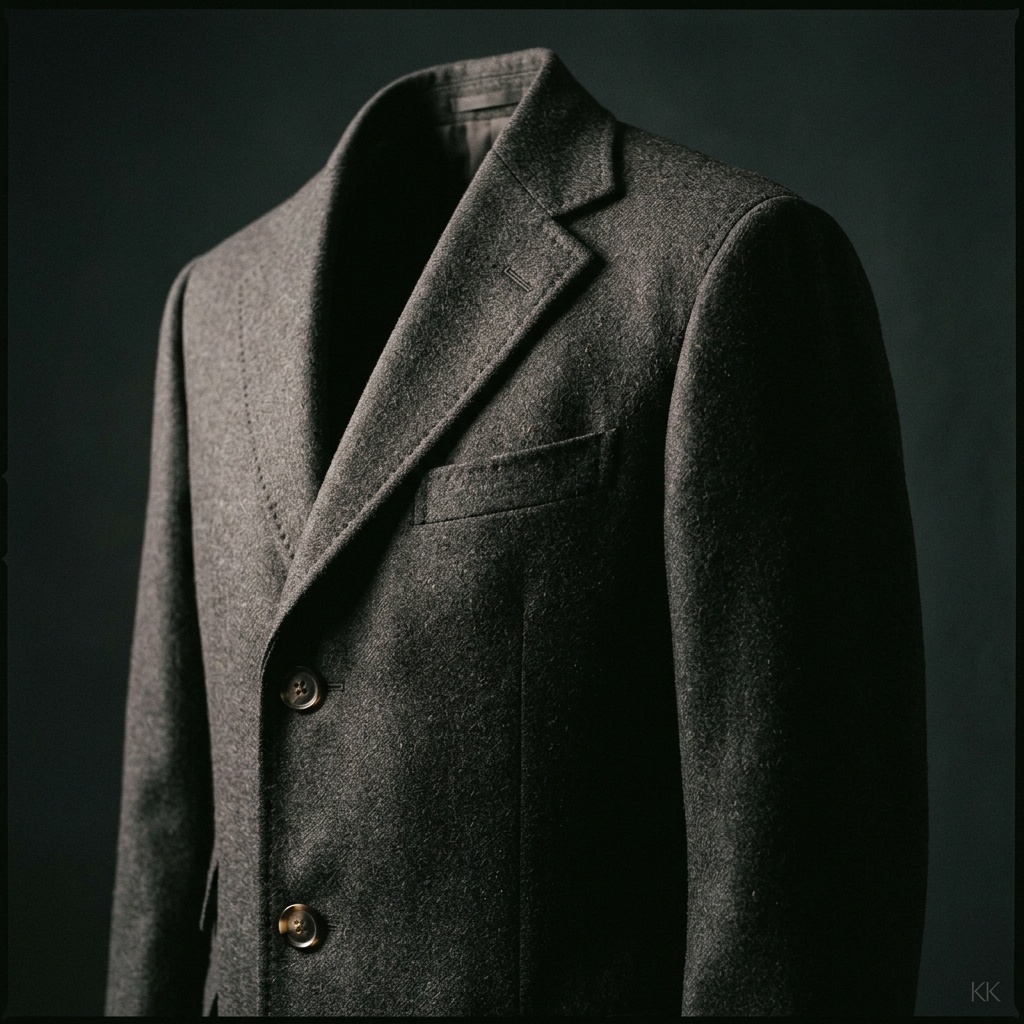
The category isn't surprising anyone who's been paying attention. DONDA-core's 2026 resurgence was the public version of a quieter shift: US menswear has been compounding cultural attention for three seasons, and the buy-in finally caught up with the press.
The NYFW Men's slot itself was treated as the more interesting calendar this year — not the September main cal. Pre-fall (a smaller, often craft-led collection delivered between the main fall season and resort — designers use it to make a sharper point of view than the larger fall show allows) reads as the season editors most-anticipated.
Translation for founders: if your category has a credible menswear cut, lead the next launch from there. Even brands that have historically run women's-first are testing the inverse.
Four signals from the shows → four founder moves
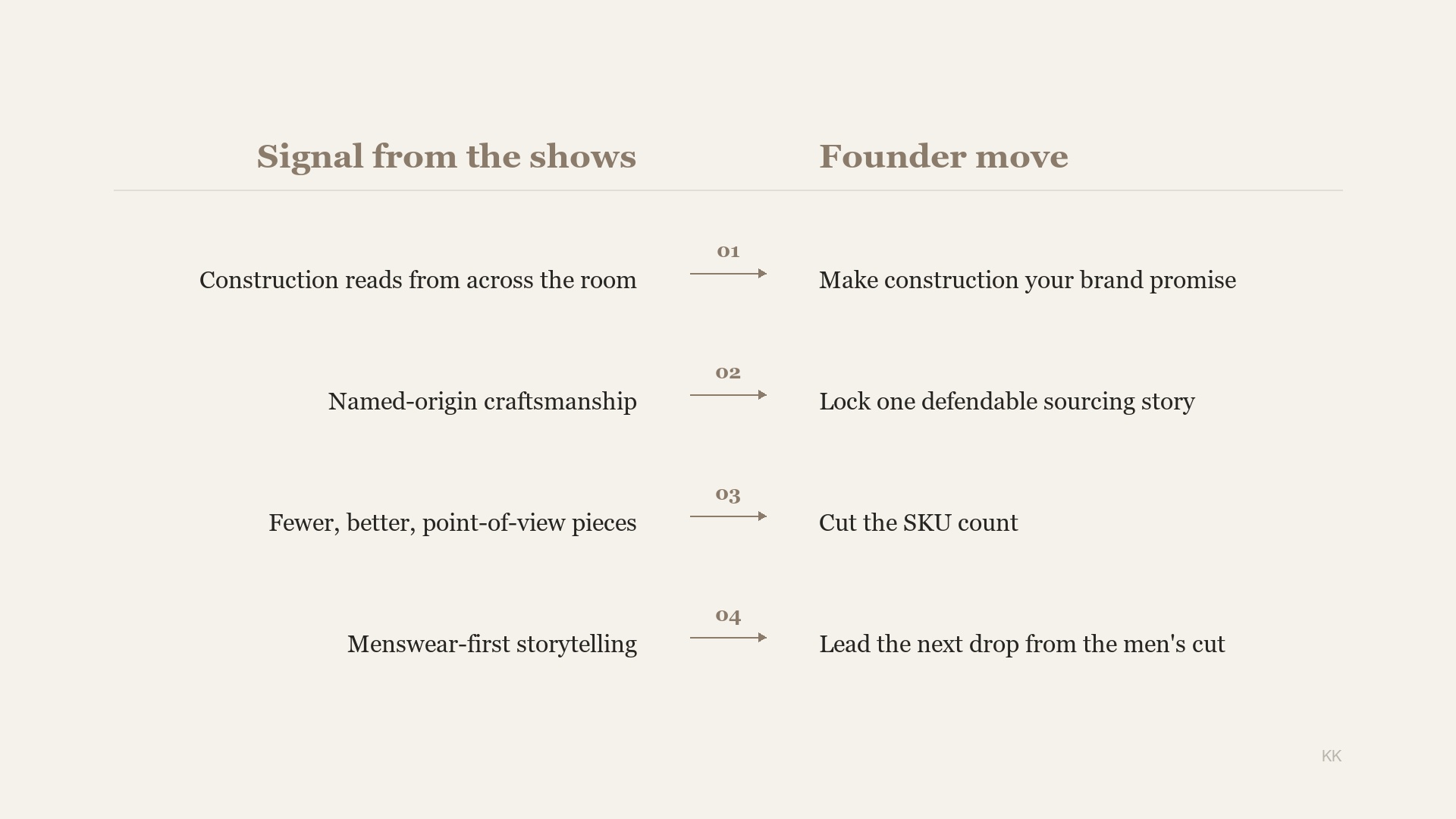
Four patterns reading clearly off this June, and the founder move each one calls for. Use the "Signs you're missing this signal" boxes below as a check on the next line plan.
1. Construction visible from across the room → make construction the brand promise
The garments getting attention are the ones whose making is legible at four feet away — hand-finished lapels, visible basting, choose-not-default seams. The construction isn't hidden inside the garment; it's the point.
The founder move: pick the one construction detail you can defend on every SKU. Make it your brand promise, not a feature of the lookbook.
Signs you're missing this signal
- • Your line story still leads with print or colour, not construction.
- • Your tech pack defaults to factory-standard seams.
- • You can't name the one detail that runs across every SKU in the line.
2. Named-origin craftsmanship → lock a single sourcing story you can defend
Editorial language across the June moments leaned on specific origins — not country-of-origin labels, but named mills, named ateliers, named techniques. Buyers are buying provenance, not just product.
The founder move: pick the one sourcing story you'd defend in a print interview. Named-origin craft sourcing from one place will outperform generic premium positioning every time.
Signs you're missing this signal
- • Your sourcing is a list of factories, not a story.
- • Your product page leads with material, not maker.
- • Your team can't answer "why this mill, why this workshop?" without checking notes.
Free download
The 2026 US Fashion Direction
A one-page read on the year's major fashion moments, the throughline across them, and four moves the data supports for US founders. PDF.
3. Fewer, better, point-of-view pieces → cut the SKU count
The shows that read sharpest weren't the widest. They were the tightest — a capsule (a tightly-scoped set of pieces designed around a single point of view, usually 8–15 SKUs) instead of a sprawling ready-to-wear (the main commercial line — not couture, not made-to-measure) run.
The founder move: pull last season's sell-through, cut the bottom third by SKU count, and reinvest the open-to-buy into deeper construction on the remaining pieces.
Signs you're missing this signal
- • Your line plan grew by SKU count this season instead of shrinking.
- • Your bottom-third sell-through hasn't been reviewed before the next assortment.
- • "What does this line stand for in one sentence?" gets a list of features, not a point of view.
4. Menswear-first storytelling → lead with the men's cut
The brands getting picked up by the better stockists this season led with menswear or unisex-tailored — not the women's-first calendar most US brands default to. The cultural attention is where the editorial attention is.
The founder move: if your category has a credible men's cut, lead the next drop from there. If it doesn't, build one as a six-SKU capsule and learn what the men's editorial cycle does for the rest of the line.
Signs you're missing this signal
- • Your men's assortment is sized-up women's rather than designed-for-men.
- • Your editorial outreach is women's-only by default.
- • The team can't name three men's editors who'd cover this brand.
The Fashion Fund roster as a directional signal
The runway shows are one read. The CFDA/Vogue Fashion Fund roster is the quieter, sharper one — a small group of designers the industry has decided are worth betting on for the next twelve months.
This year's cycle: 10 finalists, winner announced October 20, $300,000 grant plus a year of structured mentorship. The selection criteria are public and the cohort is published — you don't need to predict the winner to read the signal in the shortlist itself.
Read the cohort this week. What you'll see lines up with the throughline: craft-coded brands, point-of-view-led assortments, and a meaningful menswear weighting. The Fund isn't telling you what's next — it's confirming where the industry has already pointed its money.
When spectacle still wins
The craft thesis isn't universal. Hype-driven streetwear, logo-led drops, and performance categories still move units on theatre — the shoe brand whose entire economy is the queue, the streetwear label whose Instagram drops sell out in ninety seconds.
Those brands aren't reading the same signal because they aren't playing the same game. Their economy is FOMO, not provenance. The drop-culture model is its own discipline with its own metrics.
If your brand is positioned in that lane, optimise for spectacle. If it's anywhere else, the June signal is the one to act on.
What we'd do in your shoes this season
Open the line plan this week. Cut the bottom-third sell-through SKUs and reinvest the open-to-buy into one construction detail you can defend on every remaining piece.
Name the one sourcing story you'd give a print editor in a single sentence. If you can't, that's the missing piece — not the assortment.
Then ask whether the next drop should lead from the men's cut. For more brands than will admit it, the answer in 2026 is yes.
Read next
8 min read
What the 2026 Met Gala Taught US Fashion Founders About Craft
761 hours of hand-work behind a single look — and the founder lesson.
8 min read
The Quiet Luxury Aesthetic Is Dead — What's Next
Aesthetics die. Perspectives don't. Here's what replaces it.
8 min read
What US Founders Should Steal from the DONDA-Core Resurgence
Cultural anchor, limited drop, product as artifact — the menswear playbook.
Comments
No comments yet
Be the first to share your thoughts!