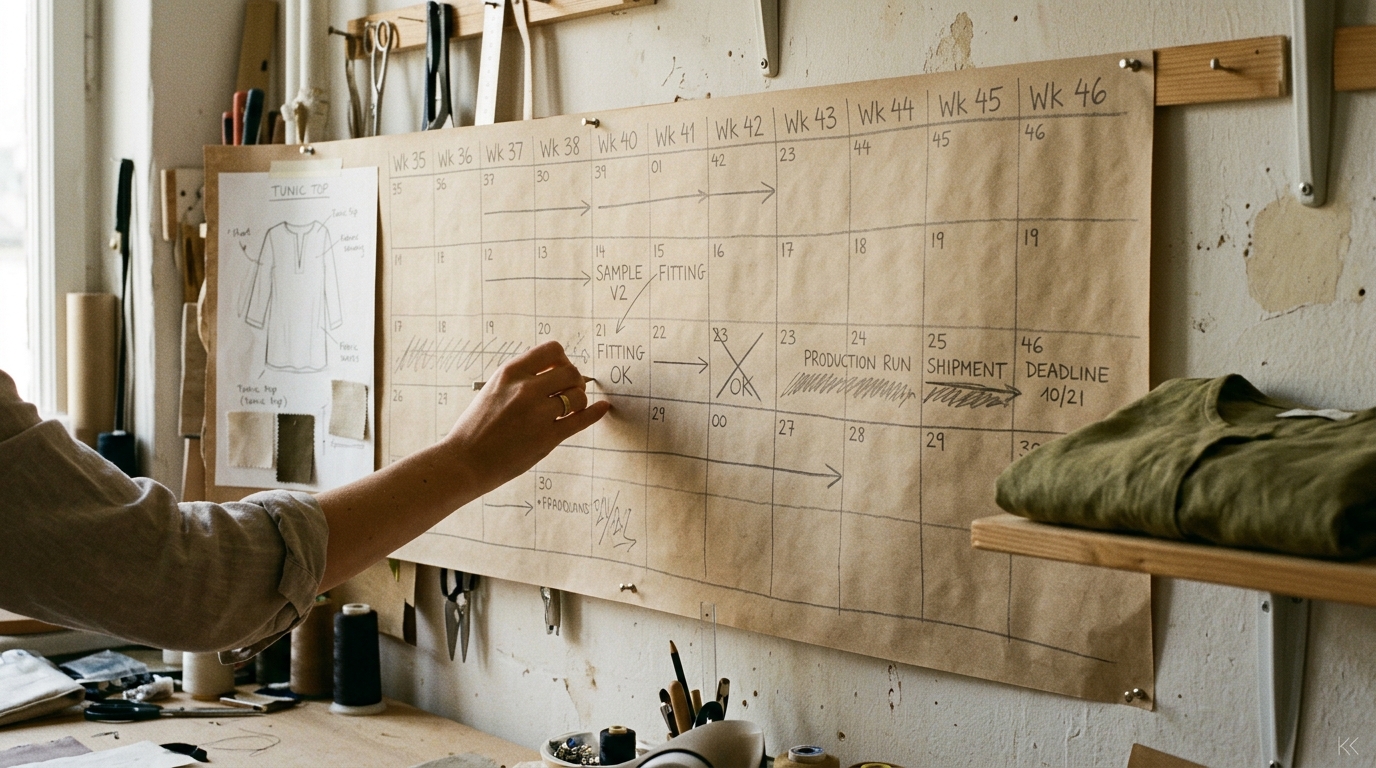
The sketches are done. You can picture the whole first drop. So you ask the only question that matters: how long until I can sell it?
About four months if everything goes right. Closer to six the first time. That gap is rarely the factory being slow. It is the weeks lost waiting for someone to say yes.
Here is the whole clothing production timeline, stage by stage. Real week counts, and the parts nobody warns you about.
Four months is real — here’s the catch
Four months is a real number. It is what a small, focused collection takes when nothing sits waiting. Our own four-step process runs on that schedule — design, sampling and sourcing, bulk production, then quality check and dispatch.
The catch is hiding in those three words. Nothing sits waiting means you answer a fit question the day it lands, not the following Tuesday. It means you picked the fabric in week five, not week nine.
Infographic 02
The same collection, three speeds
Nothing changes about the factory across these three rows. What changes is how quickly decisions get made and how the goods travel.
- Before anything is cutplanning, tech packs, fabric, sampling
- Making itbulk fabric, cut, sew, QC, packing
- Moving itfreight, customs, inland delivery
Three lanes, same factory. Thirteen weeks separate the top row from the bottom. Almost all of that is you deciding.
“Factories are rarely the slow part. Inboxes are.”
The whole timeline on one screen
This is the middle lane — 23 weeks, a small collection, shipped by sea. Every stage below gets its own section.
Infographic 01
A 23-week collection, week by week
A small first collection on ocean freight. The four colour bands are the four phases; the stages inside them are what actually fills the calendar.
Look at it once and the shape changes. Most founders think manufacturing means sewing. Sewing is four weeks out of twenty-three. For a shorter version of this map, see the lead-time timeline from concept to doorstep.
Phase 1 — Design: weeks 1 to 4
Two weeks on the range plan: how many styles, in which colours and sizes, at what price. Then two weeks turning each one into a tech pack — the spec sheet a factory builds from, with flat sketches, measurements, stitch types, trims and label placement.
This is the cheapest phase, and it decides everything after it. A vague tech pack does not save you two weeks now. It costs you three later, when the samples come back nearly right.
Signs phase 1 isn’t finished
- • You still say “something like this” when you describe a style.
- • Sizes are named but not measured, in inches, point to point.
- • Nobody has decided which trims and labels go where.
- • The colour exists as a screenshot, not a reference code.
Phase 2 — Sampling & sourcing: weeks 5 to 11
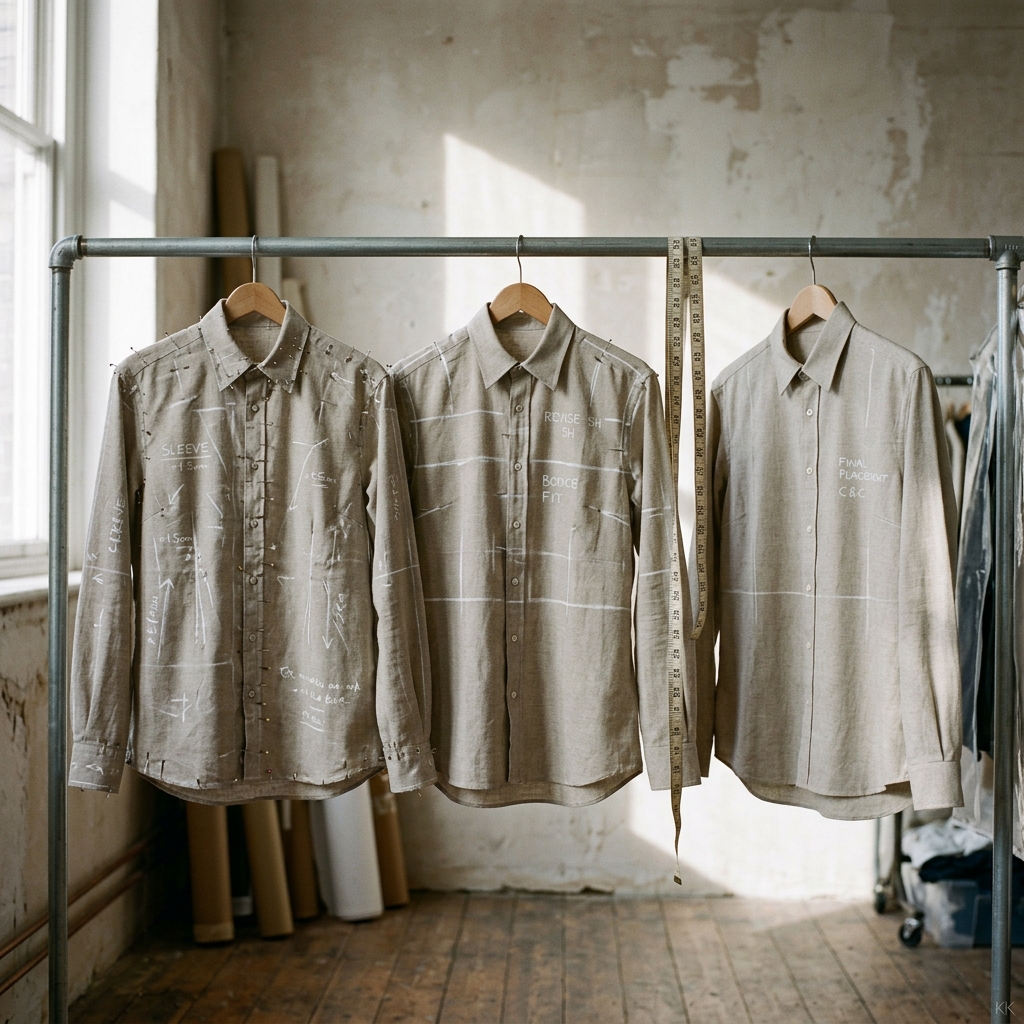
Seven weeks, and the hardest to manage. Two jobs run side by side here, and either one can stall the other.
Fabric first, weeks 5 to 7. You choose the cloth, then approve lab dips — small swatches dyed to your exact colour. A lab dip comes back, you reject it, they dye it again. That back-and-forth is why fabric, not the factory, usually sets the pace.
Then the garment, weeks 8 to 11. A pattern maker drafts your shape and the sample room sews a first prototype. Two or three fit rounds follow, each one a week: try it on, mark it up, send it back. Getting the fit right here is also where grading across your size range is settled.
Phase 2 ends with a pre-production sample: one approved garment the factory keeps on the table as the reference for the entire run. Nothing should start without it.
Phase 3 — Bulk production: weeks 12 to 17
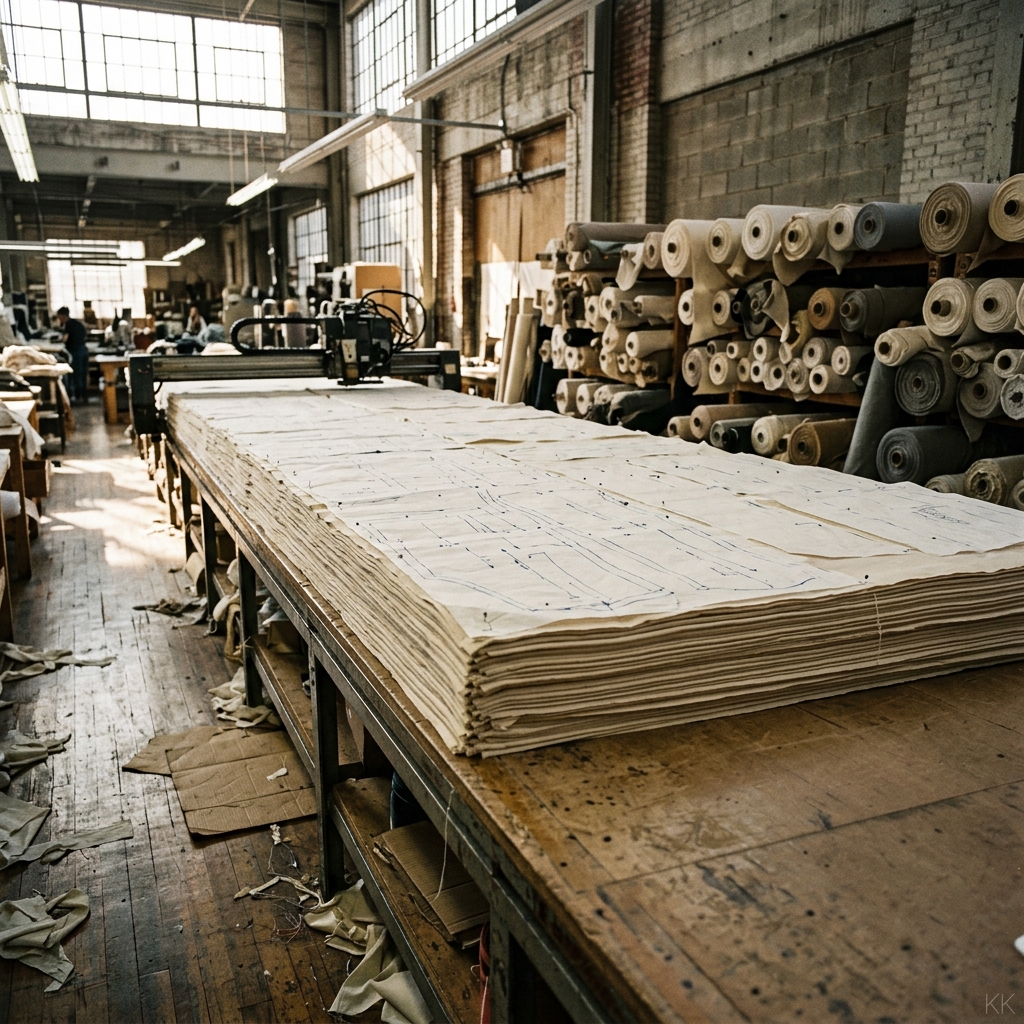
Here is the surprise: the first two weeks of “production” have no sewing in them at all. Your fabric does not exist yet. The mill has to knit and dye it in bulk quantity, and a heavier weight takes longer to finish than a light one.
Then four weeks of cut, sew and finish. The cloth is spread in layers, cut, bundled by size, sewn down a line, then washed, pressed and trimmed.
This is the one phase you genuinely cannot rush, and it is the phase founders push hardest on. A mill will not knit faster. A sewing line that doubles its speed drops its quality, and you find out eight weeks later when the returns arrive.
What to ask for in week 14
A photo of the first sewn piece off the line, before the rest of the run follows it. If something drifted from the approved sample, this is the last cheap moment to catch it.
Phase 4 — Quality check & dispatch: weeks 18 to 23
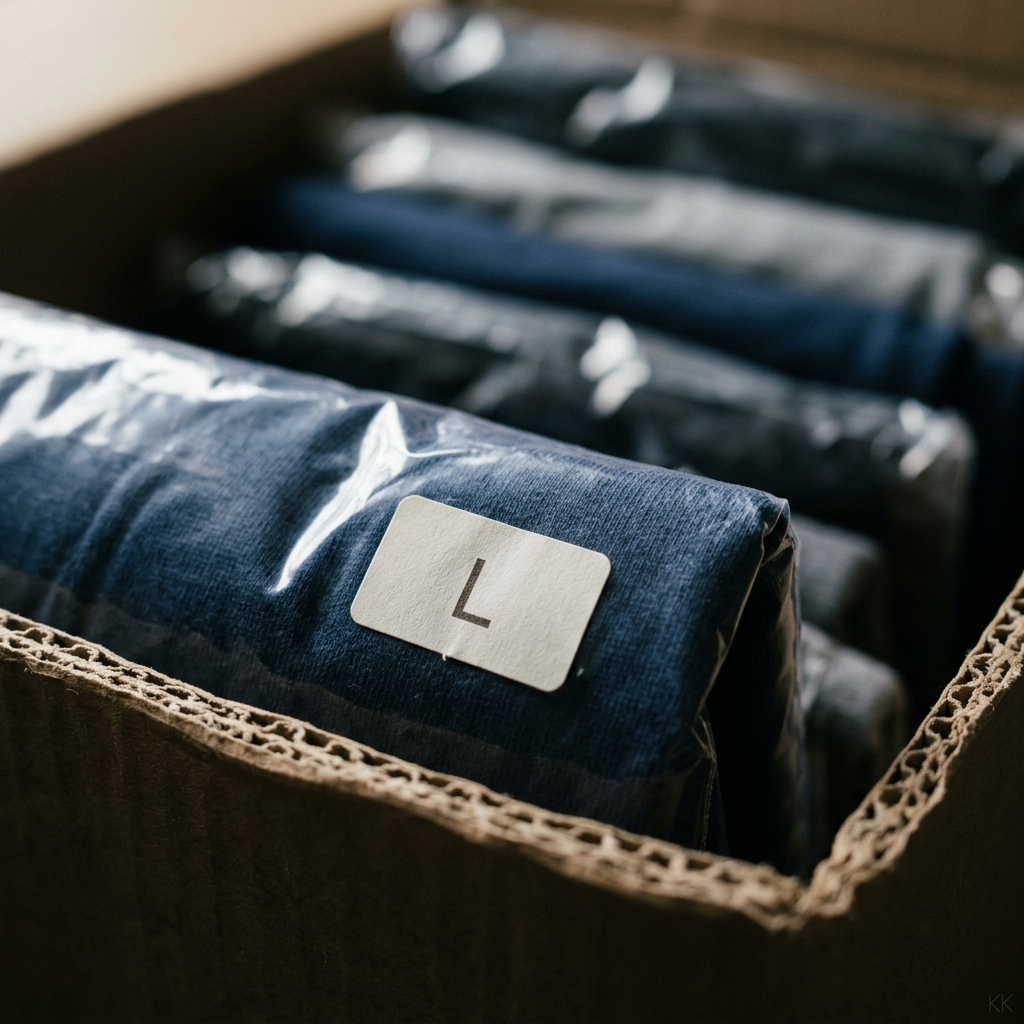
One week for inspection and packing: garments checked against the approved sample, then folded, tagged, bagged and boxed. After that the goods still have to travel, and travel eats more of the calendar than most people expect.
Ocean freight from India to the US runs 30 to 40 days door to door; air freight is 8 to 10 days and costs many times more. Four weeks on a ship is the single easiest week-block to forget.
Infographic 07
The only stage money can actually shorten
Door-to-door transit, India to the US. The paler end of each bar is the slow end of the range.
Then customs. Entry paperwork has to be filed within 15 calendar days of the shipment arriving, duty gets paid, and only then does the truck move. Cotton knit tops enter at 16.5% under heading 6109.10.00, and since CBP’s indefinite suspension of the $800 de minimis exemption in June 2026, no route in arrives duty-free.
One paperwork error — a mismatched description, a missing fibre content — and the box sits at the port while it gets corrected. The parcel-level version of this is worked through in the de minimis hangover.
Free download
The Backward Production Calendar
Put in your drop date and it counts the ten stages back to the day you have to commit — with the approval deadlines you own marked in red, and the 2027 factory blackouts already blocked out. Spreadsheet + PDF.
Three dates that move everyone’s calendar
Your schedule does not run in a vacuum. Three fixed points in the year bend it, and none of them are negotiable.
Lunar New Year. It falls on 6 February in 2027, and it is not a day off. Factories across China and Vietnam wind down from late January, reopen through late February at roughly a third of their workforce, and only reach full strength around 6 to 20 March.
Diwali. In India, 8 November 2026. Units close for a run of days around it rather than a single holiday, and the weeks either side are the busiest of the year.
Peak freight season. Roughly August to October, every brand on earth is shipping for the same quarter — the National Retail Federation expected US November-December spending to pass $1 trillion for the first time in 2025. Space gets tight, rates climb, and sailings slip.
You cannot move these dates. All you can choose is which side of them your production lands on — and you make that choice months earlier than feels natural.
Count backwards from the shelf
Almost every blown launch date comes from counting forwards. You start today, add up the stages, and land wherever you land — usually three weeks after the season you were aiming at.
Do it the other way. Fix the date stock must be in the warehouse, subtract 23 weeks, and that is your commit date. Then subtract two more for photography and listings, because goods in a box are not goods on sale.
Infographic 03
A 1 March drop is a 21 September decision
The 23-week schedule laid over a real calendar — and over the one window in it you do not control.
That is the whole trick. It also tells you something hard to hear but useful: if the date you want is less than 23 weeks away, you are not planning a timeline any more. You are picking which corner to cut. The same sum for a Q4 launch is laid out in the holiday production window.
Where the weeks actually disappear
Schedules rarely break all at once. They slip a few days at a time, and by the time you notice, a month has gone.
Infographic 04
The five ways a schedule quietly grows
These are the planning allowances we hold against each risk, not measured industry averages. Treat them as the buffer to build in, not a forecast.
The last bar is the dangerous one. It does not cost you a few days at a time — it drops off a cliff. Miss a factory shutdown by three days and you do not lose three days. You lose the shutdown, then the slow restart, then the queue of everyone else who also missed it.
What genuinely makes it faster
Four things actually shorten a clothing production timeline. Everything else is just pressure on a stage that cannot take any.
Start with the one nobody bills you for. Development has six moments where work stops until you answer.
Infographic 06
Six times someone waits on you
Development has six approval gates. Sit on each for a week and you have added six weeks without anyone working slower.
Actually works
- • A complete tech pack before sampling starts — two rounds instead of five.
- • Choosing fabric in week five, not week nine.
- • A 24-hour rule on your own approvals.
- • Fewer styles. Three done properly beat eight half-specified.
- • Air freight on the first run, sea on the repeat.
Doesn’t
- • Asking the mill to knit faster. It cannot.
- • Skipping the pre-production sample to save a week.
- • Adding styles late because one felt missing.
- • Splitting one order across two factories to halve it.
- • Changing a colour after the bulk fabric is dyed.
Notice that four of the five things that work cost nothing. The only one that costs money — air freight — buys the least time. Buying speed at the end always costs more than deciding early costs you; the per-unit version of that trade is broken down in costs at every MOQ tier.
When four months is the wrong number
Everything above assumes you are building garments from your own patterns. Plenty of brands are not, and their timeline is a different thing altogether.
Printing your artwork on an existing blank takes three to five weeks, because the eleven-week development half already happened in someone else’s factory. That trade — speed against owning the garment — is the whole of private label versus custom manufacturing.
The other direction is real too. A reorder of a style you have already made is not 23 weeks, because the pattern exists, the fabric is specified and the factory has your sample on the shelf.
Infographic 05
The second time is half the wait
The same style ordered again, once the pattern and the fabric spec already exist.
The first time is the expensive one, in weeks as much as in cash. That is exactly why finishing one style properly is worth more than starting three.
What we’d do in your shoes
Pick the date you want to be selling, count 23 weeks back, and look at what that date says. If it has already passed, do not compress the schedule — move the drop, or cut the range to the one style you are most sure of. So: what is your date, and what does 23 weeks before it land on?
Common questions
How long does clothing manufacturing take from design to delivery?
Plan on 16 to 29 weeks for a first collection, depending on how fast you make decisions. Sixteen weeks is the fast lane: one simple style, an approval turned around the same day it lands, and air freight at the end. Around 23 weeks is what a small first collection usually takes on ocean freight. Twenty-nine weeks is what it looks like when you are learning the process while running it. Repeat orders on a pattern you already own are far shorter, because the development half is already paid for.
Which stage of the clothing production timeline takes the longest?
Development — everything before the first bulk garment is cut. Range planning, tech packs, fabric sourcing, lab dips, patterns and fit samples take 8 to 14 weeks, which is roughly half the whole schedule. Founders consistently underestimate it because nothing visible is being produced. Actual sewing is one of the shorter stages, usually 3 to 5 weeks.
How long does sampling take before bulk production starts?
Budget 5 to 8 weeks from a finished tech pack to an approved pre-production sample. That covers the pattern and first prototype, two or three fit rounds, and the final sign-off sample the factory keeps as the reference for bulk. Fabric runs alongside it: lab dips, the small swatches dyed to your exact colour, take 2 to 4 weeks and often decide when sampling can actually finish.
When should I place my order to have stock on the shelf for a specific date?
Count 23 weeks backwards from the date you need stock in the warehouse, not the date you want to launch, then subtract another two weeks for photography and listings. A 1 March 2027 drop is a 21 September 2026 decision. Then check that nothing in the middle lands on a factory blackout — Lunar New Year falls on 6 February 2027, and factories across Asia run at reduced capacity until March.
Can a clothing production timeline be rushed?
Some of it, and the parts that compress are not the ones founders expect. You can pay for air freight, which takes about three weeks off the end, and you can shorten development by turning approvals around in hours instead of weeks. You cannot rush the mill: knitting and dyeing cloth takes the time it takes. Rushing usually means skipping a fit round, which is the most expensive way to save two weeks.
Read next
7 min read
Private Label vs Custom Manufacturing
The choice that decides whether your timeline is five weeks or twenty-three.
6 min read
Fabric Sourcing 101
The stage that quietly sets the pace for everything downstream of it.
15 min read
How to Start a Clothing Brand in 2026
The eight-step build order, from niche to first production run.
Comments
No comments yet
Be the first to share your thoughts!