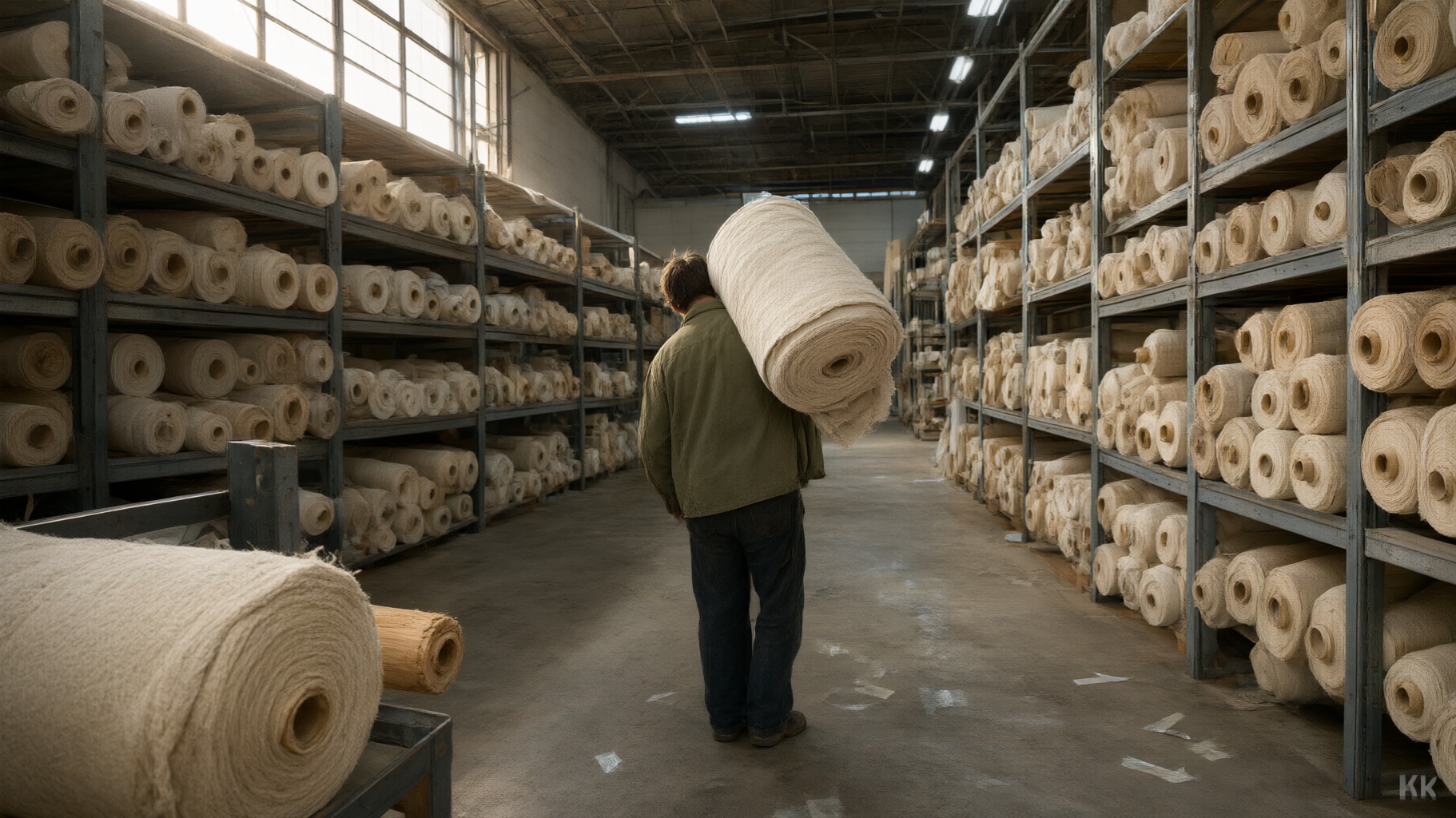
On 27 September, printing the words “eco-friendly” on a product page becomes unlawful across twenty-seven countries unless you can produce the evidence behind them.
Most US founders read that as a European problem. It isn’t. The Federal Trade Commission has already collected $5.5 million from two American retailers over a single fibre claim, under rules written in 2012 and still in force today.
Sustainable clothing manufacturing used to be a decision about fabric. It is now a decision about documentation — what has to be true inside your factory, and what piece of paper proves it when someone asks. Here is the whole chain, in the order you have to build it.
What the word now has to prove
The FTC’s Green Guides — the federal rulebook for environmental marketing — are blunt about the vocabulary most brands reach for first. On unqualified general claims, section 260.4 says it is “highly unlikely that marketers can substantiate all reasonable interpretations of these claims,” and therefore that they “should not make unqualified general environmental benefit claims.”
Read that again. Not be careful with. Should not make.
In April 2022 the FTC turned that into money. Kohl’s and Walmart paid $2.5 million and $3 million respectively for selling rayon as “bamboo” and describing the process as eco-friendly. Converting bamboo into rayon is a chemical process; the marketing said otherwise. It remains the largest penalty the agency has issued in this area.
A revision that would have defined “sustainable” and “organic” for the first time has been sitting unfinished since its comment period closed in 2023. So the 2012 text is the text you are judged against, and it never defined the word you most want to use.
Europe went the other way and wrote the definition down. The Empowering Consumers for the Green Transition Directive — a consumer-protection law adopted in 2024 — applies from 27 September 2026 in all member states. It bans generic environmental claims made without proof, and it bans sustainability labels you invented yourself.
If your Shopify store ships to a customer in Dublin or Berlin, that is your law too. And the same evidence trail feeds the EU’s Digital Product Passport, whose textile rules are expected to be adopted in 2027.
Infographic 01
The dates that already govern your label
Two of these are behind us. Filled markers are law today; open markers are adopted and dated.
“The question stopped being whether your factory is greener than the last one. It is whether you can show it to a regulator inside a fortnight.”
Fibre first — and the recycled trap underneath it
Roughly two-thirds of a garment’s environmental footprint is decided before anyone cuts anything, in the choice of fibre and the mill that makes it. That part of the old advice holds. What has changed is the arithmetic behind one of the choices.
World fibre production reached 132 million tonnes in 2024, up from about 125 million the year before. Polyester is 59% of that output, and 88% of the polyester is fossil-based.
Recycled fibre of every kind accounts for 7.6% of production. Recycled polyester made from drinks bottles is 6.9% of it. Fibre made from pre- and post-consumer textiles — old clothes, the thing the word implies — sits below 1% of the global market.
Infographic 02
What “recycled” is actually made of
Shares of the 132 million tonnes of fibre produced worldwide in 2024. The axis stops at 8% because everything above it is virgin material.
That is not an argument against recycled polyester. Diverting a bottle from landfill and displacing virgin petrochemical input is a real gain, and worth paying for. It is an argument against calling it circular, which is a claim the September rules are built to catch.
The trend line is also less flattering than the marketing. Recycled polyester grew in volume last year but lost share, slipping from 12.5% to 12% of all polyester, because virgin production grew faster.
Cotton is the more workable lane for a first range, and not for romantic reasons. Global production sits at 24.5 million tonnes, and 34% of it now comes from certified sources — organic, Better Cotton, regenerative programmes. A certification chain that already exists is a chain you can audit, which is the whole game. We break down what each label covers in organic cotton, GOTS and recycled polyester, simplified.
Hemp and linen genuinely need less water and less chemistry. They also come with shorter supply, fewer mills, and minimums that a first-season brand usually cannot meet — the trade-offs are in our read on hemp and bamboo. Pick the fibre your volume can actually buy, then pick the one you can document. If you are starting from scratch, fabric sourcing 101 is the place to begin.
Signs your fibre story will not hold
- • Your site says “recycled” without saying recycled from what.
- • Nobody has told you the recycled percentage, only that there is one.
- • The word “circular” appears anywhere near a bottle-derived yarn.
- • You chose the fibre before you checked what your order quantity can buy.
- • The claim on the label is broader than the claim on the invoice.
The two certificates that decide whether your claim survives
This is where most eco-conscious brands quietly fail, and almost none of them know it.
A scope certificate — the annual licence a mill holds — confirms that a facility has been audited and is permitted to process certified goods. It says the mill can run organic cotton. It says nothing whatsoever about the roll of cloth in your order.
A transaction certificate — issued per shipment — is the document that ties a specific batch, quantity and buyer to the standard. It is the only paper that proves your fabric was actually made the way you are telling customers it was.
Here is the detail that catches people. The public GOTS database lists only scope certificate holders, because that is what the database is for. So the PDF a supplier emails you when you ask about organic is, nine times in ten, a scope certificate. You feel reassured. You have been shown a capability, not a delivery.
Fix it in three moves. Ask for the scope certificate and check its licence number against the public database yourself, rather than trusting the file. Require a transaction certificate naming your purchase order and quantity, and make it a condition of final payment. Then keep both with the invoice, because a claim you cannot evidence eighteen months later is a claim you did not make.
| If you want to say | You must be able to produce | Issued by |
|---|---|---|
| “Organic cotton” | Scope certificate for the mill, plus a transaction certificate naming your shipment | A GOTS-approved certification body |
| “Recycled polyester” | Global Recycled Standard transaction certificate, with the recycled percentage stated | The certifier, via your fabric supplier |
| “PFAS-free” or sold in CA / NY | Signed certificate of compliance from the manufacturer | The factory or mill, in writing |
| “Ethically made” | Dated social audit report, corrective actions, and a written subcontractor list | The audit firm, not the factory |
| “Low impact” / “eco-friendly” | Nothing you can hold. Replace it with one named, verified attribute | — |
Free download
The Green Claims Evidence File
One page mapping every sustainability claim to the exact document that proves it, who issues it and when to ask — plus the fourteen questions to send a mill before you place a fabric order, and a plain-English glossary of the certifications. Spreadsheet + PDF.
PFAS is already illegal in two states you sell into

PFAS — the fluorinated chemistry behind water and stain repellency — is the one place where sustainability stops being a positioning question and becomes a line on your fabric spec.
California and New York both banned it in apparel from 1 January 2025. California’s AB 1817 sets a limit of 100 parts per million of total organic fluorine, falling to 50 ppm in 2027. New York bans intentionally added PFAS outright.
Both states put the paperwork on your supplier, not on you: the manufacturer must give whoever sells the product a signed certificate of compliance. If you have never received one, you are carrying that risk on their behalf.
Outerwear for severe wet conditions has an exemption that runs to 1 January 2028, but since 2025 it must be disclosed to the buyer. That is a narrow carve-out for technical shells, not a general reprieve.
One more thing on the California calendar: the state’s textile recovery law opened producer registration on 1 July 2026 for brands above $1 million in global sales, which makes end-of-life collection a cost line rather than a value. Worth knowing it exists before it finds you.
Ethical sourcing is an audit trail, not a sentence on your About page
A social audit — a scheduled third-party inspection of wages, hours, safety and age — is the standard instrument here. SMETA, SA8000 and WRAP are the names you will be shown.
Ask for the report, not the certificate. A certificate tells you a factory passed something once. The report tells you what the auditor found, and the corrective action list tells you what the factory did about it. Those two documents are worth more than any badge on a website.
Then ask the question almost nobody asks: what leaves the building. Embroidery, printing, washing and hand-finishing are routinely sent out, and an unregistered subcontractor is where a clean audit and a real problem live at the same time. Request a written list of every outsourced process with addresses, and put it in the purchase agreement.
A concession, because this is where honest advice matters most: on a 300-unit first run, a full audit programme is not within reach, and pretending otherwise helps nobody. What is proportionate at that size is the subcontractor list, a video walkthrough of the floor, and a partner who already holds the relationship and the history.
Your wholesale buyers will get there before your customers do. The five questions European retailers are already sending are in what EU buyers ask about your supply chain.
Waste is where a small brand actually beats a large one
The national picture is grim and worth stating plainly. In its most recent published figures, the EPA counted 17 million tons of textiles in US municipal solid waste in 2018, of which 11.3 million tons went to landfill. The recycling rate for clothing and footwear was 13%.
You cannot move that number. You can move the three upstream ones that nobody photographs.
Marker efficiency — how tightly your pattern pieces nest on the fabric roll before cutting — is measured as a percentage, and a factory that cannot tell you yours is not measuring it. A few points is real cloth on a production run, and it shows up in your cost per unit as well as your footprint.
Sample rounds each consume fabric, labour and air freight. The most reliable way to cut them is a complete tech pack, which is the least glamorous sustainability intervention in this article and probably the most effective — see what a tech pack actually is.
Over-ordering is the largest of the three by a distance. A garment that never sells is 100% waste plus the cost of storing it, and no amount of organic cotton offsets a warehouse of unsold stock. Producing closer to demand is the argument we make in building a slow brand against a fast market.
None of this needs a certificate. All of it shows up in your margin, which is why it survives the quarter when the sustainability budget gets cut.
Signs the waste is upstream of you
- • Nobody has quoted you a marker efficiency percentage on any style.
- • You are on sample round four and the comments are still about fit.
- • Last season’s carryover is bigger than this season’s first order.
- • Your minimum was set by the mill, not by your sell-through.
- • Offcuts leave the factory and nobody in your business knows where.
What this costs, and when you should skip it
Certification adds cost in three places, and only one of them is the fabric. Certified cloth carries a premium and, more painfully, a higher minimum order. The audit and certificate cycle is annual and paid. And somebody in your business has to chase, read and file the documents, every season, forever.
So here is the unpopular version. If you are launching one style in the low hundreds, a full chain of custody is usually out of reach, because certified fabric minimums sit above your order before you have sold a thing.
What works at that size is narrower and completely defensible: buy from a stockist who holds the transaction certificate for the roll, make one specific claim you can evidence — “the shell is GOTS-certified organic cotton, certificate on request” — and say nothing else. One provable sentence beats a page of atmosphere.
Being small is not the failure. Making a large claim on a small evidence base is, and that is the exact pattern both the FTC and the September rules are built to find.
More on how we think about this across a production run is on our sustainability page, and the fibre-and-ethics groundwork sits in our earlier guide to building an eco-friendly fashion brand.
What we’d do in your shoes
Audit your own product pages this month, before September does it for you. Every green word on the site gets matched to a document you can put your hand on, and anything that fails the test gets replaced with a narrower claim that passes.
Then work backwards to the mill and ask for the two certificates by name. If you found more claims than documents this morning — which one would you defend first?
Common questions
What does sustainable clothing manufacturing actually require in 2026?
Evidence, in three layers. A fibre choice you can name and trace; a transaction certificate proving the specific batch of fabric you bought was made to the standard you are claiming; and a compliance certificate from the manufacturer covering restricted chemistry such as PFAS, which is banned in apparel in California and New York. A general commitment to being green is no longer a position you can hold — from 27 September 2026 the EU requires proof for any generic environmental claim, and the FTC's Green Guides have discouraged unqualified claims since 2012.
What is the difference between a scope certificate and a transaction certificate?
A scope certificate is the annual licence a mill or factory holds. It confirms the facility was audited and may process certified goods — it says the mill can run organic cotton. A transaction certificate is issued per shipment and ties a specific batch, quantity and buyer to the standard. Only the transaction certificate proves your fabric was actually made the way you say it was. The public GOTS database lists scope certificate holders only, which is why the document most suppliers send on request proves capability rather than delivery.
Is recycled polyester a genuinely sustainable choice for a fashion brand?
It is a real reduction in virgin petrochemical input, and it is not circular. Recycled fibre of all kinds was 7.6% of the 132 million tonnes of fibre produced worldwide in 2024, and recycled polyester made from drinks bottles accounted for 6.9% of that. Fibre made from pre- and post-consumer textiles — actual old clothes — is below 1% of the global market. Recycled polyester's share of all polyester also fell from 12.5% to 12% in 2024 as virgin production grew faster. Use it, price it honestly, and do not call it closed-loop.
Do US brands have to worry about the EU rules on green claims?
If you sell to EU customers, yes. The Empowering Consumers for the Green Transition Directive applies from 27 September 2026 across all twenty-seven member states and bans generic environmental claims made without proof, along with sustainability labels a brand created for itself. A direct-to-consumer store that ships to Ireland or Germany is trading in those markets. Separately, the EU Digital Product Passport rules for textiles are expected to be adopted in 2027, and they draw on the same evidence trail.
Can a small brand afford ethical, low-impact garment production?
Partly, and it is better to be honest about which part. Certified fabric carries both a price premium and a higher minimum order, so a first run in the low hundreds usually cannot support a full chain of custody. What works at that size is buying from a stockist who holds the transaction certificate for the roll, making one narrow claim you can evidence, and saying nothing beyond it. The upstream waste levers — marker efficiency, fewer sample rounds, ordering closer to real demand — cost nothing and improve margin at any volume.
What is the PFAS rule for apparel sold in the US?
California and New York both banned PFAS in apparel from 1 January 2025. California's AB 1817 sets a limit of 100 parts per million of total organic fluorine, dropping to 50 ppm in 2027, while New York prohibits intentionally added PFAS. In both states the manufacturer must supply a signed certificate of compliance to whoever offers the product for sale. Outdoor apparel for severe wet conditions is exempt until 1 January 2028 but must be disclosed to the buyer from 2025.
About Krazy Kreators
Krazy Kreators is the end-to-end brand-building partner for US clothing founders — design, sampling, fabric sourcing and retail-grade production, and packaging, under one roof, from first sketch to shelf. How we approach responsible production is on our sustainability page. krazykreators.com
Read next
8 min read
The EU Digital Product Passport
The data every garment will have to carry, and who has to collect it.
8 min read
What EU Buyers Ask About Your Supply Chain
The five questions wholesale accounts send before they open a purchase order.
7 min read
Building a Slow Brand in a Fast Market
Producing closer to demand — the waste reduction that also protects margin.
Comments
No comments yet
Be the first to share your thoughts!